
If your “walk-in” closet is really more of a “step-in-and-turn-sideways” closet, you’re not alone. A tiny walk-in closet can still outperform a giant one it just needs a plan that treats every wall, corner, and inch of ceiling height as usable real estate. The difference between a cramped, frustrating closet and one that feels like a boutique dressing room isn’t square footage. It’s smart layout choices.
Below are 16 tiny walk-in closet ideas that actually work in real, small spaces not just in photos. Pin your favorites, because you’ll want to come back to this list when it’s time to plan.
Why Small Walk-In Closets Need a Smarter Plan (Not More Space)
Most small walk-in closets start at around 4 feet by 4 feet, just enough room for a rod and a place to stand. That tight footprint means there’s no room for wasted space, awkward gaps, or storage that only works for one type of item. Every shelf, rod, and drawer has to earn its spot.
The good news: a few strategic changes can double your usable storage without adding a single square foot. Here’s where to start.
16 Tiny Walk-In Closet Ideas Worth Stealing
1. Stack Double Hanging Rods
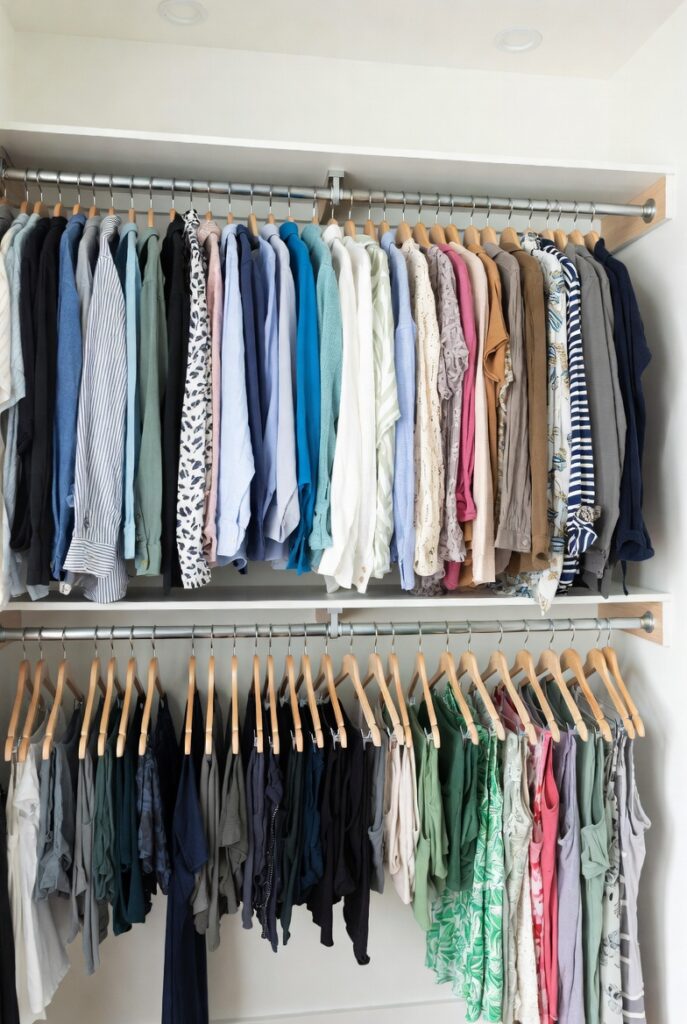
The single biggest space-waster in a small closet is one lonely rod with empty air above it. Add a second rod above the first for shirts, folded pants, or skirts, and reserve the lower rod for longer items. This one change alone can nearly double your hanging capacity.
2. Use the Wall Above the Door
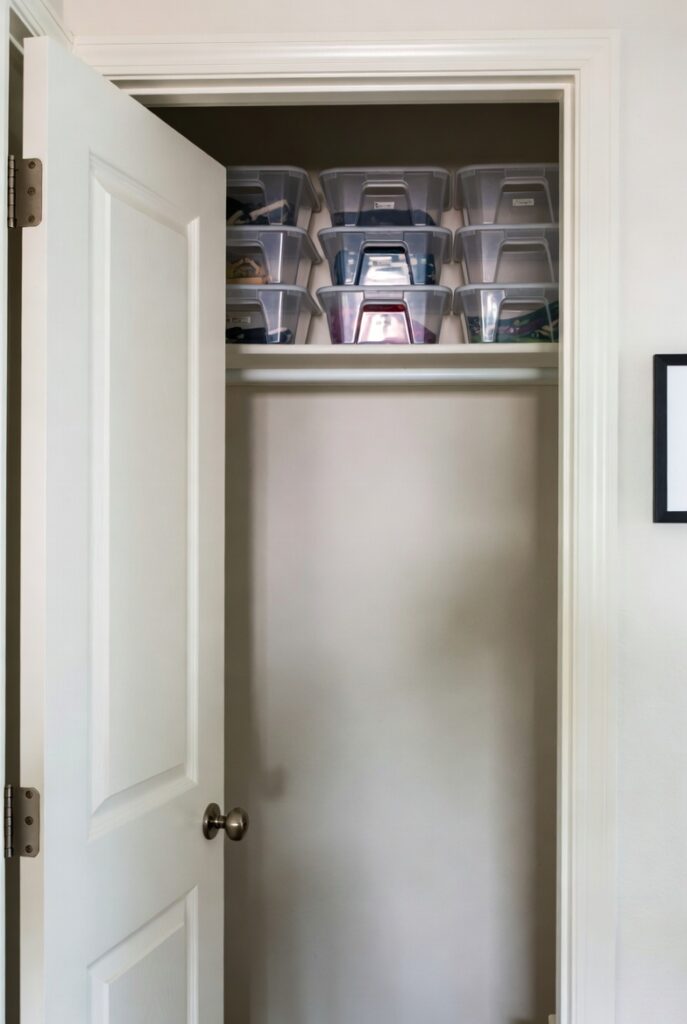
The space above your closet door is almost always empty. Add a shallow shelf or a row of hooks up there for hats, bags, or bins holding off-season accessories. It’s storage you’ll barely notice is there until you need it.
3. Build a Corner Shelving Tower
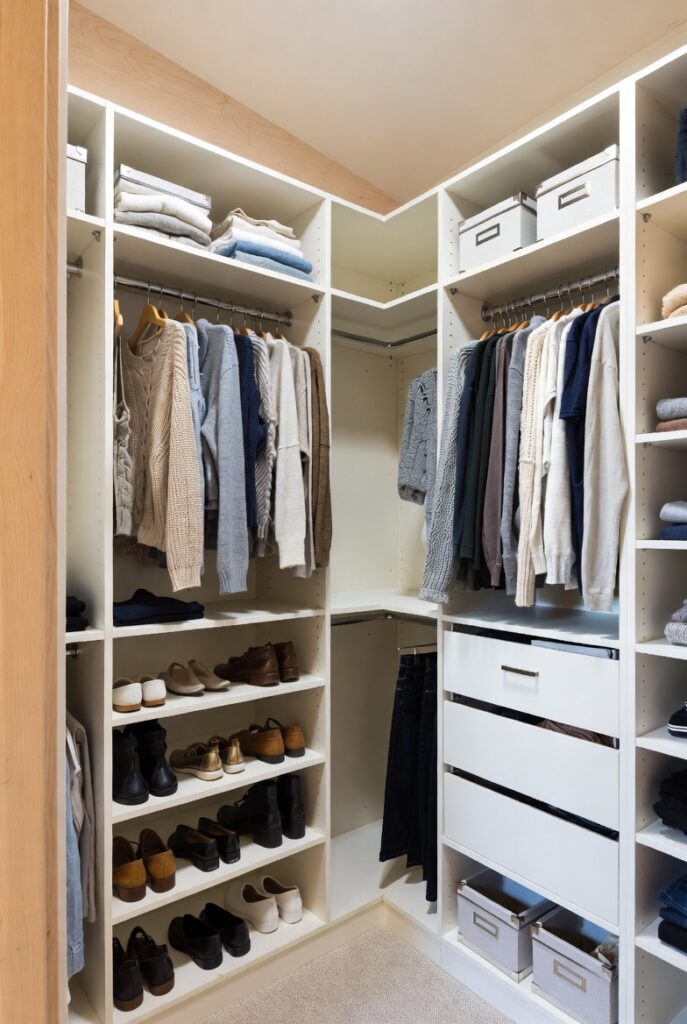
Corners are the most commonly wasted space in any small closet. A tall, narrow shelving tower tucked into a corner adds vertical storage for shoes, folded sweaters, or bags without eating into your walking space.
4. Install a Slim Vertical Shoe Rack
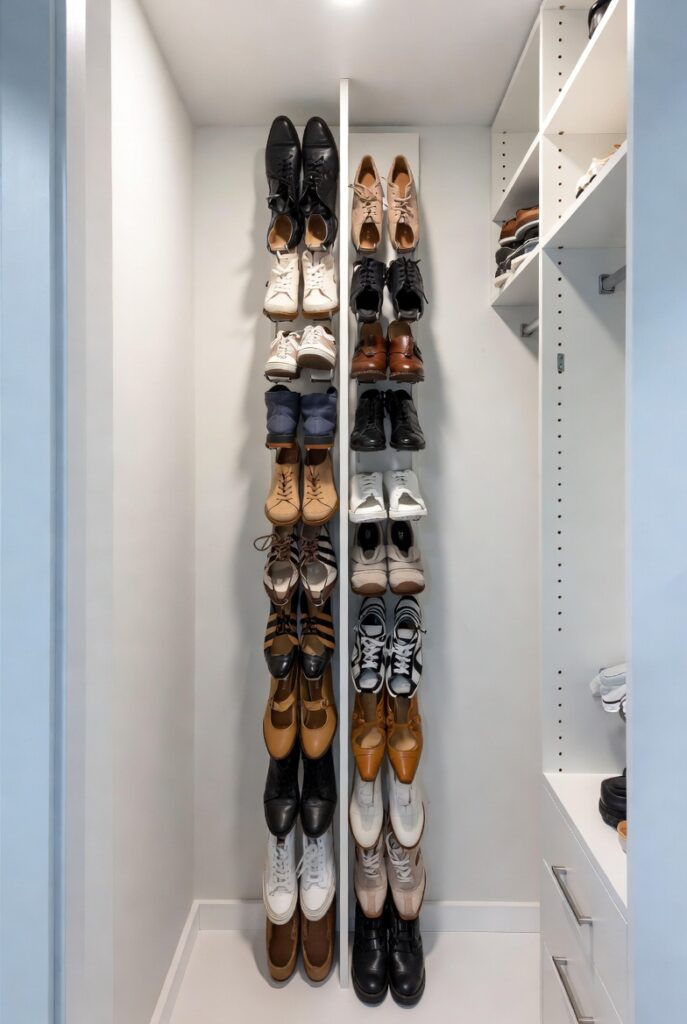
Skip the floor-hogging shoe pile. A narrow, floor-to-ceiling shoe rack against a back wall or door keeps every pair visible and off the ground, freeing up floor space you actually need to move around in.
Read Also: 13 Tiny Studio Apartment Ideas That Actually Make Small Feel Spacious
5. Swap Swing Doors for Sliding Doors
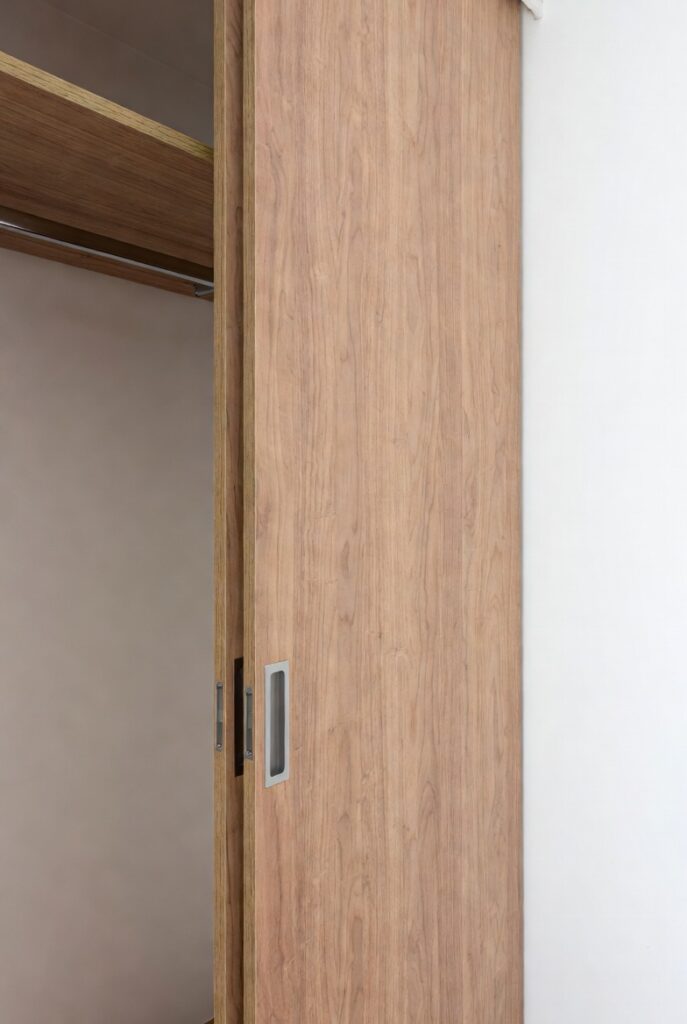
A swinging door needs clearance space to open, which is a luxury a tiny closet can’t spare. Sliding or barn-style doors save that space entirely and give the room a cleaner, more open feel.
6. Add a Narrow Drawer Column Instead of an Island
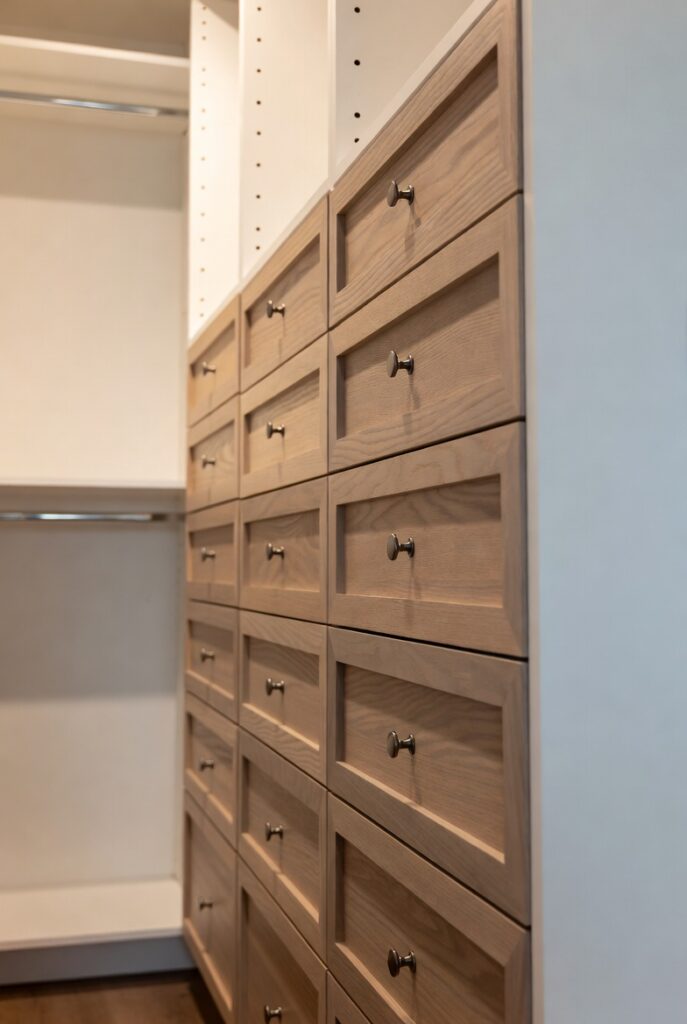
Closet islands look gorgeous in showrooms, but most tiny walk-ins don’t have room for one. A slim column of drawers along a single wall gives you the same folded storage and a flat surface for accessories, minus the bulk.
7. Put the Back of the Door to Work
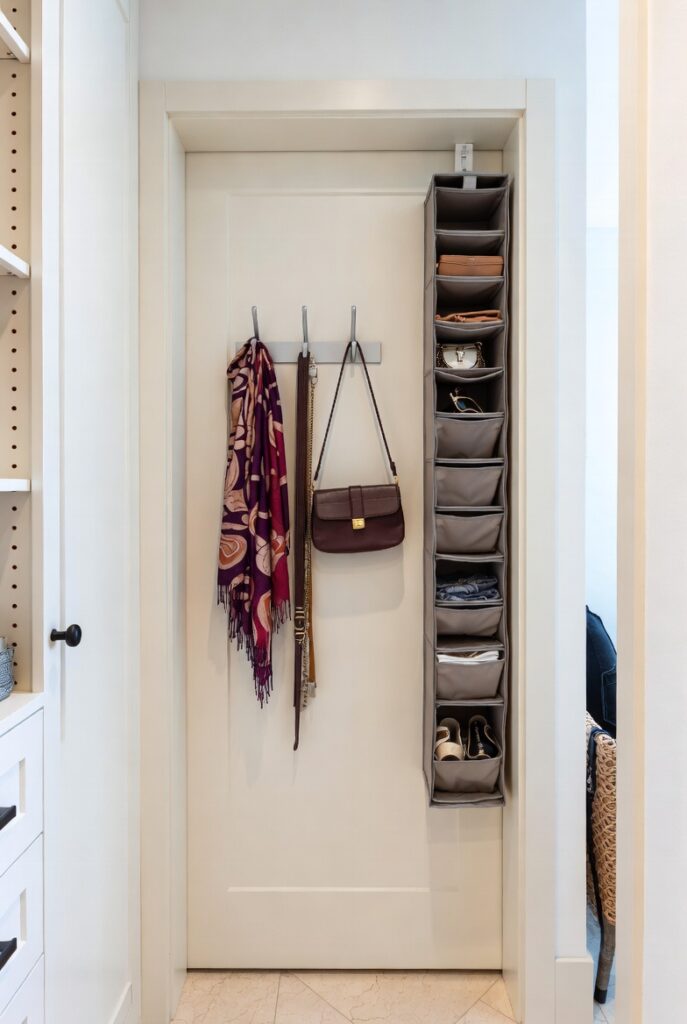
An empty door is wasted storage. Over-the-door hooks, a slim shoe organizer, or a mounted jewelry rack turn that flat surface into extra square footage you didn’t know you had.
8. Choose a Modular, Adjustable Shelving System
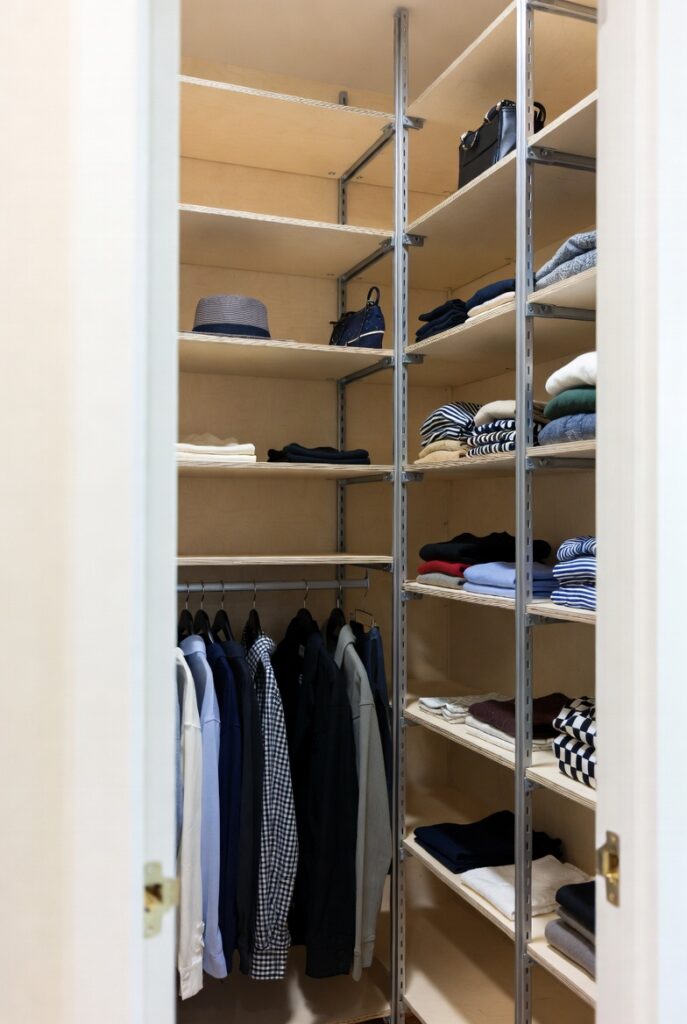
Fixed shelves lock you into one configuration forever. A modular system with adjustable shelves and rails (like the kind sold in flat-pack furniture lines) lets you reconfigure the layout as your wardrobe changes.
9. Add Vertical Dividers to Shelves
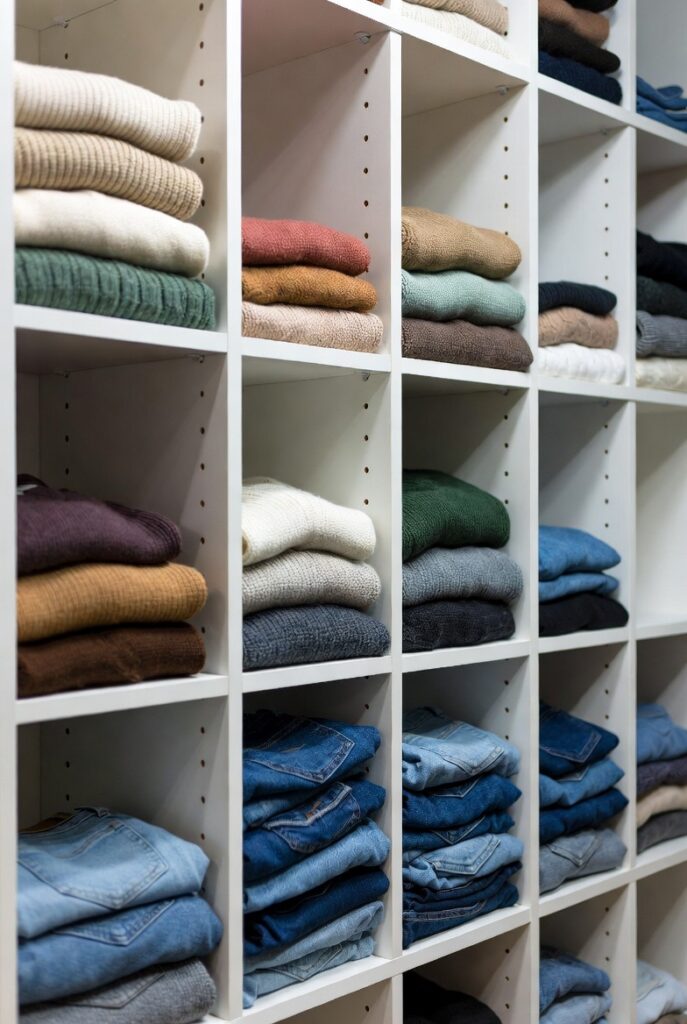
Stacks of folded clothes collapse into a messy pile the moment you pull one shirt out. Simple vertical dividers on open shelves keep each stack upright and separated, so the whole shelf doesn’t topple every time you grab a sweater.
10. Bring In a Statement Wallpaper or Accent Wall
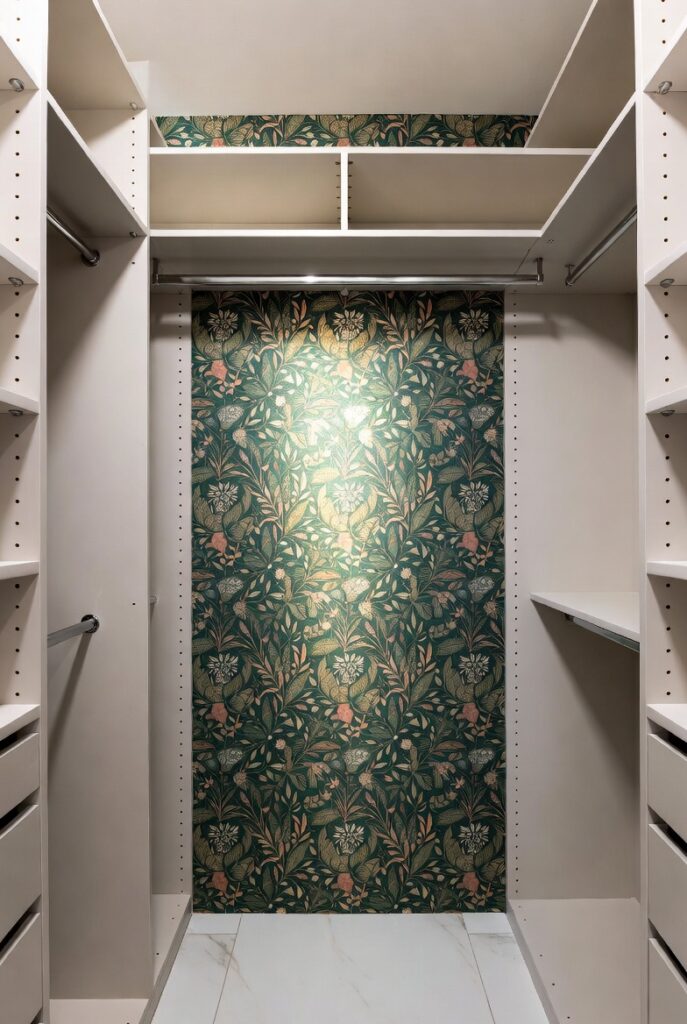
A tiny closet is the perfect low-risk place to go bold. A patterned wallpaper or a rich accent color makes the space feel intentional and designed, not like leftover square footage. It’s also one of the most photographed closet details on Pinterest for a reason it makes even a small space feel like a room worth showing off.
11. Layer in Real Lighting
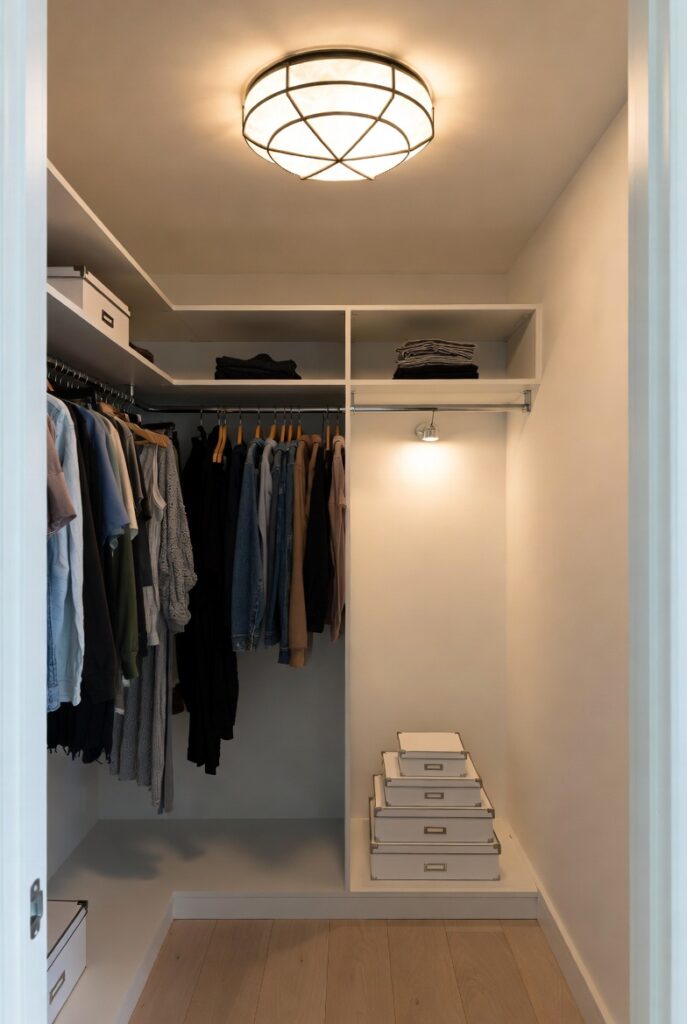
Overhead light alone leaves the corners and lower shelves in shadow. Add a plug-in sconce, a battery-powered puck light, or an LED strip along a shelf edge so you can actually see what you’re grabbing, especially early in the morning.
12. Label Baskets and Bins for Small Items
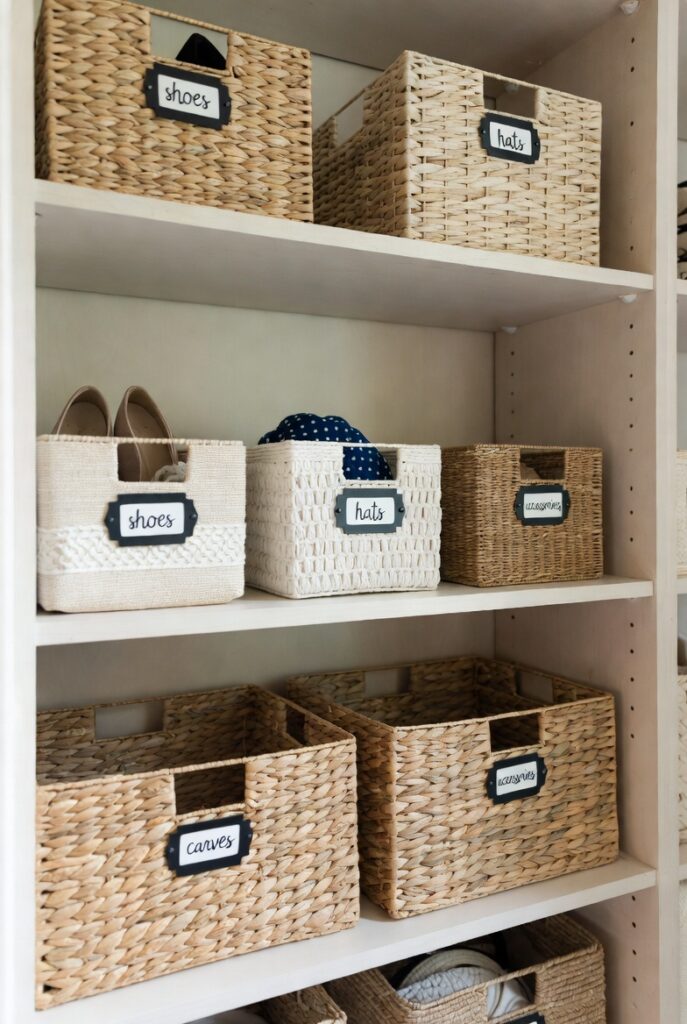
Scarves, belts, and accessories are the clutter culprits in most closets. Group them into labeled bins or baskets on a shelf so everything has a home and you’re not digging through a junk drawer of fabric every morning.
13. Mount a Full-Length Mirror on the Door
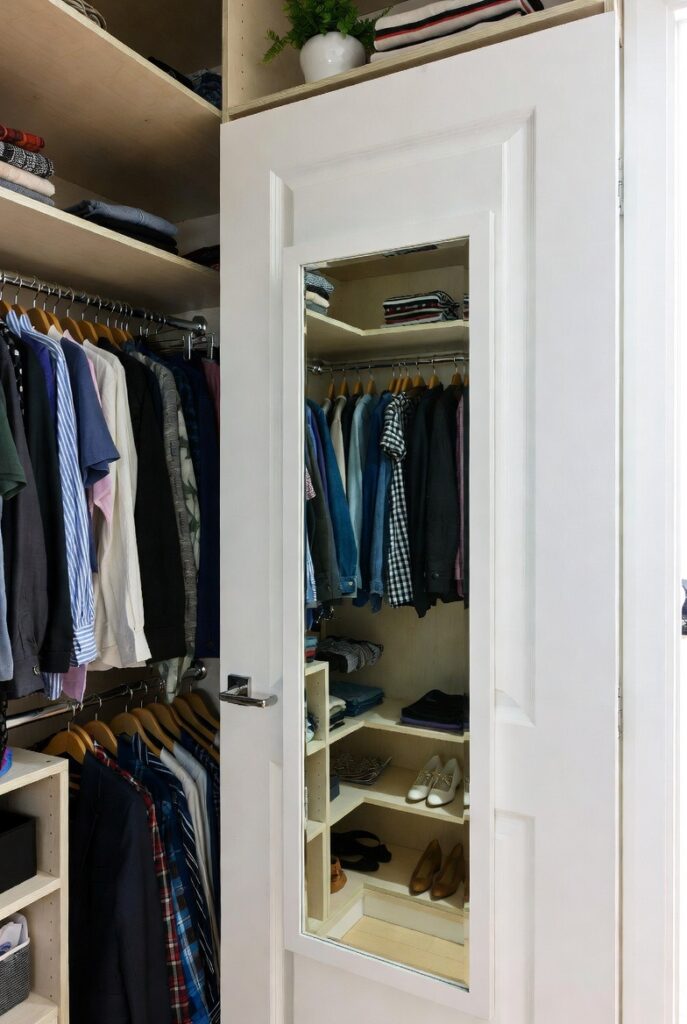
A mirror doesn’t just help you check your outfit it visually doubles the space by reflecting light and depth. Mounting it directly on the closet door means it takes up zero floor space.
14. Install a Pegboard Wall
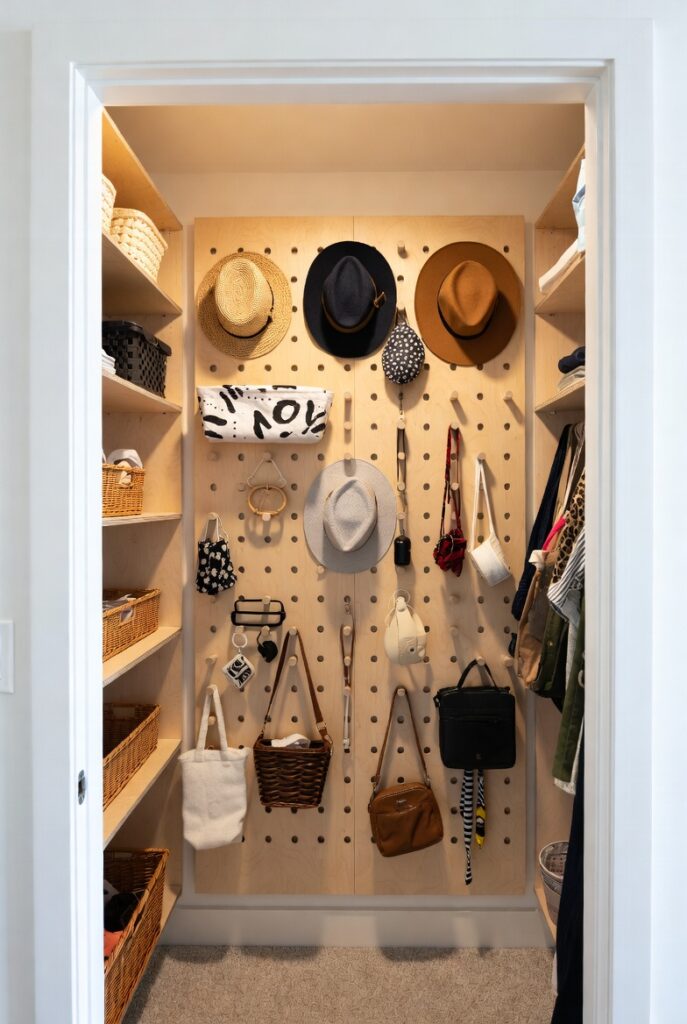
A pegboard section turns one wall into infinitely reconfigurable storage for belts, bags, jewelry, and scarves. Move the hooks around anytime your storage needs change, no new holes required.
15. Claim the Ceiling for Off-Season Storage
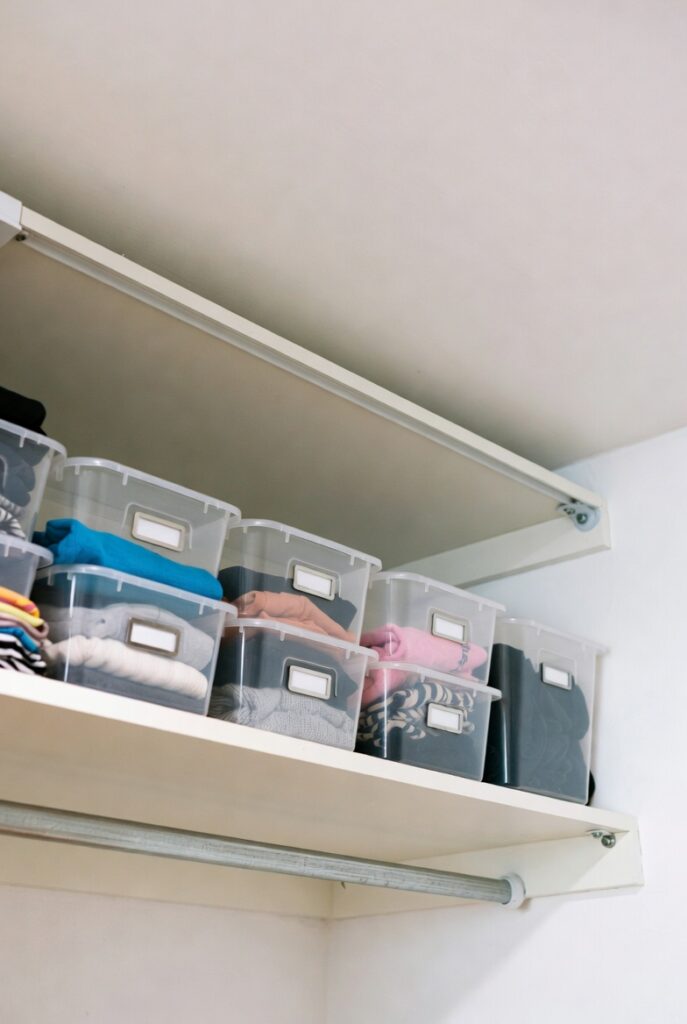
The area right below the ceiling is prime real estate for things you only need occasionally, like bulky sweaters, holiday outfits, or extra luggage. A single shelf up top keeps daily items within easy reach while off-season pieces stay out of the way.
16. Add a Small Stool or Bench
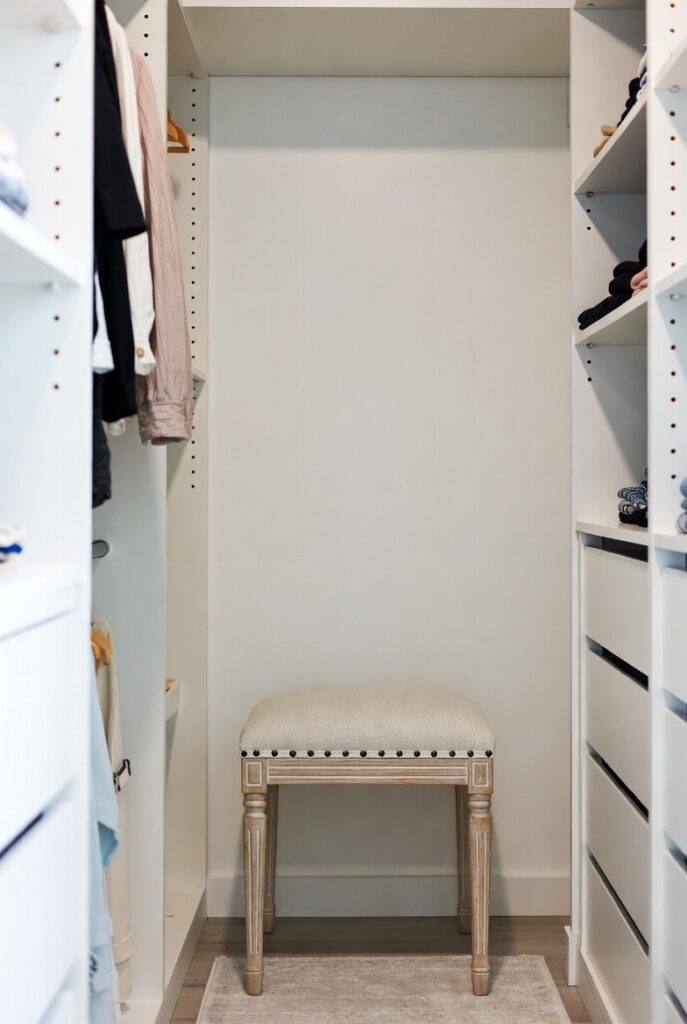
If there’s a sliver of floor space left, a slim stool does double duty: a place to sit while putting on shoes, and extra storage underneath for baskets or shoe boxes.
Quick Tips for Planning Your Tiny Walk-In Closet Layout
Before you start buying shelving or booking a contractor, keep these in mind:
- Measure twice. Most small walk-ins start around 4 feet wide; know your exact depth and width before choosing rod or shelf placement.
- Plan hanging height around your own reach, not a generic standard taller and shorter household members often need different rod heights.
- Start with a full inventory of what actually needs to live in the closet, including accessories, so nothing gets forgotten in the plan.
- Prioritize accessibility for daily items and push occasional-use pieces higher or further back.
Frequently Asked Questions
What is the minimum size for a tiny walk-in closet?
Most small walk-ins start around 4 feet by 4 feet, just enough room for a hanging rod and space to stand comfortably.
How can I make a small walk-in closet feel bigger?
Lighter wall colors, a mounted mirror, better lighting, and floor-to-ceiling storage (instead of bulky furniture) all help a tiny closet feel more open.
Do sliding doors really save that much space?
Yes. A swinging door typically needs two to three feet of clearance to open fully, space a tiny closet usually can’t afford to lose.
Final Thoughts
A tiny walk-in closet doesn’t have to feel like a compromise. With the right combination of vertical storage, smart doors, better lighting, and a layout built around how you actually get dressed, a small closet can function just as well as sometimes better than a much larger one. Pick two or three ideas from this list to start, and build from there.