
You walked into your studio apartment, looked at the 400 square feet you now call home, and thought: where is all my stuff supposed to go?
You’re not alone. Millions of renters are squeezing full lives into single-room apartments, and most of them are making the same mistake decorating like they still have three separate rooms to fill. The truth is, a tiny studio apartment doesn’t need less furniture. It needs smarter furniture, and a layout that tricks the eye into seeing more space than actually exists.
That’s exactly what this list is for. Below are 13 tiny studio apartment ideas that go beyond “buy a small couch.” These are the real space-stretching tricks the ones interior designers actually use for zoning, storage, lighting, and furniture that quietly do double duty. Number 7 is the one most people skip, and it’s often the single biggest visual space-maker on this whole list.
Let’s get into it.
1. Zone Your Space Without Building a Single Wall
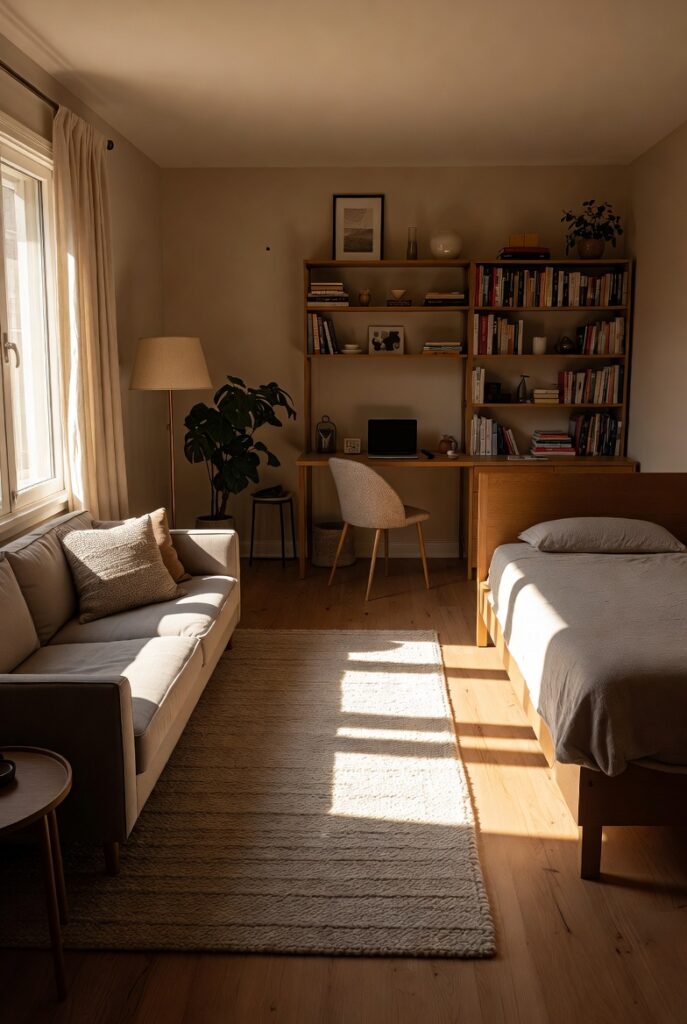
The number one challenge in any studio is this: how do you make one open room feel like it has a bedroom, a living room, and an office?
The answer is visual zoning. You don’t need walls you need cues that tell your brain “this is a different area now.”
- Use a large area rug to anchor your “living room” zone
- Switch up your ceiling light or add a floor lamp to signal a new area
- Change wall color or add a gallery wall behind just one zone
The takeaway: your eye reads changes in texture, color, and lighting as room boundaries even when there’s no physical wall there at all.
2. Let a Room Divider Do the Heavy Lifting
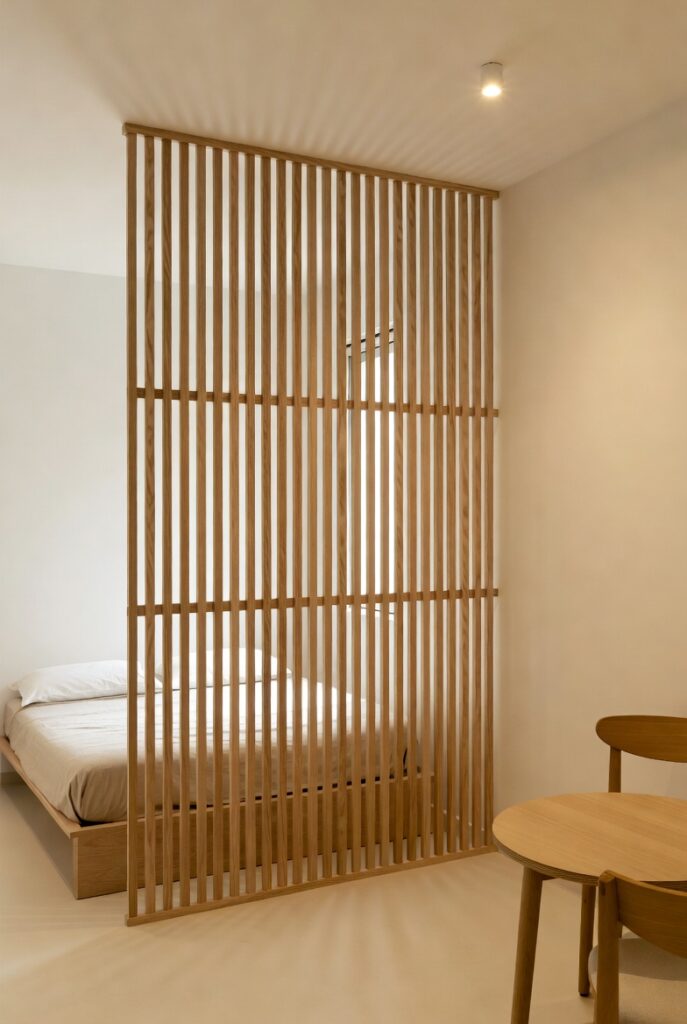
If visual cues aren’t enough, a physical (but still open) divider is your next move.
Open-back bookshelves, slim slat-wood screens, and even sheer curtains hung from ceiling track rods all separate a sleeping area from the rest of the apartment without blocking light or making the room feel boxed in.
Pinnable tip: sheer curtains from ceiling to floor create the illusion of a “window” at the foot of the bed, while still letting daylight flood the whole apartment.
3. Choose Furniture That Works Two Jobs, Not One
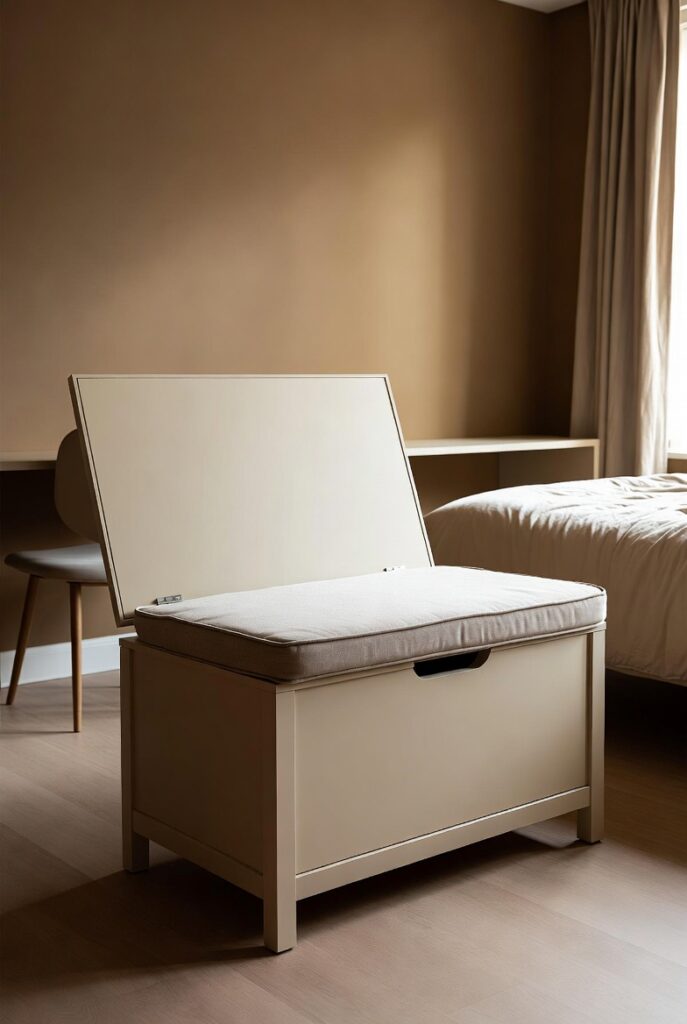
Here’s the thing: in a studio, every piece of furniture is competing for square footage. So every piece needs to earn its spot twice over.
Look for:
- A daybed or sofa bed instead of a separate sofa and bed
- An ottoman with hidden storage that also works as a coffee table
- A storage bench that doubles as an entryway seat and a place to stash shoes
Furniture that only does one job is furniture you don’t have room for anymore.
4. Go Vertical With Storage Your Walls Are Underused Real Estate
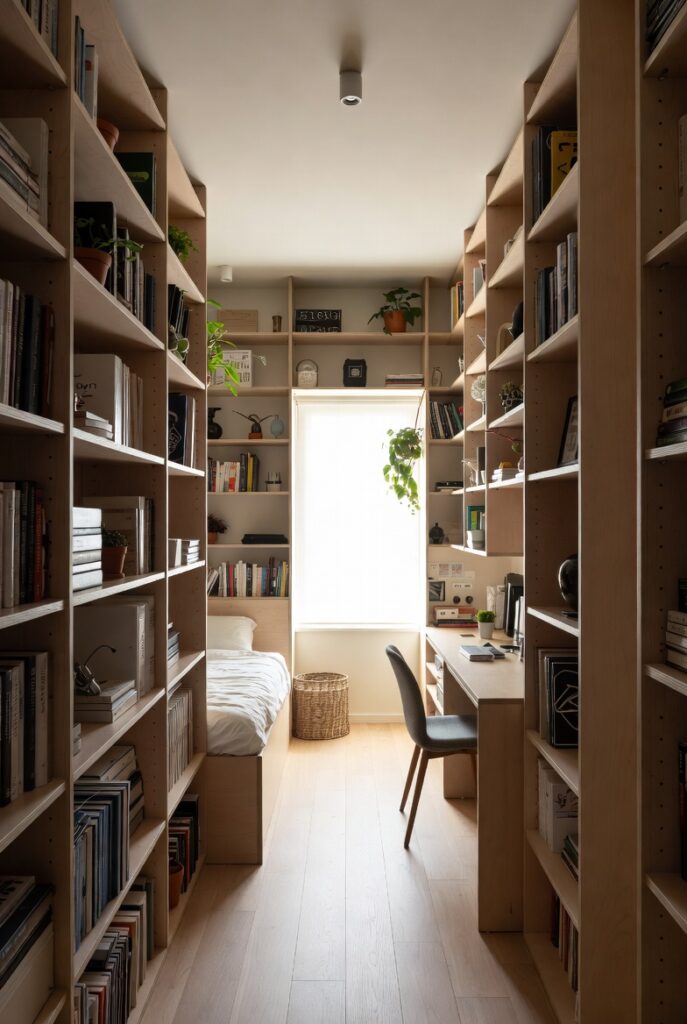
Most studio apartments run out of floor space long before they run out of wall space. So the fix is simple: stop storing things at eye level and start storing them up.
- Install shelving that wraps above doorways
- Use tall, narrow bookcases instead of wide, low ones
- Add a pegboard for kitchen tools, jewelry, or accessories so nothing sits on the counter
Vertical storage doesn’t just add capacity it draws the eye upward, which makes ceilings feel higher and rooms feel bigger.
Read Also: Nestly Home Deco
5. Build a “Cloakroom” Instead of Fighting for Closet Space
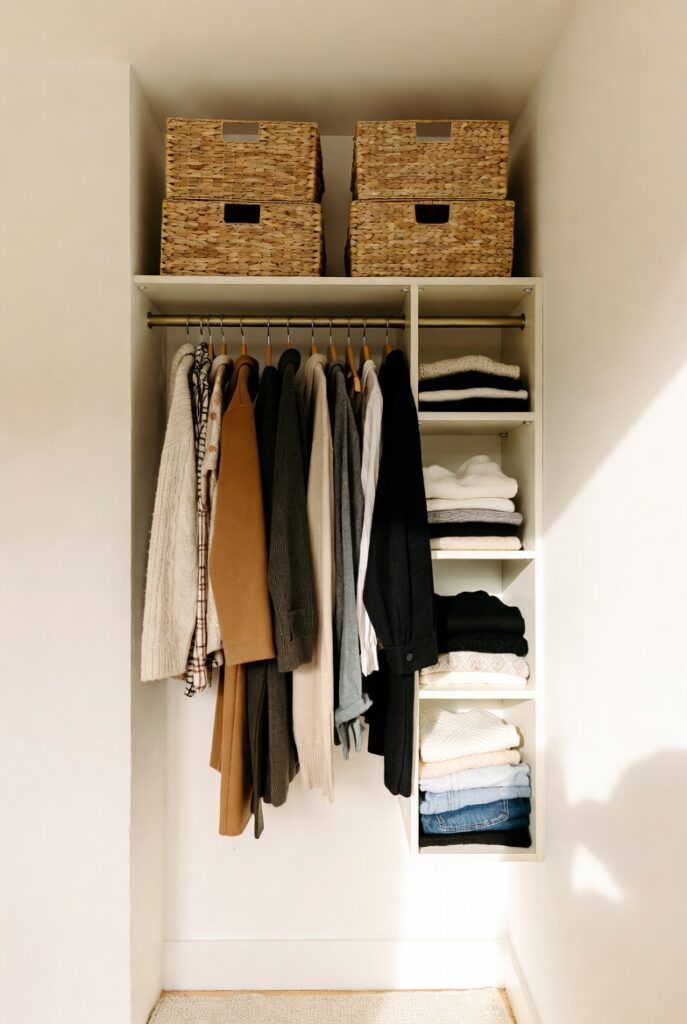
Closets in tiny studios are notoriously small sometimes nonexistent. Instead of cramming everything into one cramped space, build your own mini dressing area.
A freestanding clothing rack, stacked cube storage, and a few woven baskets can create more usable storage than a standard closet and if you don’t love the look of it exposed, hang a light curtain or a sliding door with a mirror on it to hide it instantly.
Bonus: that mirror does double duty too, reflecting light back into the room.
6. Use Mirrors Strategically, Not Just Decoratively
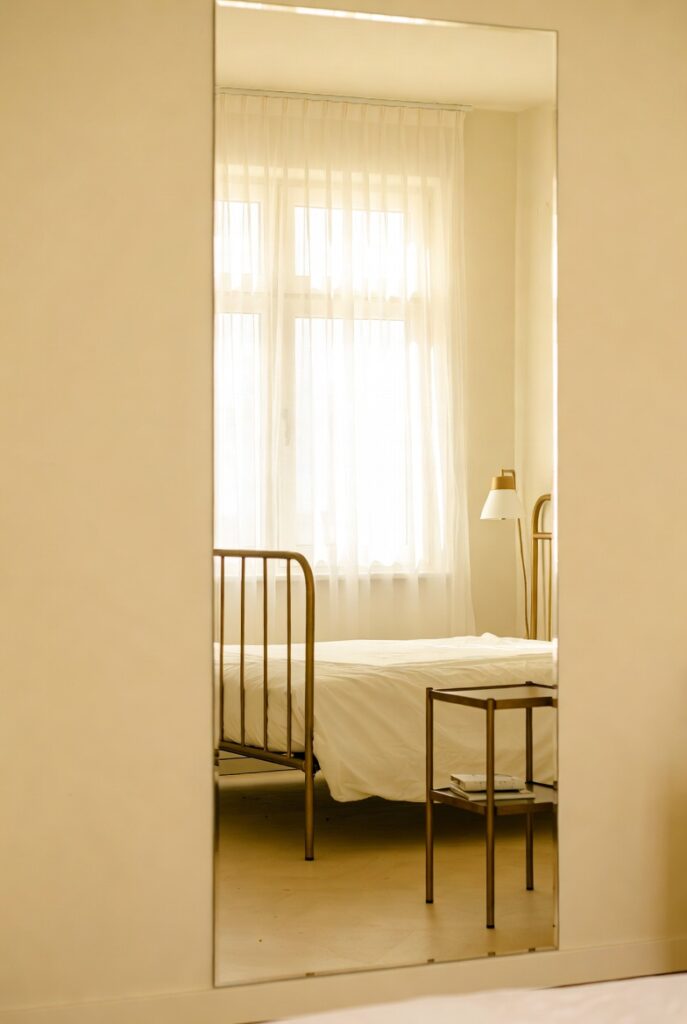
Speaking of mirrors this is one of the oldest tricks in small-space design, and it still works because it’s genuinely effective, not just trendy.
Placing a mirror directly across from a window bounces natural light across the entire apartment, instantly making it feel brighter and larger. A floor-length leaning mirror in a narrow gap between furniture pieces adds function without taking up real floor space of its own.
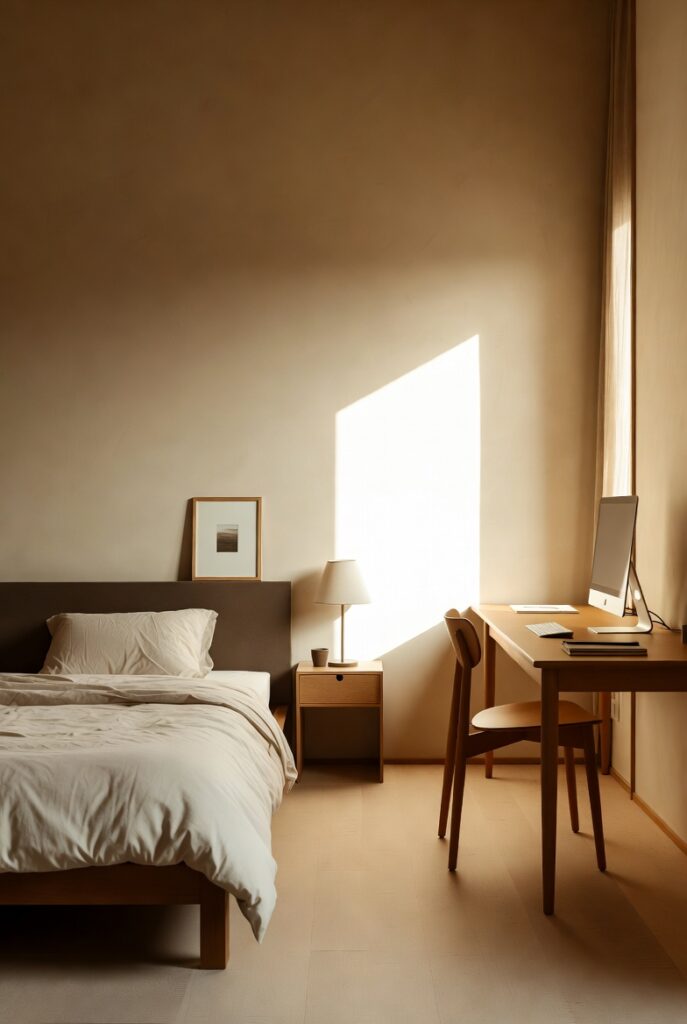
7. Commit to a Light, Cohesive Color Palette
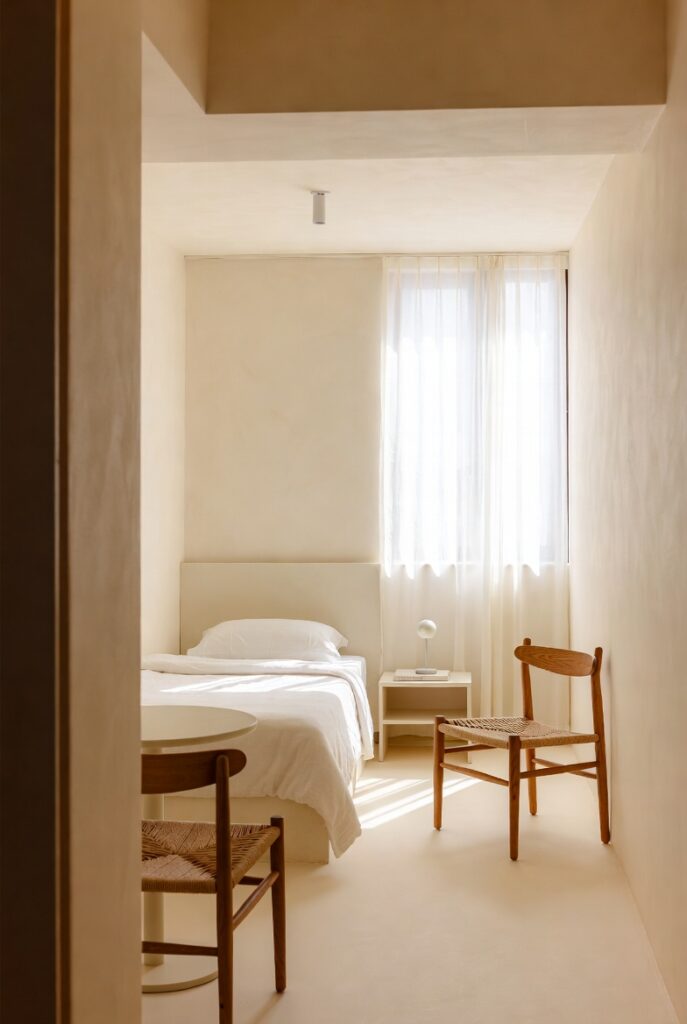
This is the tip most people underestimate and it might be doing more for your square footage than any piece of furniture ever could.
A palette of soft whites, warm neutrals, and pale wood tones amplifies whatever natural light your apartment gets, making walls feel like they’re pushed further back than they actually are. Dark, busy color schemes do the opposite they visually shrink a room by giving the eye too many stopping points.
That doesn’t mean boring. Add personality through:
- A bold rug
- Statement artwork
- One accent-colored piece of furniture
Just keep the walls and big furniture light, and let smaller pieces carry your personality.
8. Rethink Your Entryway With a Curtain, Not a Door
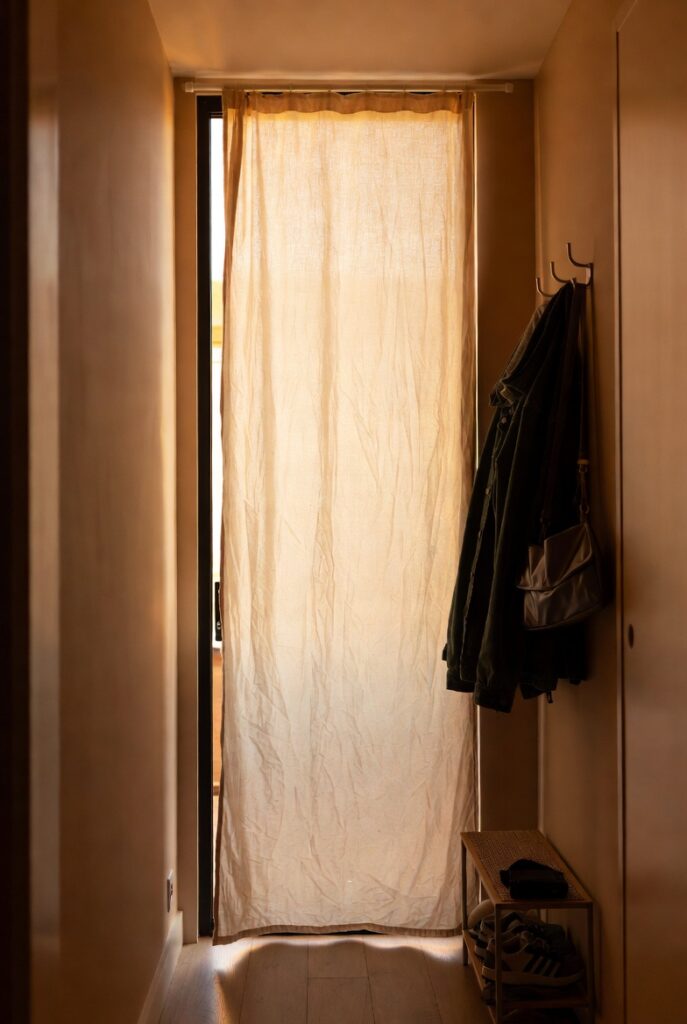
If your studio has a narrow entry closet with hinged doors, you already know how much walking space those doors eat up every time you open them.
Swap hinged doors for a curtain on a tension rod. It instantly frees up floor space for a slim console table the perfect landing spot for keys, mail, and your morning coat.
9. Choose a Bed That Stores as Much as It Sleeps
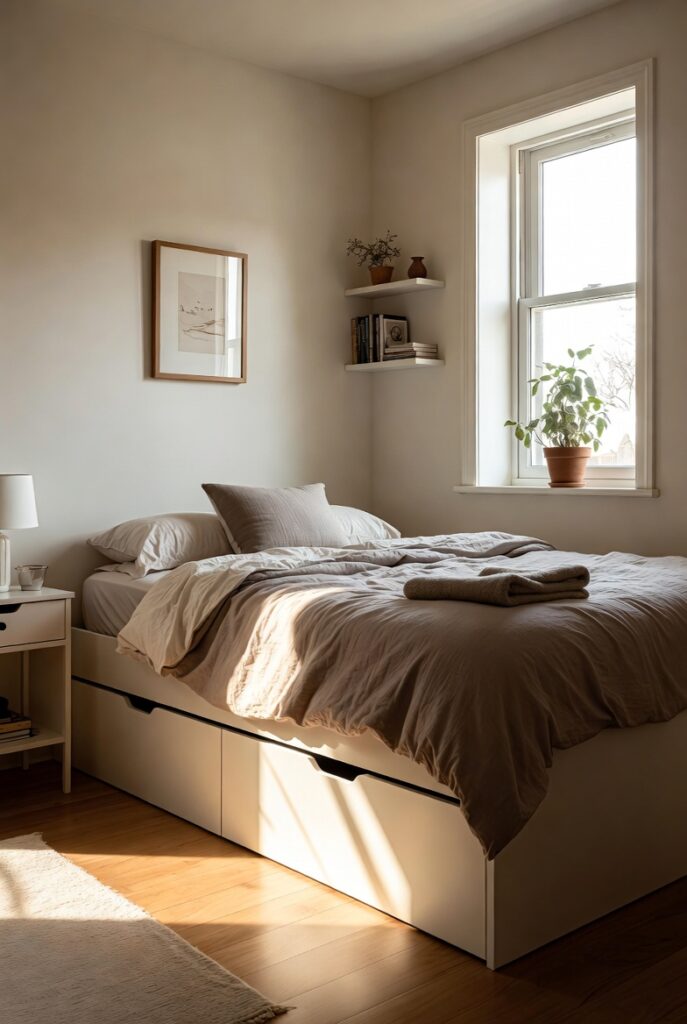
Since roughly a third of your life happens in bed, it deserves to be more than just a place to sleep.
Look for:
- A platform bed with built-in drawers
- A bookcase headboard for books, chargers, and bedside essentials
- If budget allows, a Murphy bed that folds away completely when not in use, freeing the entire footprint for daytime living
10. Create a Reading Nook in the Corner You’re Ignoring
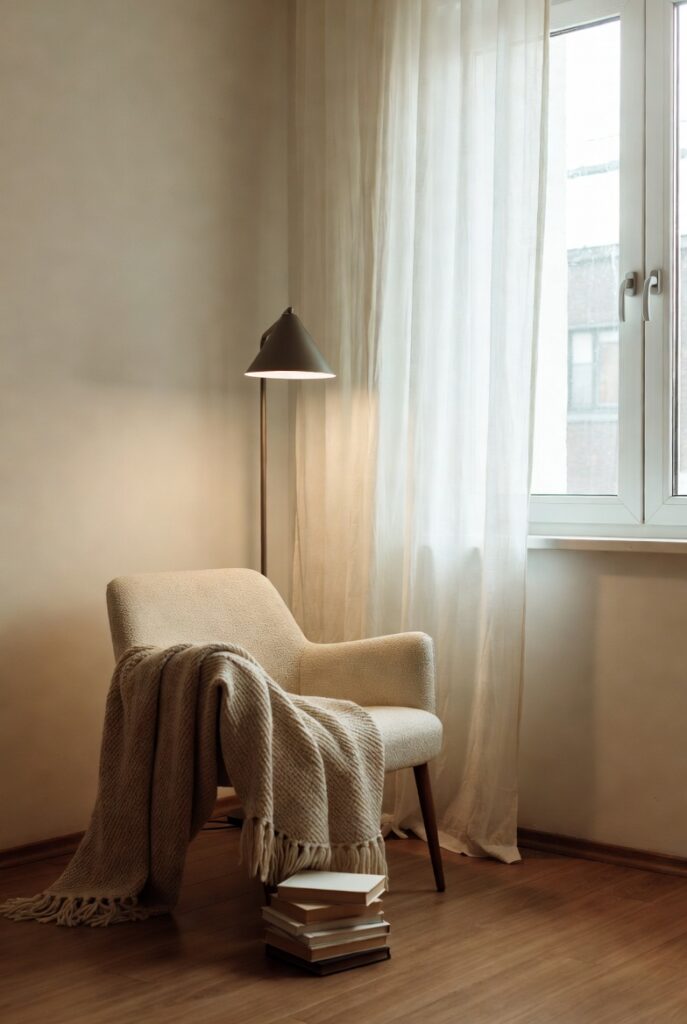
Every studio apartment has at least one “dead” corner an awkward, underused pocket of space. Instead of leaving it empty, turn it into a cozy reading nook.
A floor cushion, a small pendant light, and a hanging plant are all it takes to turn wasted square footage into your favorite spot in the apartment.
11. Add Architectural Interest to Awkward Wall Sections
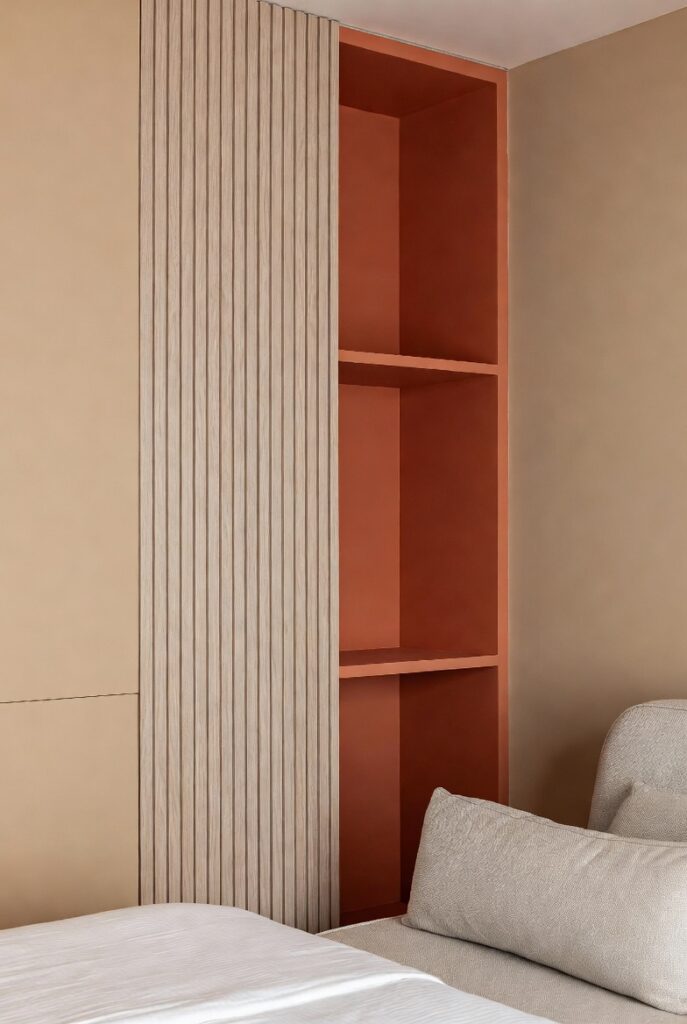
Studio apartments almost always have that one weird jutting wall or oddly shaped nook that doesn’t fit standard furniture. Rather than working around it, work with it.
Hang floating shelves or a slim console unit directly on that awkward section. It turns a design problem into a deliberate feature and adds storage you weren’t counting on.
12. Layer in Plants for an Instant, Affordable Upgrade
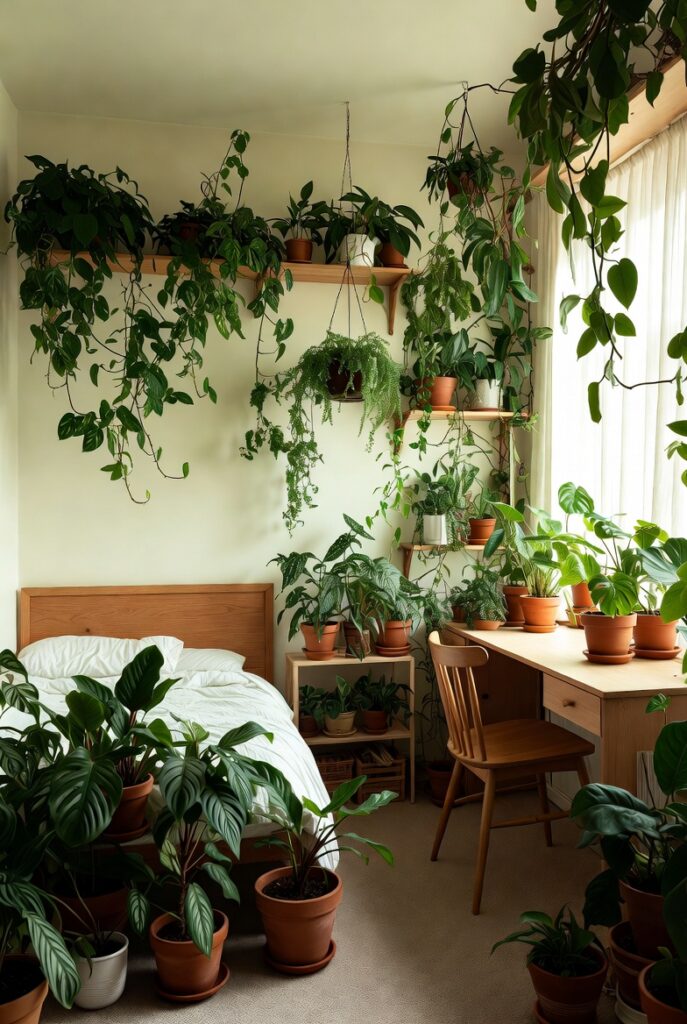
If there’s one “extra” purchase worth making in a small space, it’s greenery. Plants soften hard edges, add life to a neutral palette, and unlike most decor they don’t compete for floor space if you go with hanging planters or tall floor plants tucked into corners.
They’re also one of the most repeated, most-loved additions among people who’ve actually lived in and decorated tiny studios.
13. Keep a “One In, One Out” Rule for Everything You Own
This last one isn’t a design trick it’s a mindset shift, and it’s the reason every other tip on this list actually works long-term.
In a studio apartment, clutter isn’t just an eyesore. It’s a direct threat to how spacious your home feels day to day. Before anything new comes into your apartment, ask what’s leaving to make room for it. This single habit does more to preserve your hard-earned sense of space than any single piece of furniture ever could.
Frequently Asked Questions
How do you make a tiny studio apartment feel bigger?
Focus on light colors, strategic mirror placement, vertical storage, and visual zoning with rugs or lighting — all of which trick the eye into perceiving more space than physically exists.
What furniture is best for a small studio apartment?
Multi-functional furniture is essential: daybeds or sofa beds, storage ottomans, and beds with built-in drawers all help you avoid needing separate pieces for separate purposes.
How do you separate a bedroom from a living space in a studio?
Use open shelving units, curtain room dividers, or simply a rug and lighting change to visually zone the space without sacrificing natural light or square footage.
Do dark colors make a studio apartment look smaller?
Generally, yes. Dark, busy color palettes on walls and large furniture tend to visually shrink a small room, while light, cohesive palettes amplify natural light and openness.
Is a Murphy bed worth it in a small apartment?
For studios where daytime floor space is a priority, yes a Murphy bed can free up an entire room’s footprint when not in use, though it’s a bigger investment than a daybed or sofa bed.
Final Thoughts
A tiny studio apartment isn’t a limitation it’s an invitation to be intentional with every single item you bring into it. Start with one or two ideas from this list, whether that’s a bold mirror placement or finally committing to that light, cohesive color palette, and build from there.
Which tip are you trying first? Save this post so you can come back to it as you tackle your studio, one smart upgrade at a time.