
You keep buying books, but your apartment keeps staying the same size. Sound familiar? If you’ve ever stacked paperbacks on your windowsill because there was nowhere else to put them, this list was built for you.
Small spaces don’t mean small book collections they just mean smarter shelving. Below are 15 tiny bookshelf ideas that turn dead corners, blank walls, and awkward nooks into real storage, without swallowing your square footage. Stick around for the one at #9 it’s the trick most renters never think to try.
Save this pin now so you don’t lose it when you’re ready to shop or DIY.
1. Floating Wall Shelves
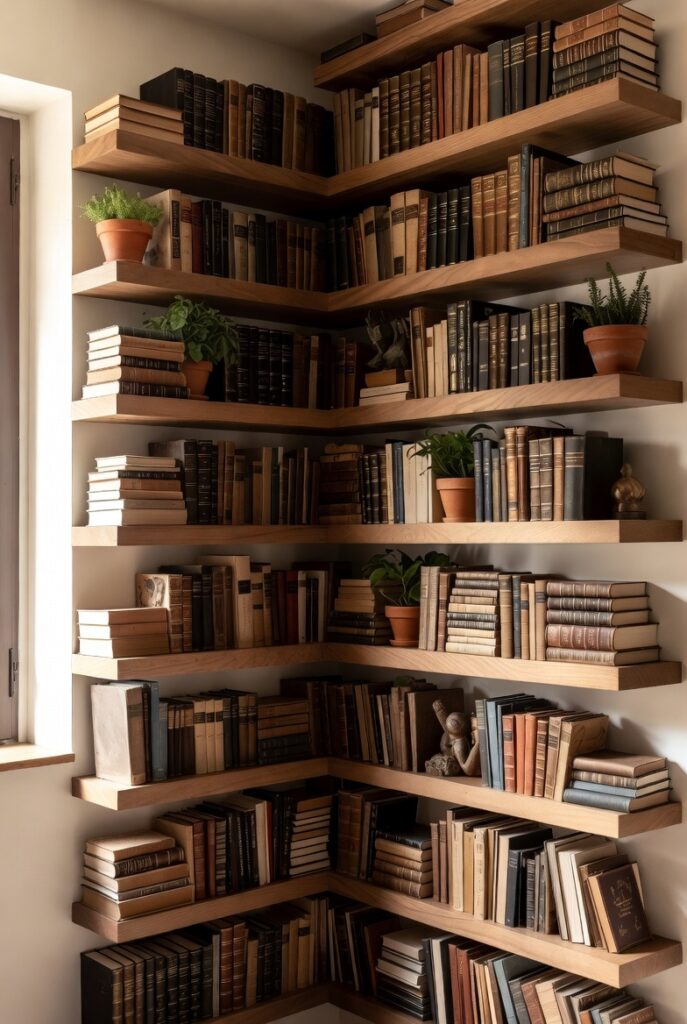
Floating shelves are the fastest way to add book storage without eating floor space. Because they appear to hang with no visible brackets, they keep a room feeling open and airy even when they’re stacked with hardcovers.
Why it works: You can stagger them at different heights, group them in a grid, or run a single long shelf above a doorway. They’re ideal for renters too, since most versions need only a few small wall anchors.
- Use 3-4 shelves in a staggered cluster for visual interest
- Keep spacing uneven for a designer look
- Mix books with a plant or framed print to break up the rows
2. Slim Ladder Bookshelf
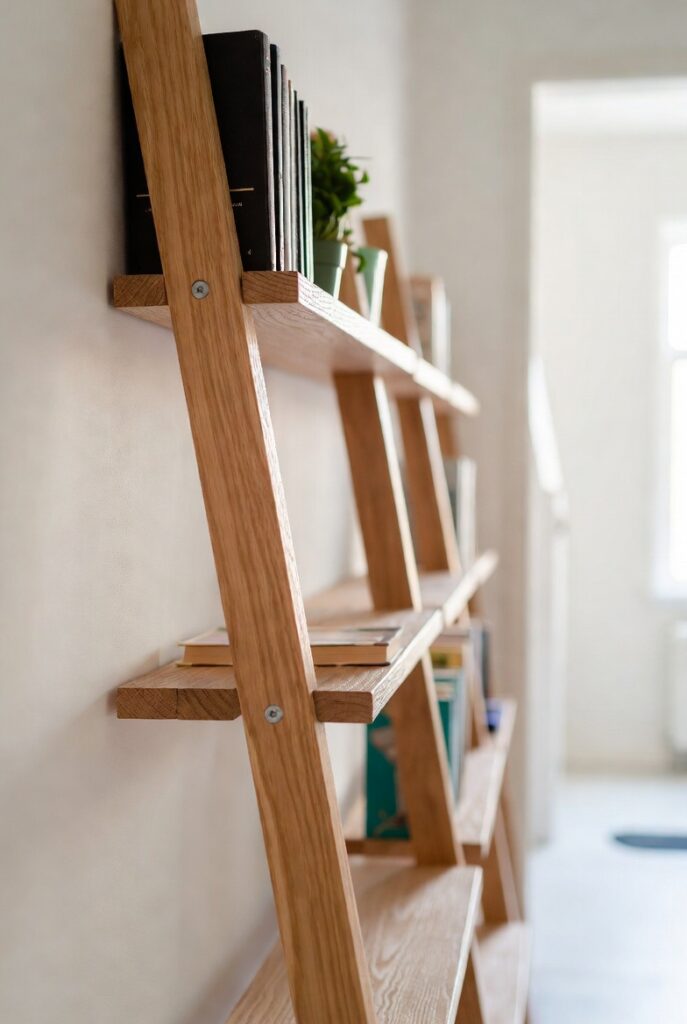
A ladder-style bookshelf leans against the wall instead of needing to be secured, which makes it perfect for apartments where drilling isn’t allowed. Its narrow footprint (often under 20 inches wide) tucks into gaps beside a couch or bed that would otherwise go unused.
Quick tip: Choose one with graduated shelf depths narrower at the top, deeper at the bottom so it doesn’t feel top-heavy in a small room.
3. Over-the-Door Shelf
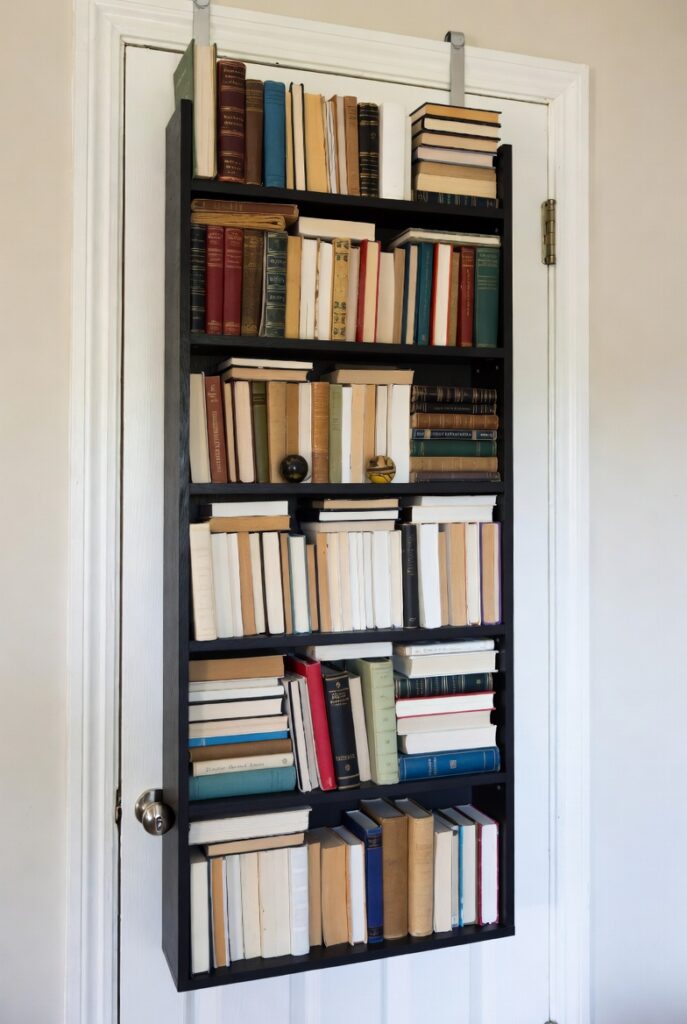
The back of a door is one of the most overlooked storage zones in any home. Over-the-door shelving units hook right onto the top of the door frame, need zero tools, and give you several extra cubbies without touching your walls.
Best for: Closets, bathrooms, and nurseries where floor space is at an absolute premium. Store your most-used books at eye level and everything else below.
4. Corner Bookcase
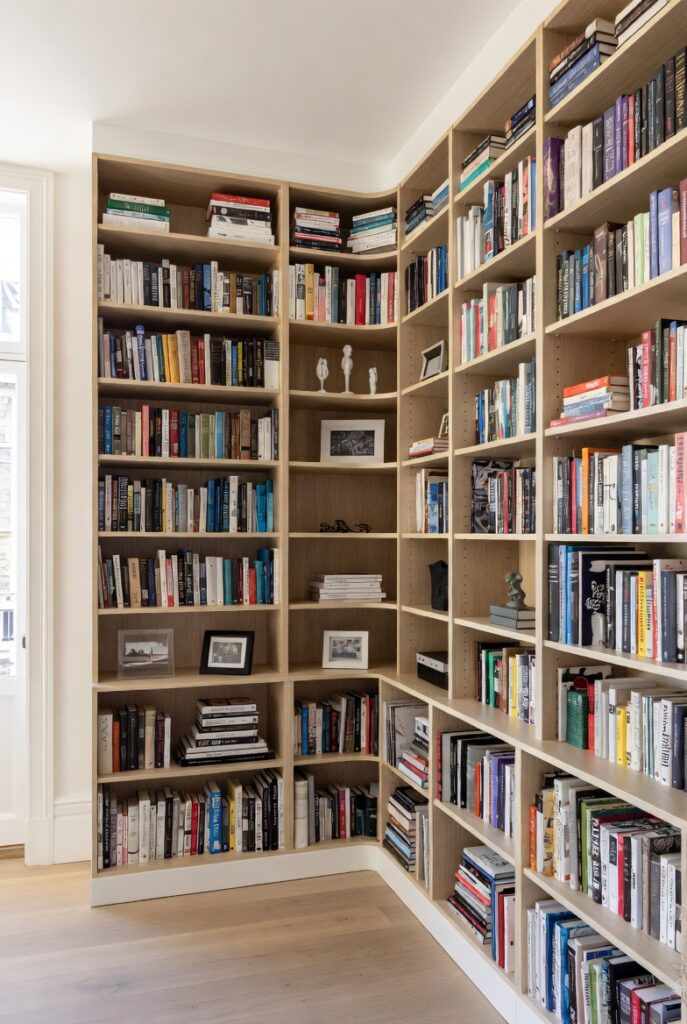
Corners are almost always wasted space, and a triangular corner bookcase fills that gap perfectly. Because it hugs the wall on two sides, it holds a surprising number of books while barely intruding into the room.
Design note: Open, airy corner units (rather than solid-backed ones) keep the space from feeling boxed in a small but important detail in a tight room.
Suggested image: a styled corner bookcase shot from a low angle to show its full height, with warm lighting.
Read Also: 13 Tiny Studio Apartment Ideas That Actually Make Small Feel Spacious
5. Bookshelf Headboard
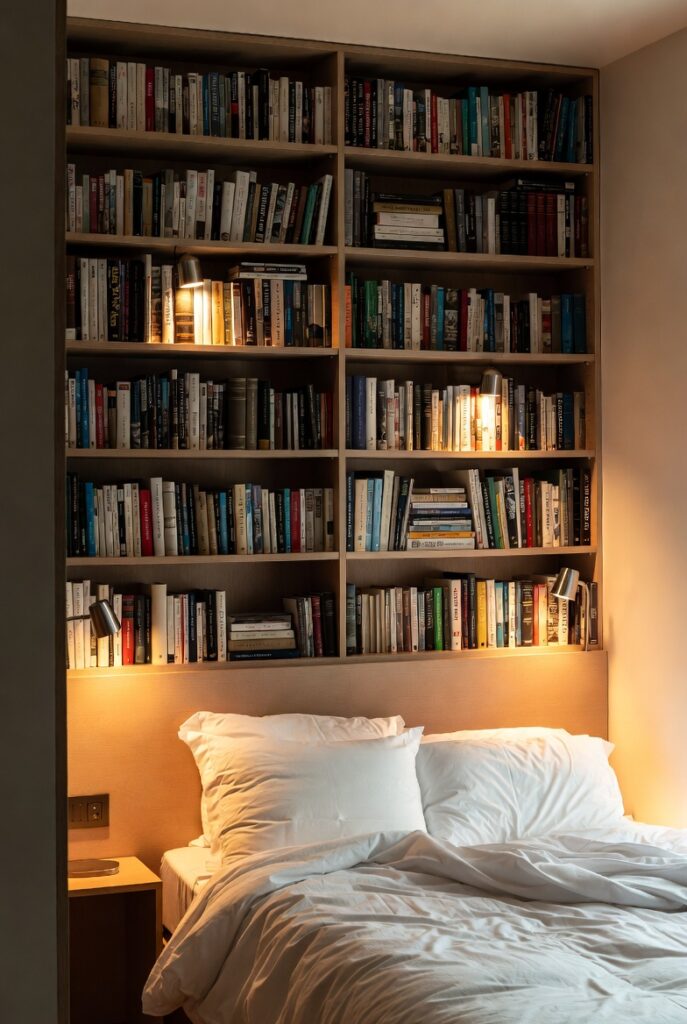
Turn your bed’s headboard into a bookshelf, and you’ve solved two problems with one piece of furniture: no nightstand pile, and no dedicated shelf unit needed.
How to style it: Add a small reading light tucked under the shelf, and use bookends or a low glass front so nothing tumbles onto you at 2 a.m.
Save-worthy tip: This idea works especially well in studio apartments where every piece of furniture needs to multitask.
6. Window Seat With Built-In Shelving
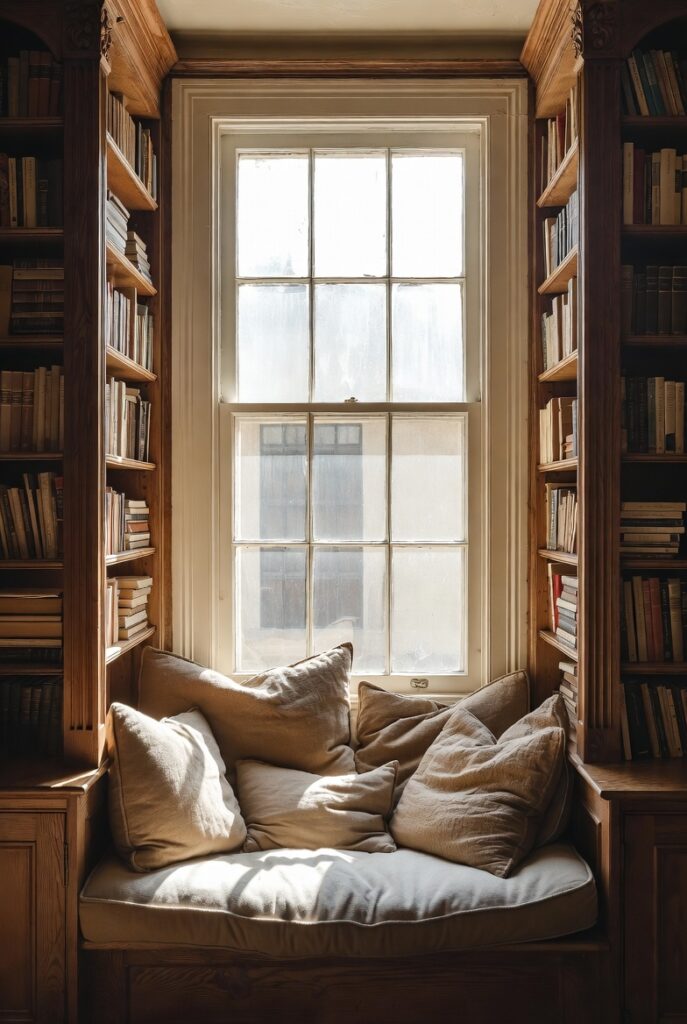
If you have a deep windowsill or a bay window, a window bench with shelving underneath (or built into the sides) is one of the most elegant tiny bookshelf ideas out there. You get a cozy reading nook and hidden storage in the same footprint.
- Add cushions on top for seating
- Use the underside cubbies for larger art books or box sets
- Frame the whole area with curtains for a true reading-nook feel
7. Rotating Bookshelf
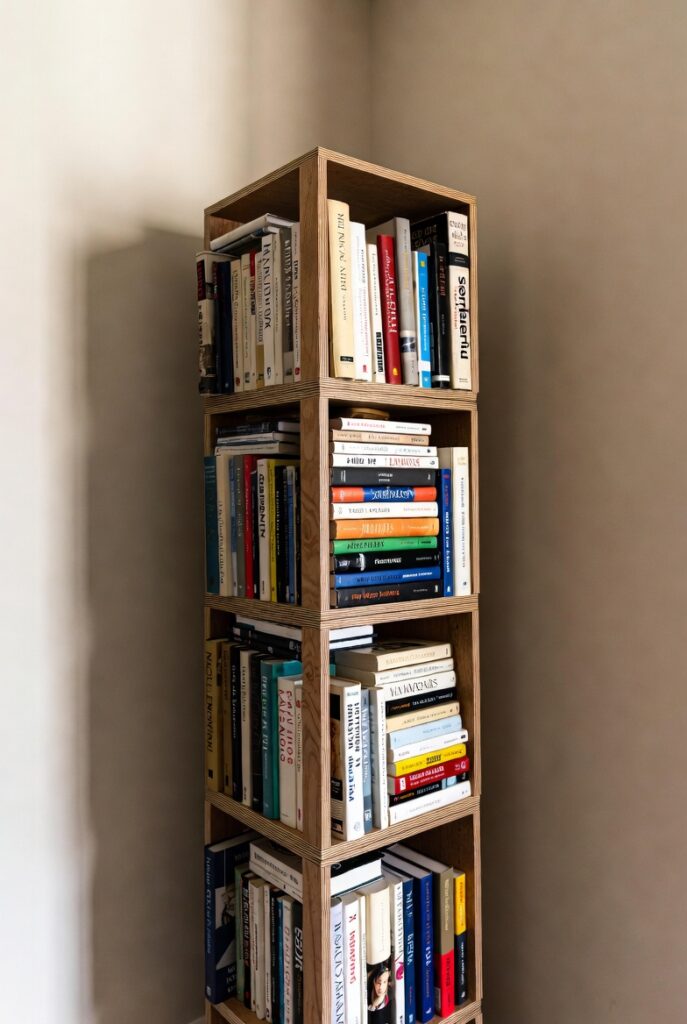
A rotating bookshelf sits low, doesn’t take up much horizontal space, and can double as a side table next to a chair or sofa. Because you spin it instead of walking around it, it works beautifully in tight corners where a traditional bookcase wouldn’t fit.
Bonus: Kids love these because every side is a new “surprise” of books.
8. Radiator Cover Bookshelf
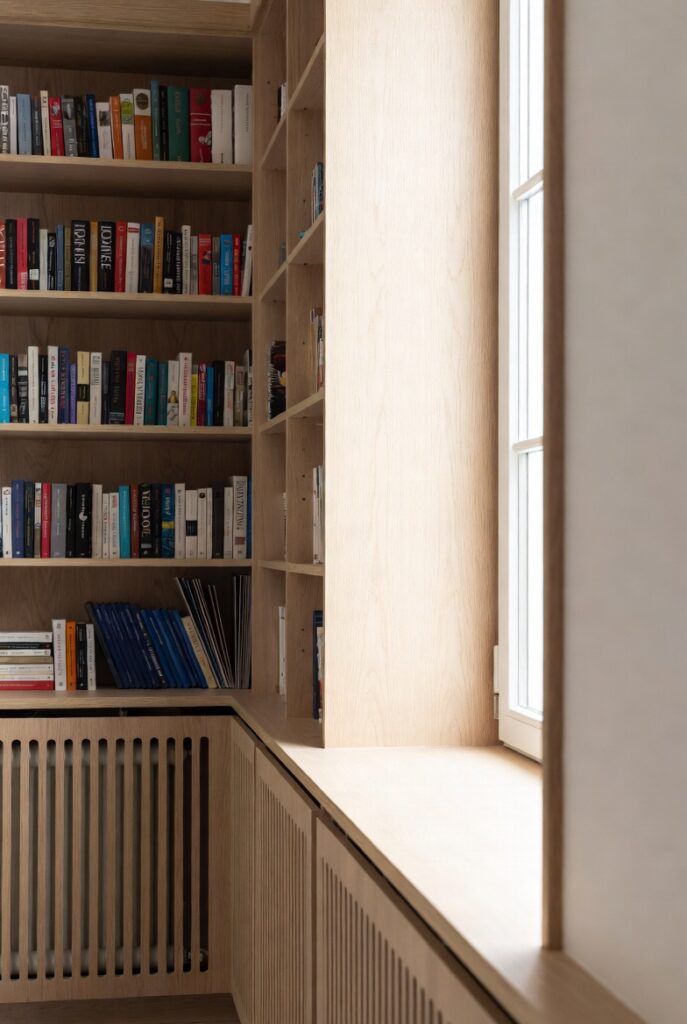
An often-skipped bit of real estate: the wall space directly above a radiator. Building or buying a cover with shelving on top turns dead, unusable space into a slim, functional bookshelf.
Safety first: Use heat-resistant materials and keep books a few inches back from the heat source.
9. Stair-Step or Under-Stairwell Cubbies
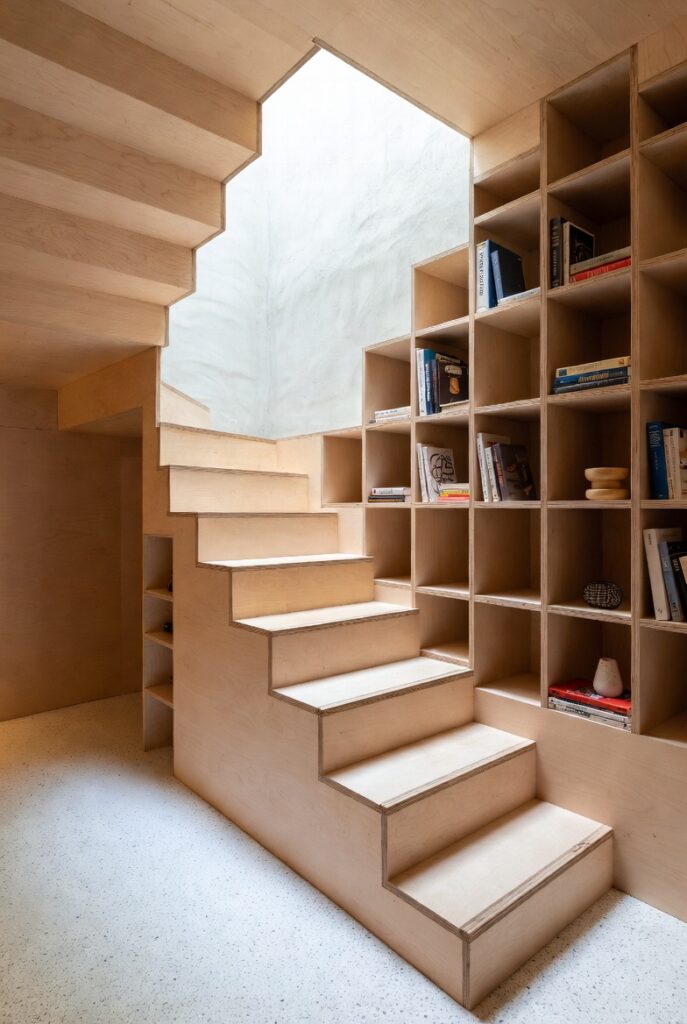
If your home has a staircase, the space underneath is almost never used to its full potential and that’s exactly why this idea gets overlooked. Open cubbies built into or under a stairwell create a sleek, built-in-looking bookshelf that makes use of a spot most people write off entirely.
Why it’s the best pick on this list: Unlike freestanding shelving, this option adds zero visual clutter to your main living area while holding dozens of books.
Suggested image: a vertical shot of stair-step shelving, styled with a mix of upright and stacked books.
10. Wooden Crate Shelving
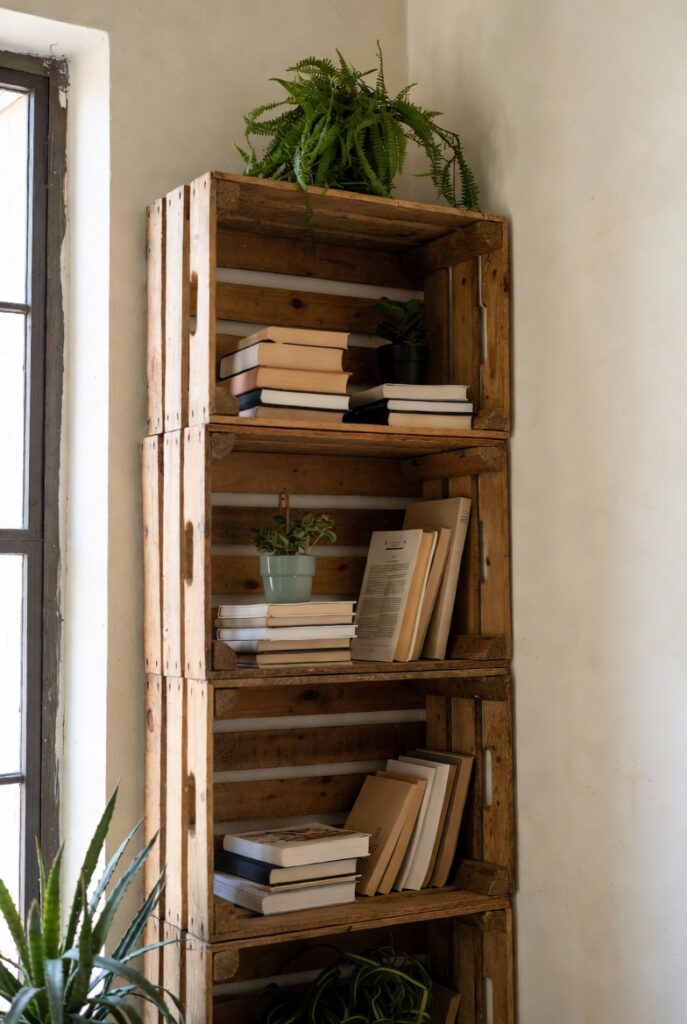
Mounted or stacked wooden crates are one of the most affordable, customizable tiny bookshelf ideas around. Because each crate is its own module, you can add more as your collection grows instead of committing to one fixed unit.
- Mix crate sizes for visual texture
- Sand and stain for a polished, less “DIY” look
- Label crates by genre for easy browsing
11. Narrow Vertical Book Tower
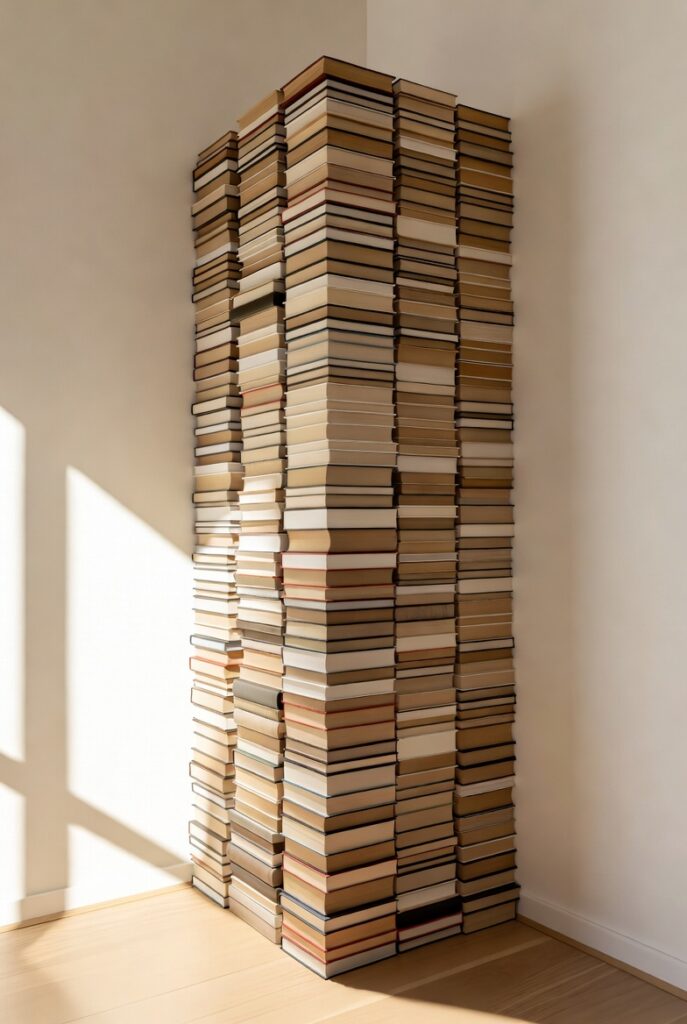
When floor space is nonexistent but you still need serious capacity, a tall, skinny book tower is the answer. Many hold 10-12 shelves in a footprint barely wider than a stack of books, so they fit beside a dresser, at the end of a hallway, or in an office corner.
Real talk: These towers are sturdier than they look just make sure heavier books go on the lower shelves to keep the whole thing balanced.
12. Desk-and-Bookshelf Combo
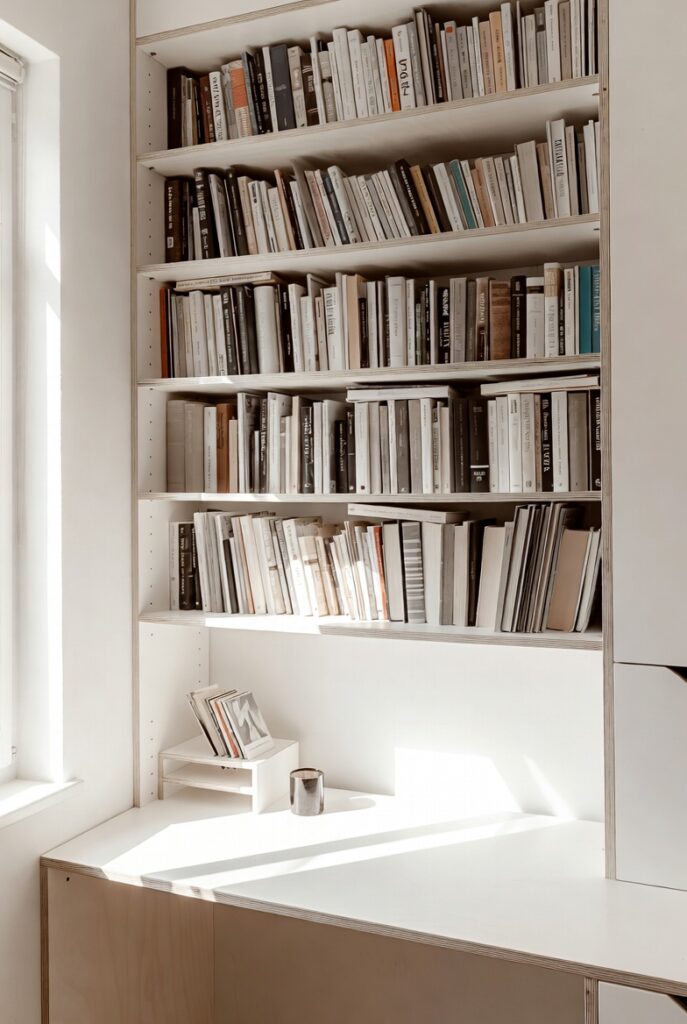
For anyone working from a small home office, a desk with built-in vertical shelving eliminates the need for separate furniture altogether. You get a work surface and book storage in one piece, which is a huge win when every square foot counts.
Best for: Studio apartments, dorm rooms, and shared home offices.
13. Side-of-Furniture Shelving
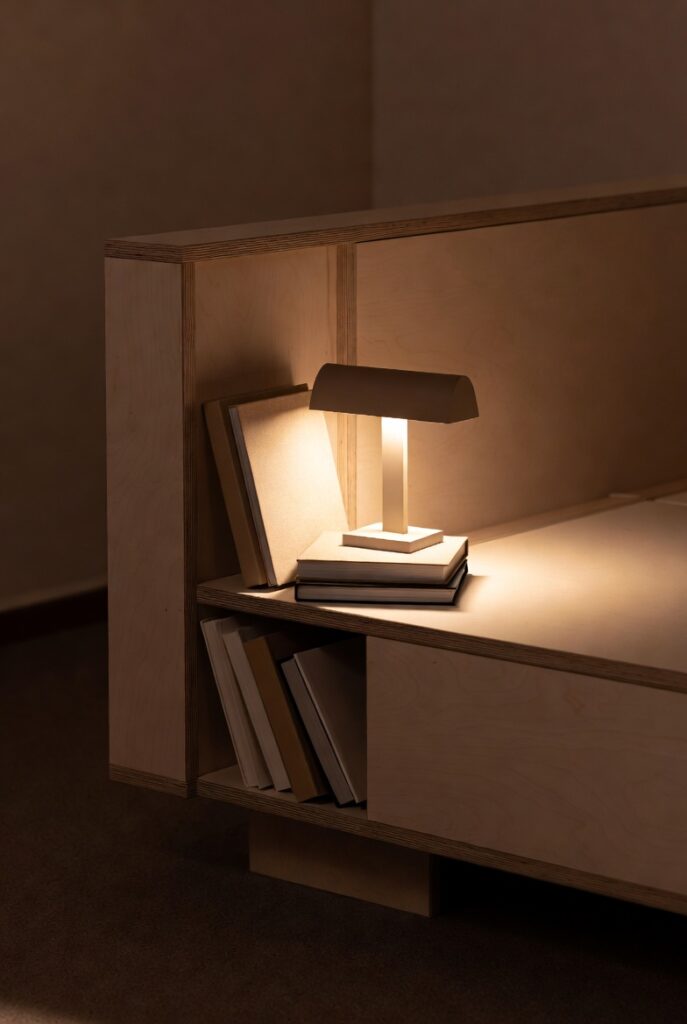
Don’t forget the sides of things you already own. The blank side panel of a dresser, kitchen cabinet, or bookshelf itself can hold a narrow vertical shelf or repurposed spice rack for slim paperbacks as long as there’s still room to walk past comfortably.
Save this trick for the moments when you’ve truly run out of wall and floor options.
14. Low Bookcase Room Divider
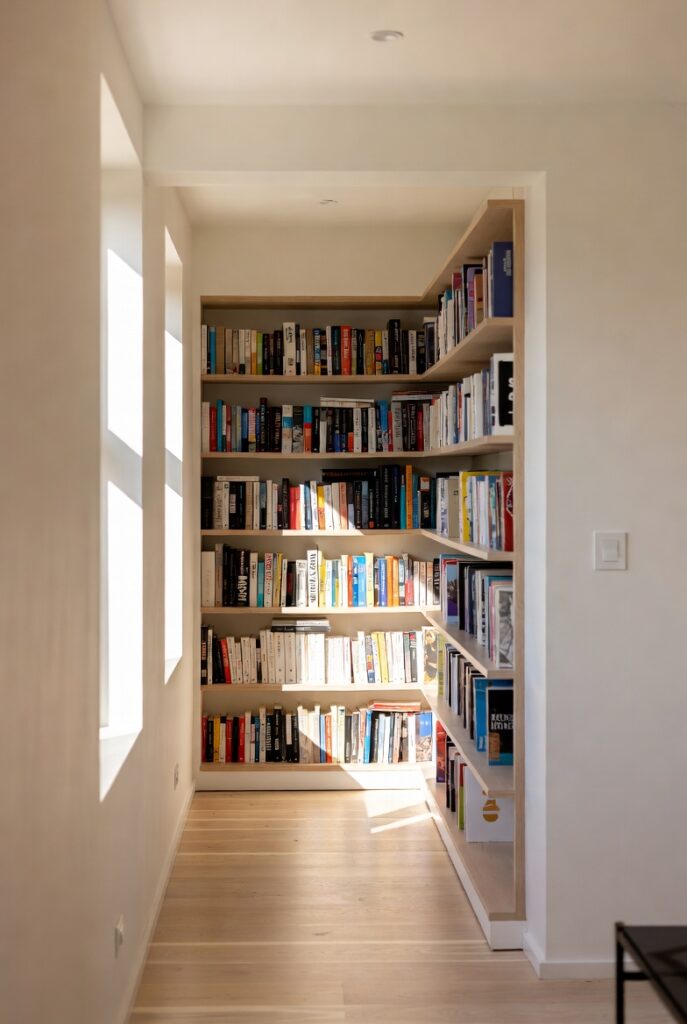
In a studio apartment or a shared kids’ room, a low, open-backed bookcase can separate two “zones” of a room while still letting light pass through and books stay visible on both sides. It’s storage and layout solved in a single move.
Design tip: Keep it under shoulder height so the room still feels open, not chopped in half.
Suggested image: a wide shot showing the divider in use, with distinct zones on either side (e.g., sleeping area vs. living area).
15. Tetris-Style Desktop Bookshelf
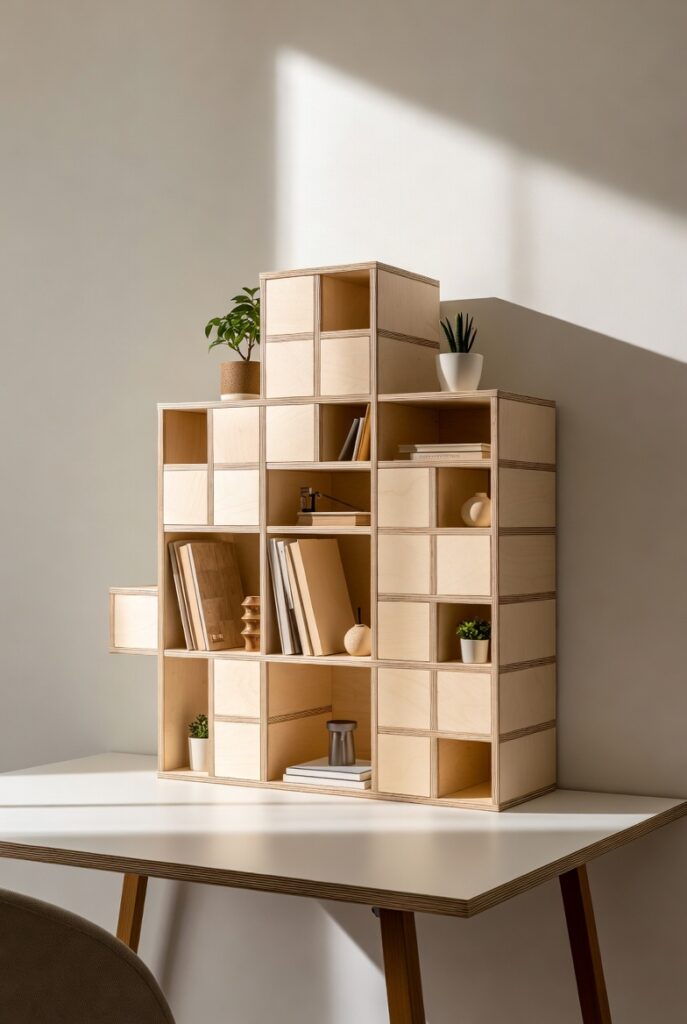
When there’s genuinely no floor or wall space left, a small modular desktop bookshelf fits right on a nightstand, end table, or corner of a desk. The interlocking, asymmetrical design holds more books than its size suggests and adds a modern, sculptural look to any surface.
Quick summary: This is the easiest entry point on the list no tools, no installation, just set it down and start filling it.
Frequently Asked Questions
What is the best bookshelf for a small apartment?
Floating wall shelves and slim ladder bookshelves tend to work best for small apartments because they use vertical wall space instead of floor space, and most require little to no permanent installation.
How do I store books if I have no bookshelf at all?
Look at unused vertical space first: above doorways, beside furniture, over a headboard, or the back of a door. Even a narrow shelf in one of these spots can hold a meaningful number of books.
Are floating shelves strong enough for heavy books?
Most floating shelves rated for books can hold 20-30 pounds per shelf when installed into wall studs. For hardcovers or larger collections, always check the weight rating and anchor into studs rather than drywall alone.
What’s a good tiny bookshelf idea for renters?
Ladder bookshelves, over-the-door units, crate shelving, and desktop bookshelves are all renter-friendly since they don’t require drilling into walls.
Final Thoughts
A small space doesn’t have to mean sacrificing your book collection it just means being intentional about where storage hides. Whether you go with a single floating shelf or build out an entire under-stairwell reading nook, the right tiny bookshelf idea can make your space feel bigger, not smaller.
Pick one idea from this list that fits your space today, and save this guide so you can come back to it as your collection grows.