
If your “mudroom” is really just a cramped corner by the back door where shoes multiply overnight and coats slide off hooks onto the floor, you are not alone and you don’t need extra square footage to fix it. Some of the most functional, good-looking entryways in real homes are barely wider than a hallway. The secret isn’t space. It’s smart layout, vertical thinking, and a few clever furniture choices that do double duty.
Below are 15 tiny mudroom ideas that prove a small entry can still handle muddy boots, backpacks, dog leashes, and everything else your family drags in the door without feeling like clutter central.
1. Go Vertical Before You Go Wide
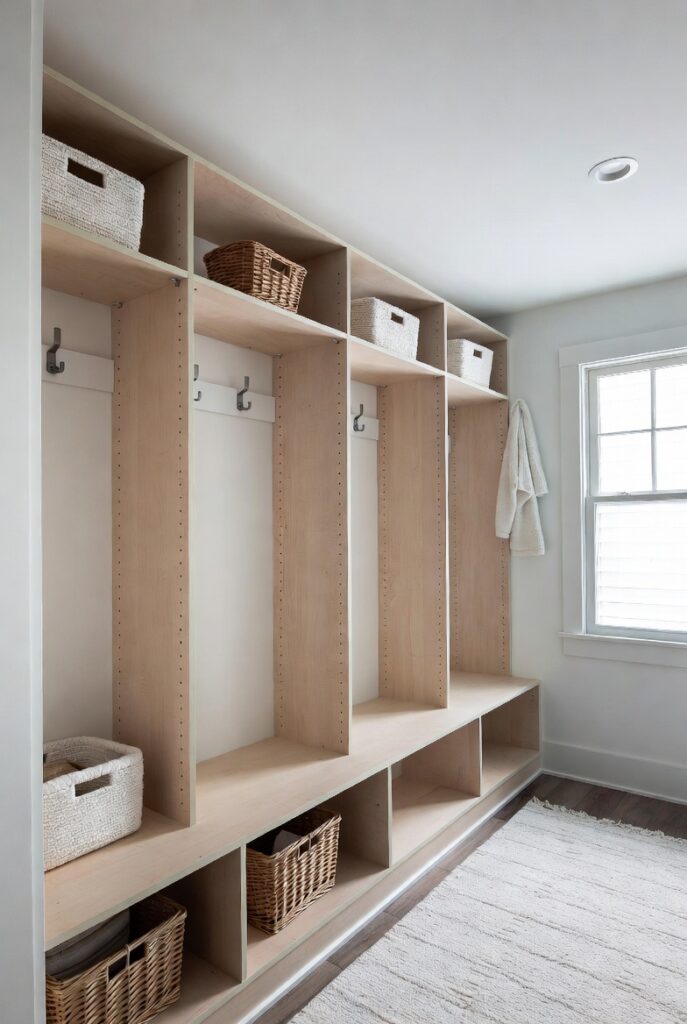
In a tiny mudroom, floor space is the scarcest resource you have, so the fix is to stop thinking in square footage and start thinking in cubic footage. Tall, narrow cabinets and floor-to-ceiling shelving units let you store far more than a low dresser ever could, while leaving the actual walking path clear. A slim column of shelves that’s only 12–16 inches deep can hold baskets, shoes, and seasonal gear without eating into the room.
Save-worthy tip: if you can only add one thing, add height. A mudroom that uses its ceiling is always more functional than one that only uses its floor.
2. Install a Peg Rail Instead of a Bulky Coat Rack
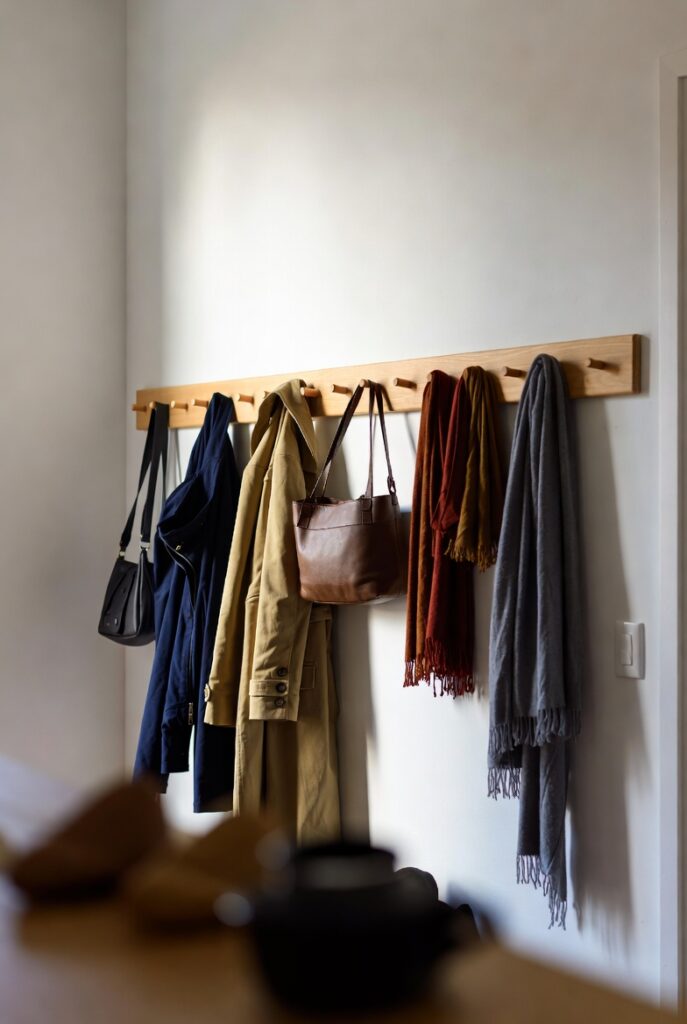
A single peg rail mounted at two different heights (one row for adults, one lower row for kids) takes up almost no depth and instantly solves the “where do coats go” problem. Unlike a freestanding coat tree, a peg rail is fixed flat to the wall, so it never intrudes into a narrow walkway. Add a few S-hooks and you’ve also got a spot for dog leashes, tote bags, and umbrellas.
3. Choose a Fold-Down or Slim Bench
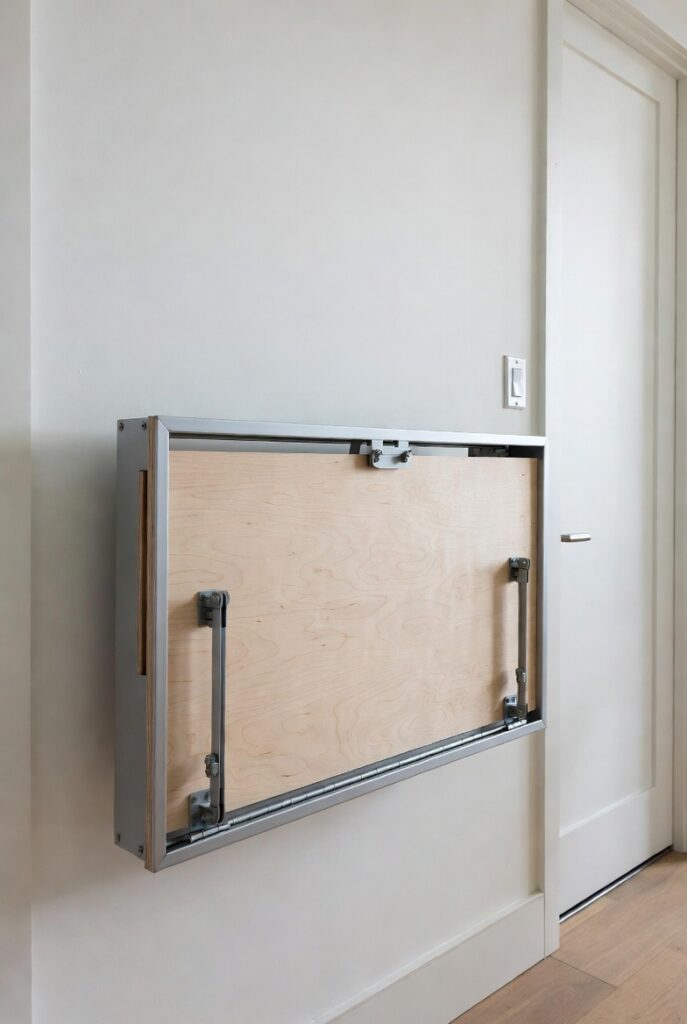
Seating is one of the trickiest things to fit into a small mudroom, but it’s also one of the most requested features nobody wants to balance on one foot while wrestling with a boot. A narrow bench (12–16 inches deep) tucked against a wall gives you a place to sit without blocking traffic. If space is truly tight, a wall-mounted, fold-down bench that tucks flat when not in use can free up the floor entirely between uses.
4. Let a Bench Double as Storage
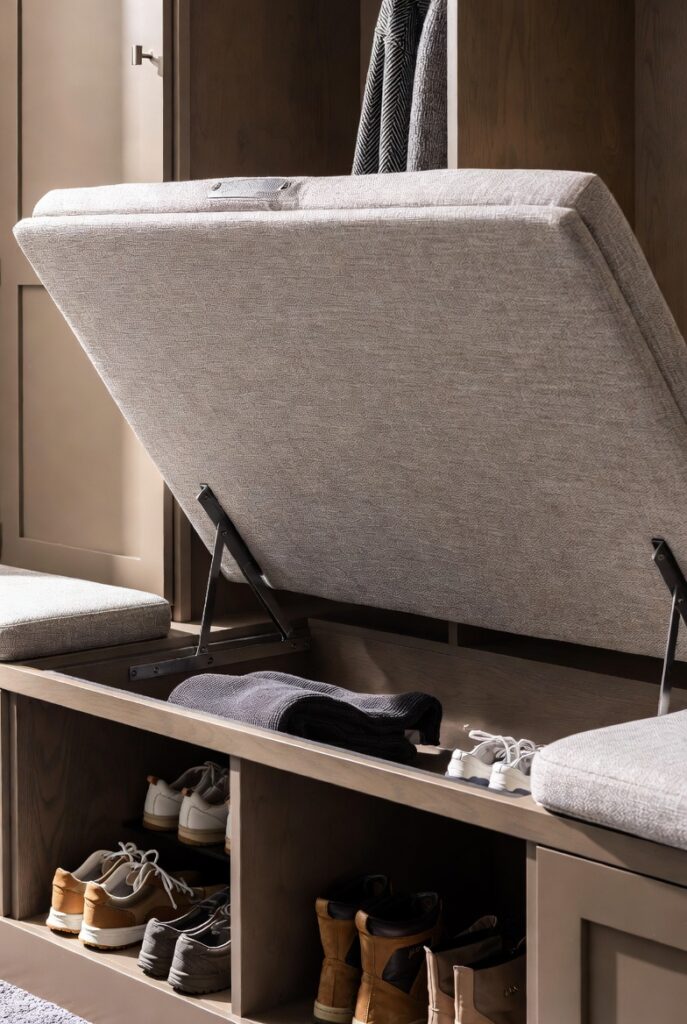
Whenever floor space is limited, every piece of furniture should earn its keep twice over. A bench with a lift-up lid or open cubbies underneath becomes seating and shoe storage in one footprint. This is one of the simplest small mudroom ideas to retrofit into an existing space, since many entryway benches on the market are already built this way.
Read Also: 15 Tiny Bar Cart Ideas That Prove Small Spaces Can Still Pour Big Style
5. Use Baskets and Bins for “Soft” Categories
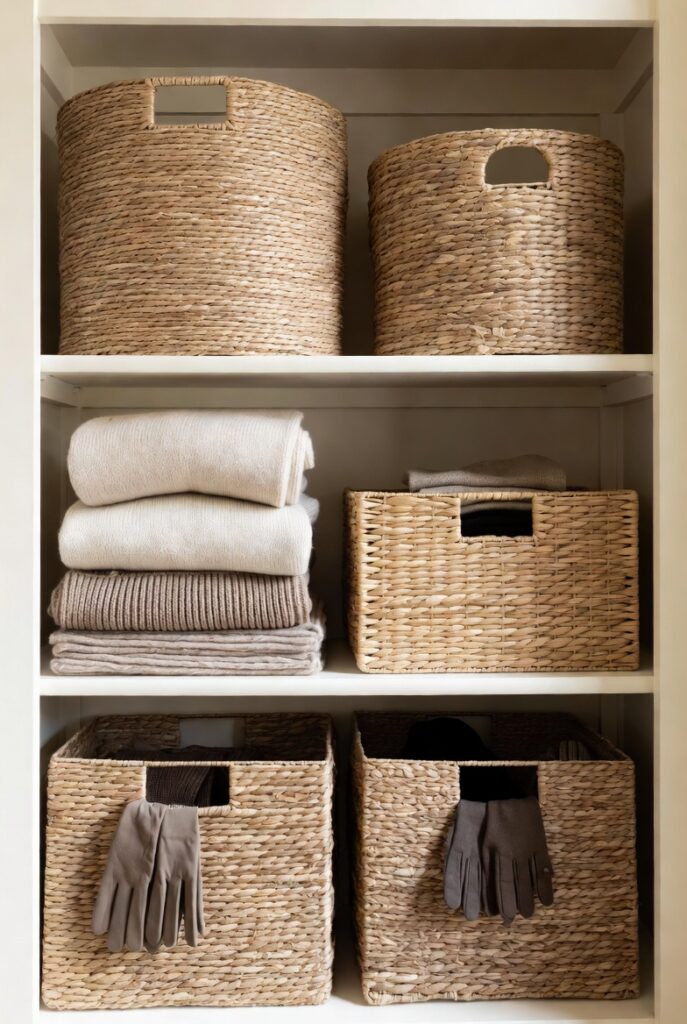
Not everything that lands in a mudroom needs a shelf of its own. Gloves, hats, scarves, and dog gear are easiest to manage in labeled baskets or bins rather than loose piles. Clear or open-weave bins let you see contents at a glance, while a simple label keeps everyone in the household including kids putting things back where they belong.
6. Create Personal “Stations” for Each Family Member
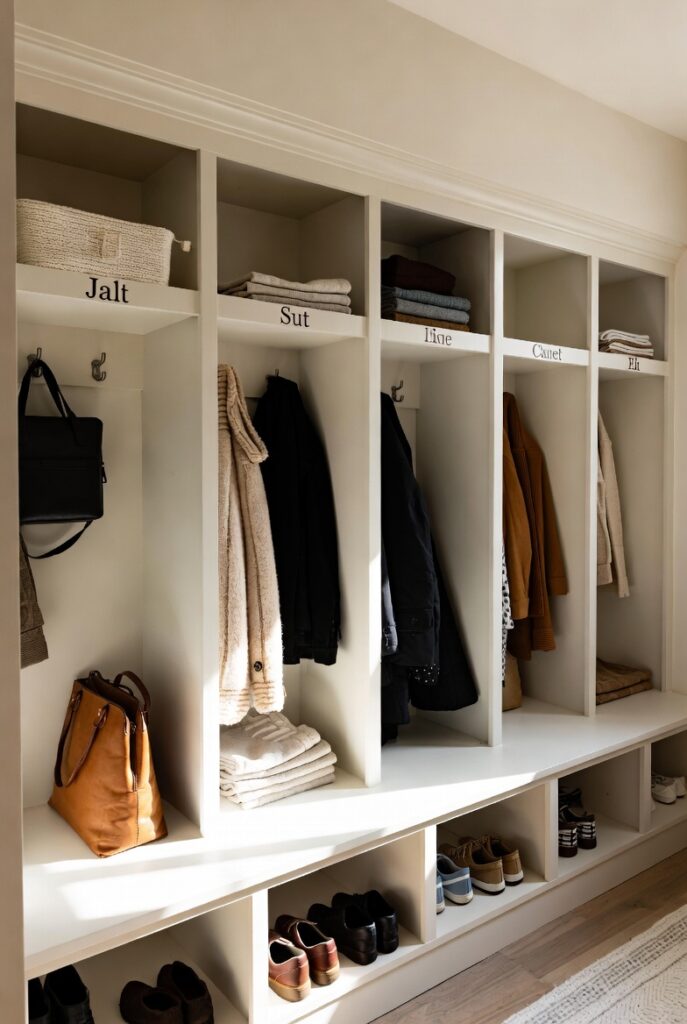
In a tiny mudroom shared by a whole family, chaos usually comes from everyone’s stuff blending into one pile. Assign a single hook, a small basket, and (if there’s room) a labeled cubby to each person. It doesn’t require extra square footage, just a smarter division of the space you already have and it makes it dramatically easier to spot whose muddy boots are still sitting out.
7. Add a Boot Tray Near the Door
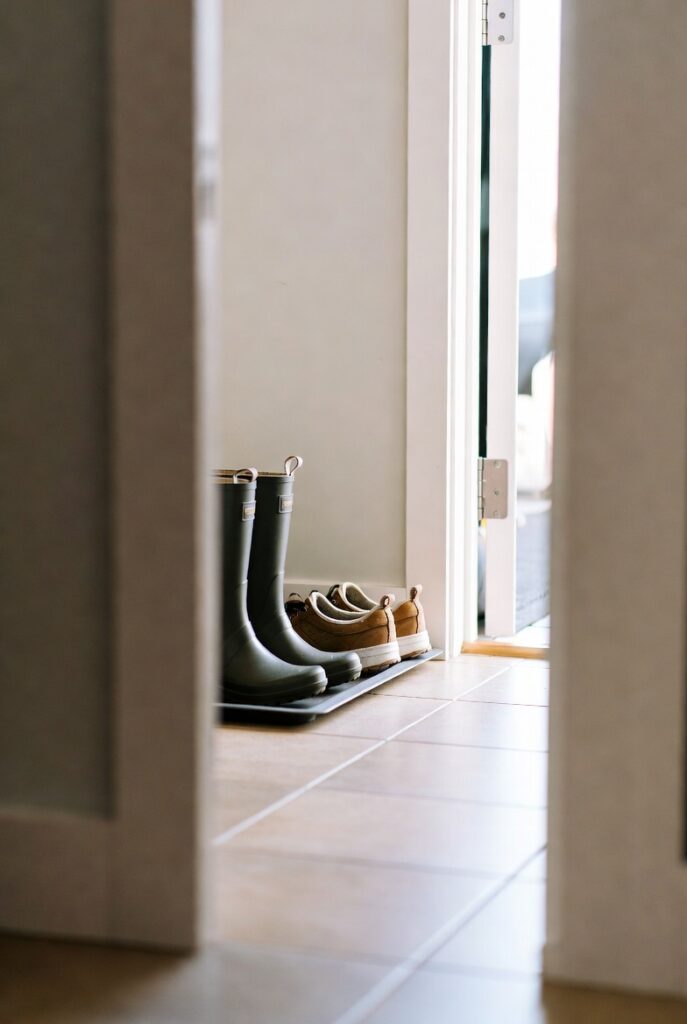
If you live somewhere with rain, snow, or mud, a boot tray by the entrance is one of the cheapest, highest-impact upgrades you can make. It catches drips and debris before they reach your floors, and it visually defines a “shoes off here” zone even in a mudroom with no walls of its own.
8. Use an Over-the-Door Organizer
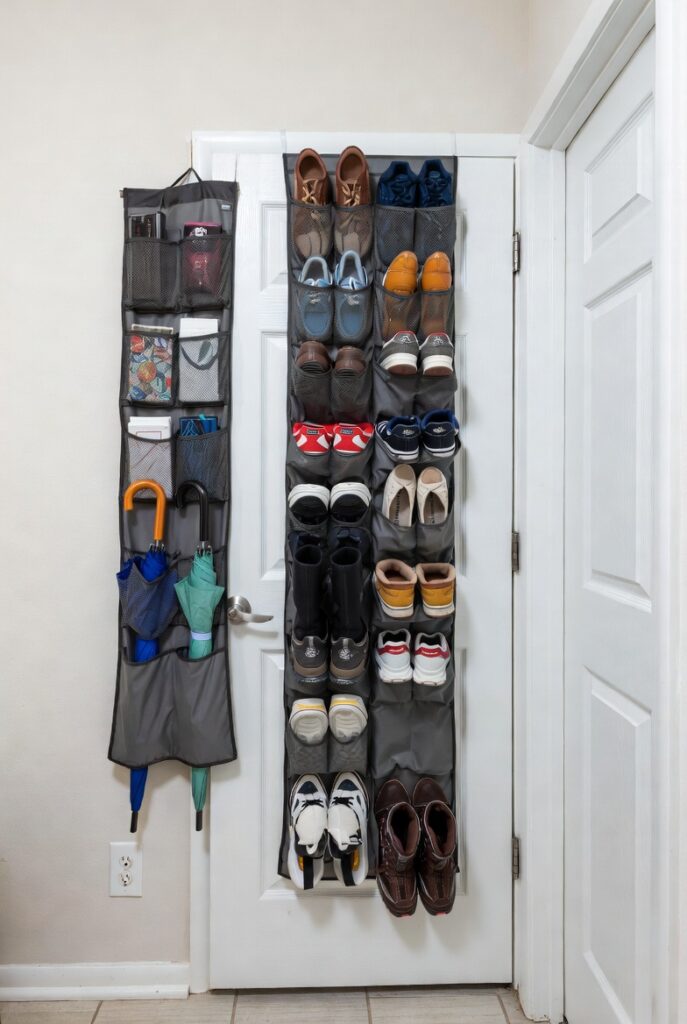
When there’s genuinely no wall space left, look at the door itself. An over-the-door organizer with pockets or hooks can hold shoes, cleaning supplies, or dog-walking essentials, and it installs without any permanent mounting ideal for renters or anyone borrowing a corner of a laundry room or closet for mudroom duty.
9. Borrow a Closet and Convert It
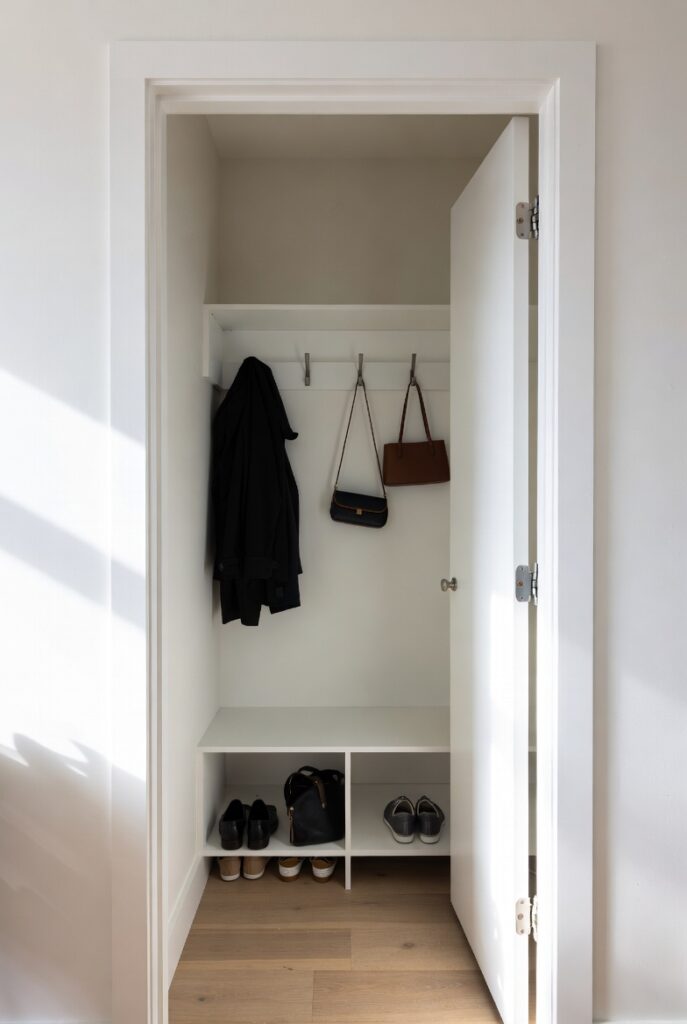
If your home doesn’t have a dedicated mudroom, a small coat closet near the entry can often be repurposed. Swap the single closet rod for a shorter rod plus shelving above and shoe storage below, and add hooks to the inside of the door. This “hidden mudroom” approach keeps clutter out of sight when guests come over, while still giving your family a real system.
10. Try a Slim Shoe Cabinet Against the Wall
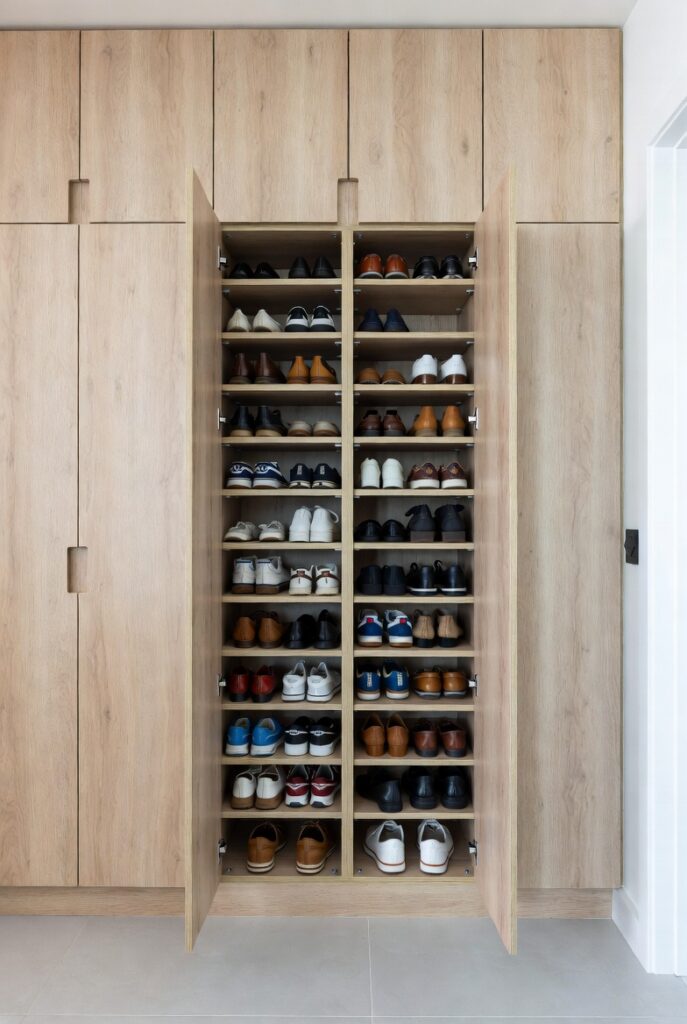
Wire racks work, but a slim, wall-hugging shoe cabinet (often just 8–10 inches deep) looks more polished and keeps shoes fully out of view. These cabinets are especially useful in a mudroom that doubles as the first thing guests see when they walk in, since closed storage always reads as calmer than open shelving.
11. Use a Stackable Washer and Dryer to Reclaim Floor Space
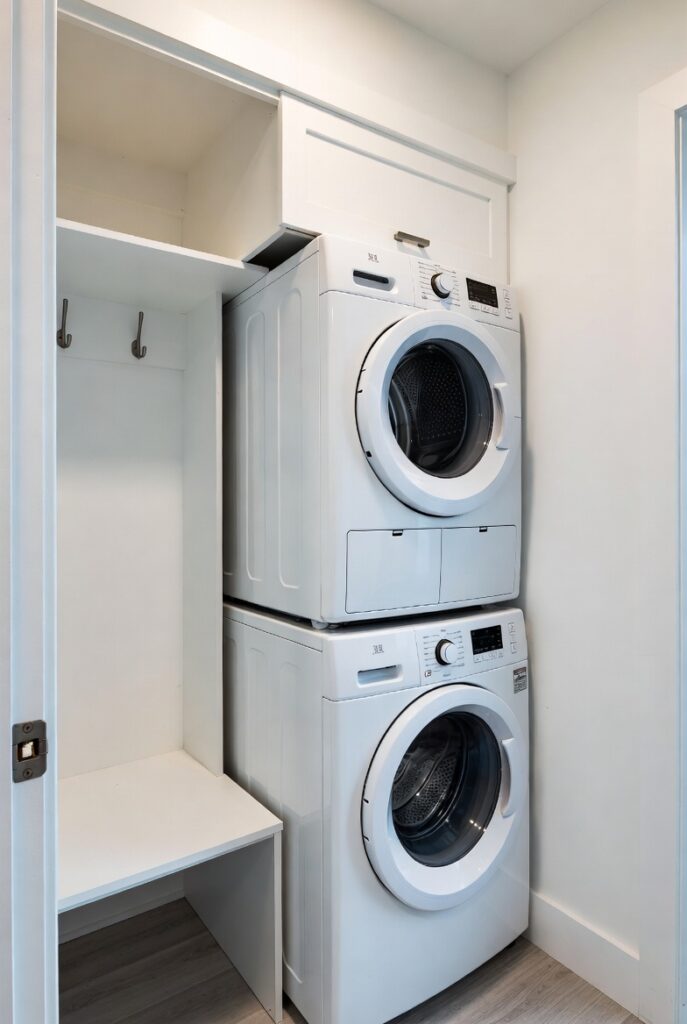
If your mudroom pulls double duty as a laundry area, a stackable or combo washer-dryer unit can save an enormous amount of footprint compared to side-by-side machines. That reclaimed space can go straight into a narrow bench, extra hooks, or a folding counter genuinely one of the best space-saving upgrades for a combined mudroom-laundry room.
12. Define the Space With Flooring or Paint, Even Without Walls
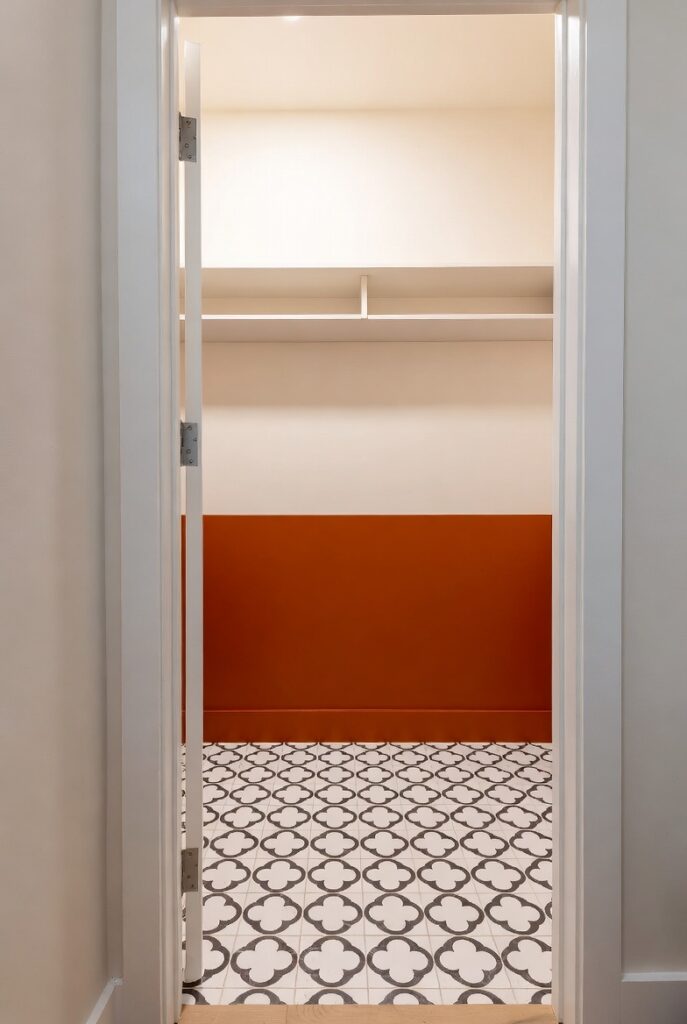
Many small mudrooms aren’t separate rooms at all they’re a corner of a living room, kitchen, or hallway. You can still make the area feel like its own zone by changing the flooring material (tile in the entry, transitioning to wood elsewhere) or using a distinct paint color on that section of wall. A well-placed rug does the same job instantly and adds a cozy, decorative touch.
13. Make the Awkward Space Under the Stairs Work for You
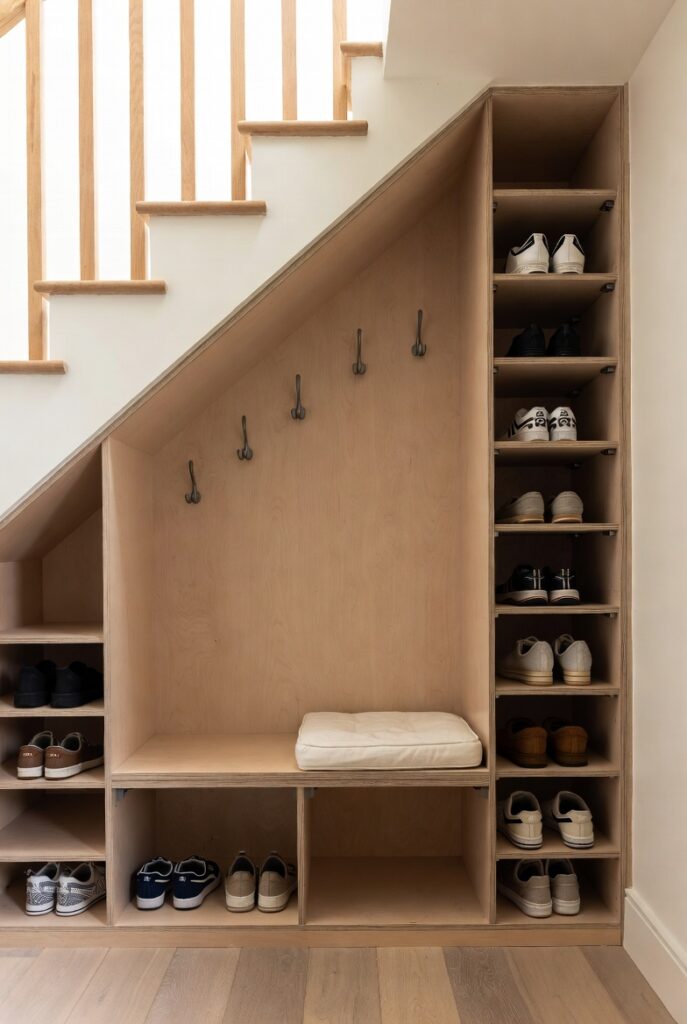
If you have stairs near your entry, the space underneath is one of the most overlooked storage opportunities in the house often worth 15 to 30 square feet you’re not currently using. A bench in the tallest section, hooks along the slanted wall, and low bins or baskets in the shortest part can turn a dead zone into a fully functional tiny mudroom.
14. Keep the Color Palette Simple and Cohesive
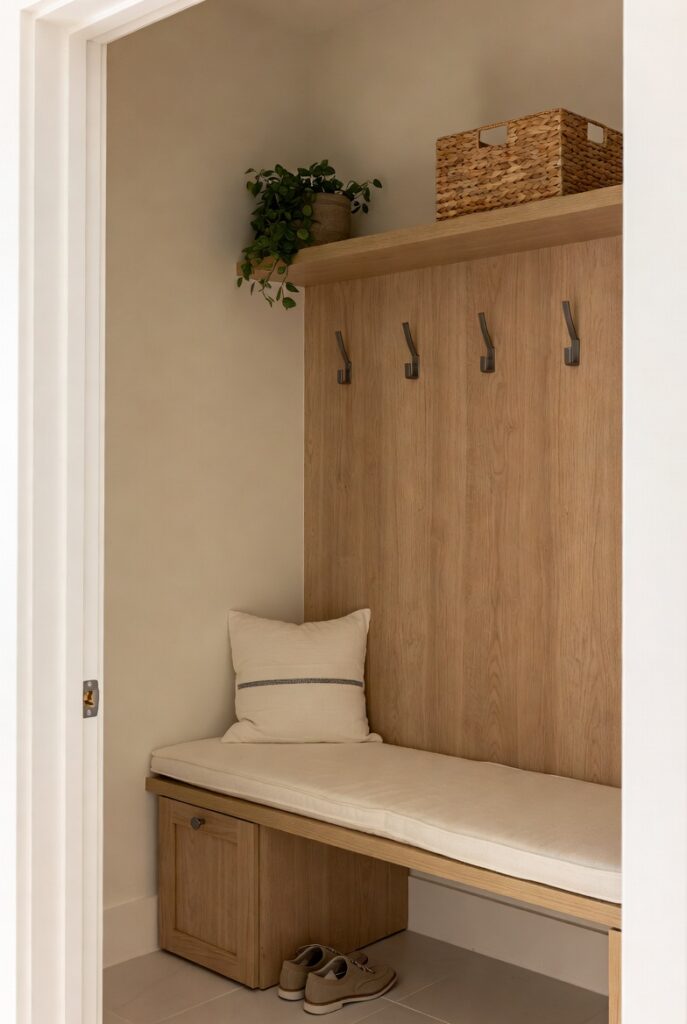
In a small space, busy patterns and mismatched finishes make the room feel more chaotic and more cramped. Sticking to one or two colors say, a soft neutral wall paired with warm wood tones makes a tiny mudroom feel intentional rather than like leftover space. If you want a bolder look, save it for one accent wall or a single wallpaper panel rather than the whole room.
15. Add a Mirror or Light Source to Open Up the Room
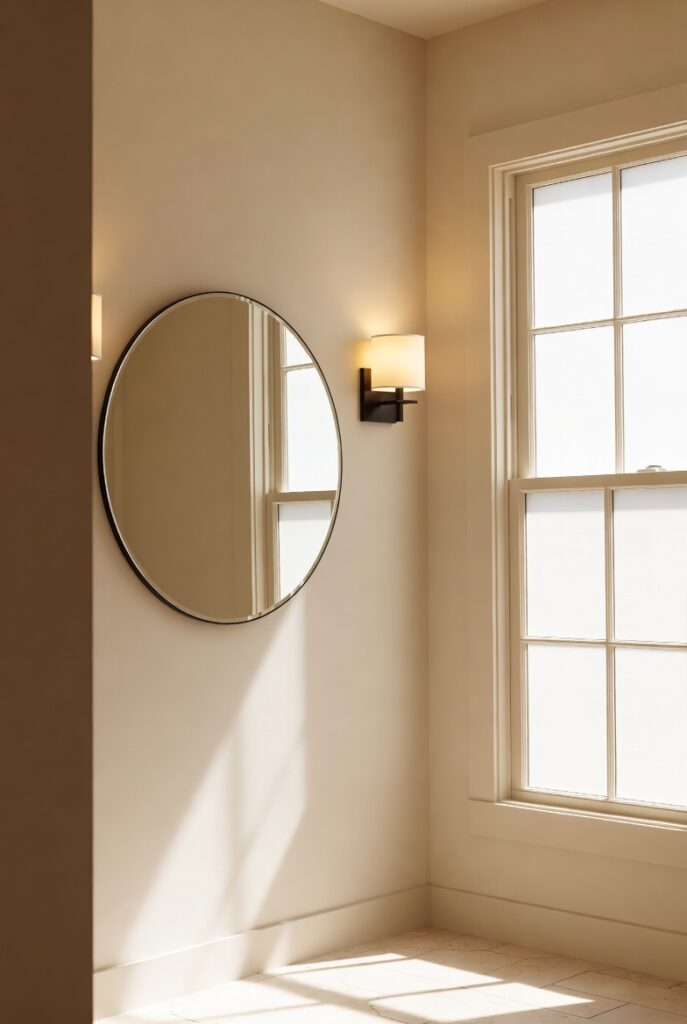
Mudrooms are notorious for being dark, especially when they’re tucked into a back hallway with no windows. A mirror near the door reflects light and adds the illusion of depth, while a wall sconce or small overhead fixture keeps the space from feeling like an afterthought. This is a small, inexpensive touch that makes a tiny mudroom feel considered rather than forgotten.
Quick Mudroom Essentials Checklist
Before you start shopping or building, it helps to know exactly what your space needs to do. Most small mudrooms are built around the same short list of jobs:
- A landing spot for keys, mail, and phones
- Hooks or a peg rail for coats and bags
- Shoe storage that’s easy to access daily
- A place to sit, even if it’s small
- Bins or baskets for “soft” items like hats and gloves
- A boot tray or durable flooring near the door
If your plan covers all six, you’ve got a mudroom that works no matter how many square feet it takes up.
FAQ: Tiny Mudroom Ideas
How small can a mudroom actually be and still be useful?
Some fully functional mudrooms are as small as 30–35 square feet, roughly the size of a walk-in closet. What matters more than total size is fitting in a hook, a shoe spot, and some kind of seating, even if that seating is a narrow fold-down bench.
What’s the best flooring for a tiny mudroom?
Durable, water-resistant flooring like tile or vinyl plank is ideal near the entry point, since mudrooms deal with mud, snow melt, and dirt more than any other room in the house.
Can I create a mudroom if I don’t have an extra room at all?
Yes. Many of the ideas above a peg rail, a boot tray, a slim bench, a repurposed closet can be added to a corner of a living room, hallway, or laundry area without any construction.
How do I keep a small mudroom from looking cluttered?
Lean on closed storage (cabinets, lidded benches, bins) rather than fully open shelving, and stick to a simple, cohesive color palette so the eye has fewer things to catch on.
Final Thoughts
A tiny mudroom doesn’t have to mean a tiny amount of function. With the right mix of vertical storage, double-duty furniture, and a clearly defined “drop zone,” even a few square feet by the back door can handle everything your family brings in coats, shoes, backpacks, and all the small stuff in between. Start with one or two of these ideas, and build out the rest as your space and budget allow.