
You know the feeling: you walk into a space and something just breathes. No clutter fighting for your attention, no mismatched textures screaming over each other just light, warmth, and calm. That’s the quiet magic of Scandinavian design, and the good news is you don’t need a Nordic postcode (or a Nordic budget) to get there.
Scandinavian decor isn’t about buying more. It’s about choosing better fewer pieces, thoughtfully placed, each one earning its spot in the room. Below are 15 real, doable ways to bring that light-filled, effortlessly cozy Scandi look into your own home, room by room. Save this guide you’ll want to come back to it as you work through each space.
1. Start With a Neutral, Light-Bouncing Palette
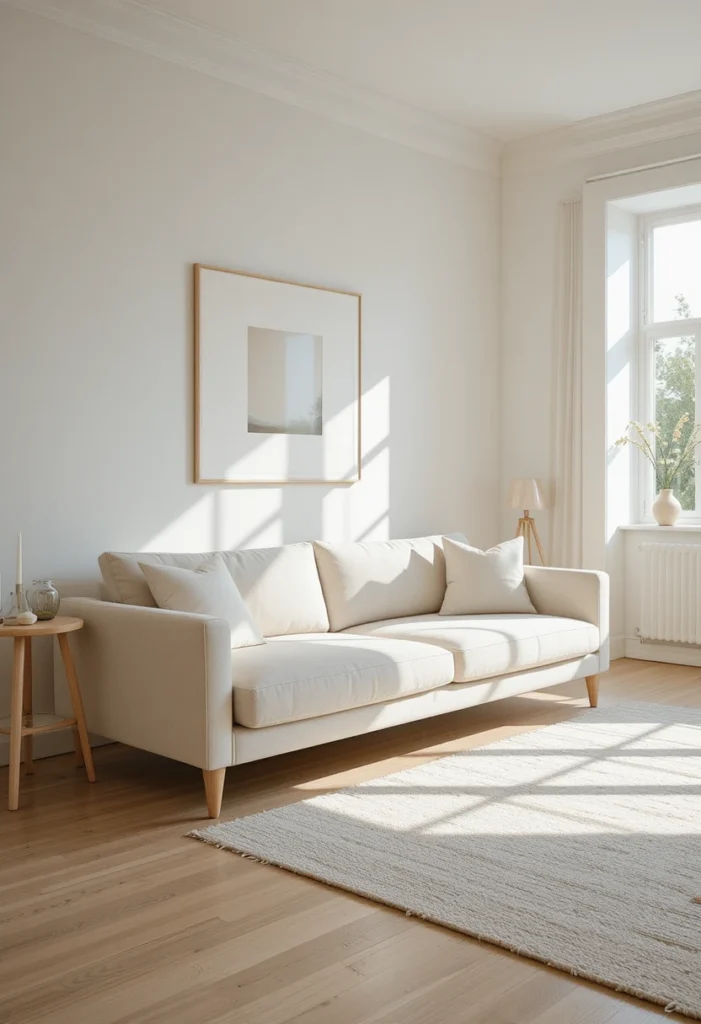
Everything in Scandinavian design starts with color, or rather, the near-absence of it. Think whites, soft greys, warm creams, and pale sand tones on your walls and larger furniture pieces. These shades don’t just look calm they physically bounce available daylight around a room, which matters a lot when you’re designing for long, dim winters.
Quick tip: Choose a warm white over a stark, clinical one. Warmer undertones keep the palette from feeling cold or sterile.
2. Let Natural Light Lead the Room
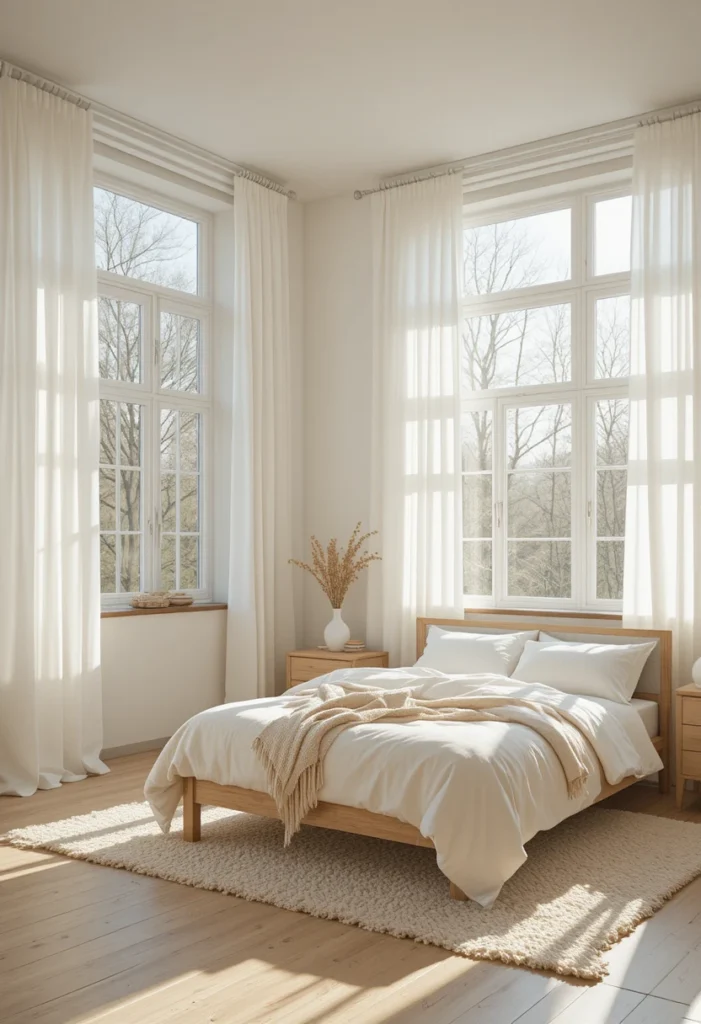
Here’s the thing: Scandinavian homes are built around the sun, not around the TV or the sofa. Keep window treatments minimal sheer linen panels or nothing at all so daylight can travel deep into the room.
If privacy is a concern, layer a light, gauzy curtain with a heavier one you only draw at night. You get softness during the day and coverage when you need it, without ever blocking that precious natural glow.
3. Bring In Light, Honest Wood
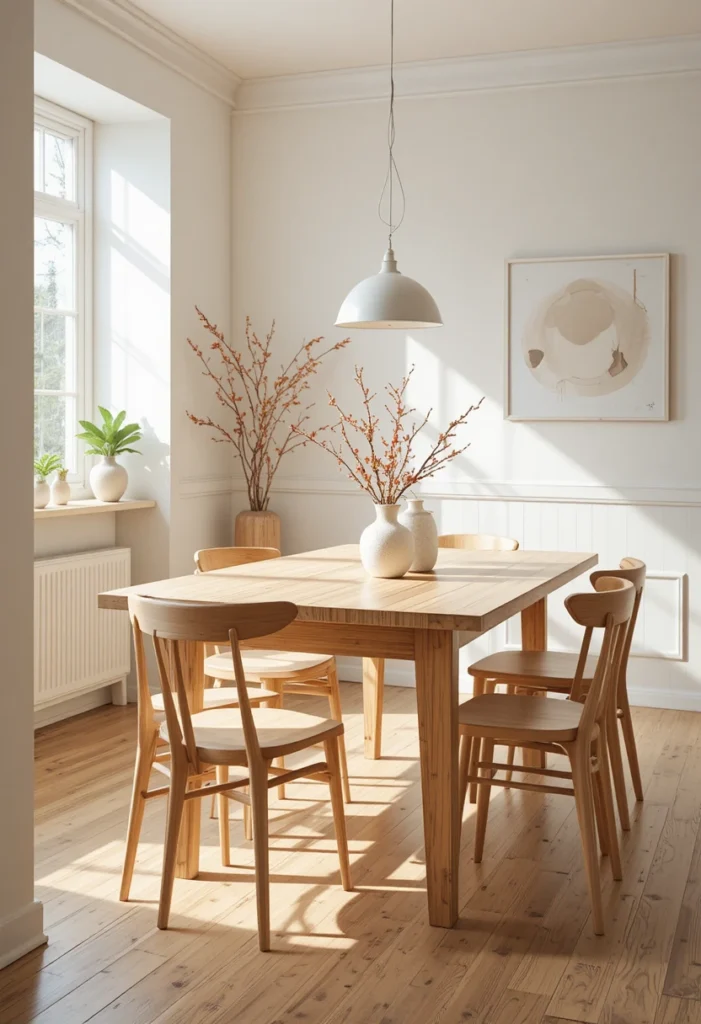
Pale woods like birch, ash, and light oak are the backbone of Scandi furniture. Look for pieces with visible, slender legs that let light pass underneath them this alone makes a room feel bigger and airier than solid, boxy furniture ever could.
Image placement idea: a vertical shot of a birch coffee table with slim tapered legs against a white wall perfect pin material.
Read Also: Scandinavian Home Decor Ideas for a Minimalist & Modern Home
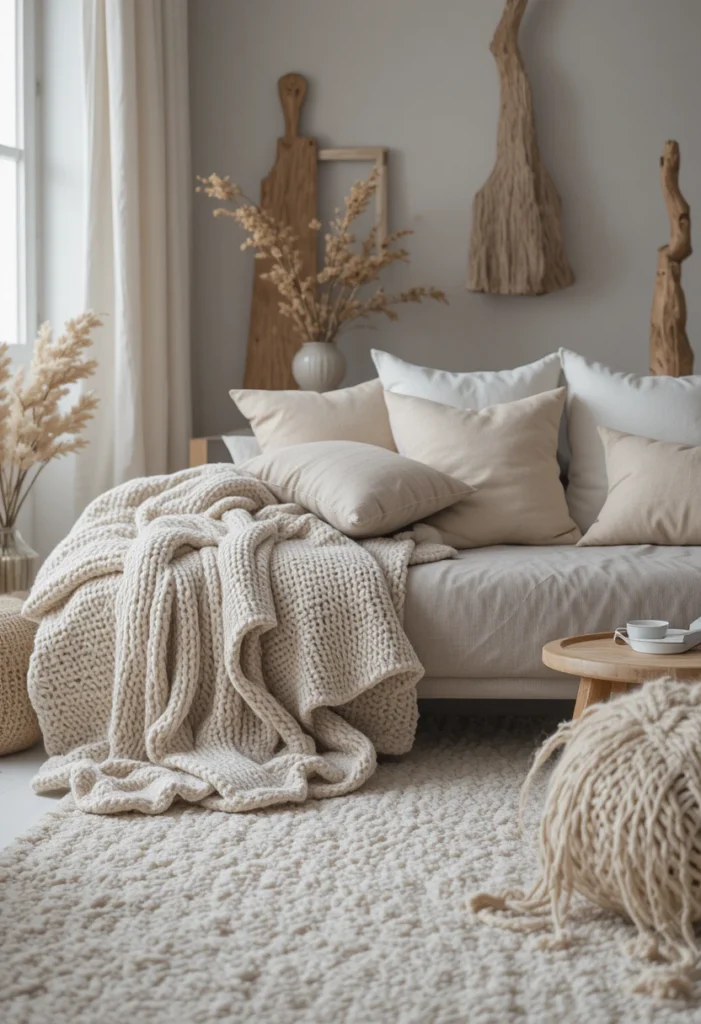
So what does this mean for you if bold prints aren’t your style? Good news Scandinavian design barely uses them. Instead, it layers texture: a chunky knit throw over a smooth leather chair, a sheepskin on a wood-slat bench, a linen cushion beside a wool rug.
The rule of thumb: if a room looks flat in a photo, it needs another texture, not another color.
5. Choose Furniture With Clean, Functional Lines
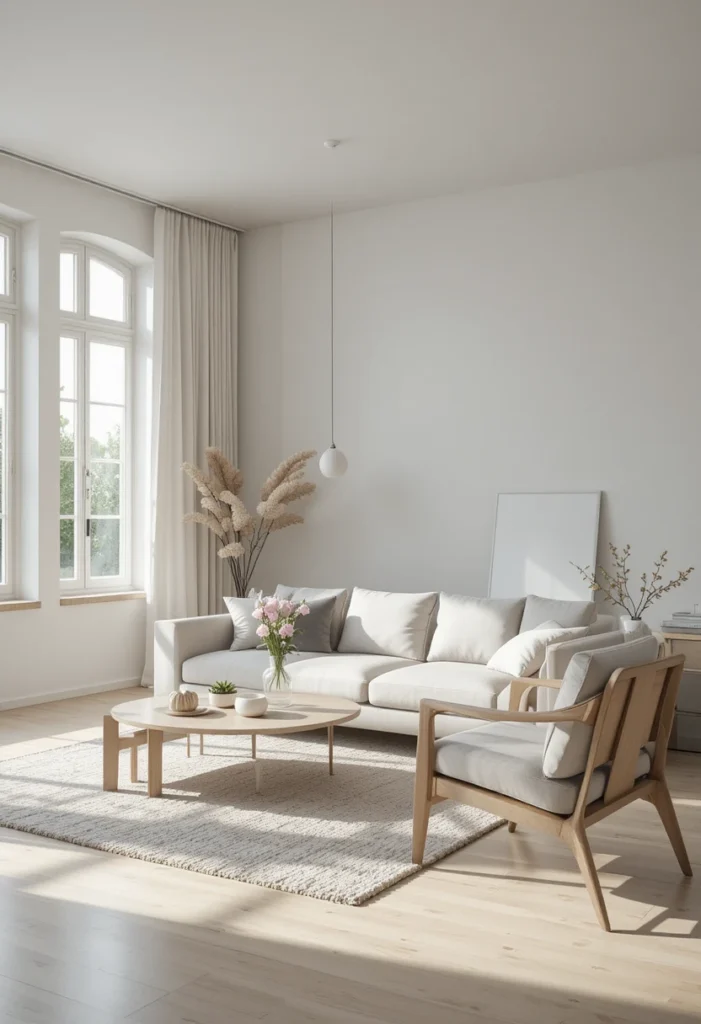
Ornate carving and heavy upholstery work against the Scandi look. Instead, prioritize furniture with simple silhouettes and a clear purpose a sofa that’s genuinely comfortable, a table that seats exactly who needs seating, nothing performative.
Before buying anything new, ask: does this piece do a job, or is it just filling space? If it’s the latter, skip it.
6. Hide the Clutter, Show the Calm
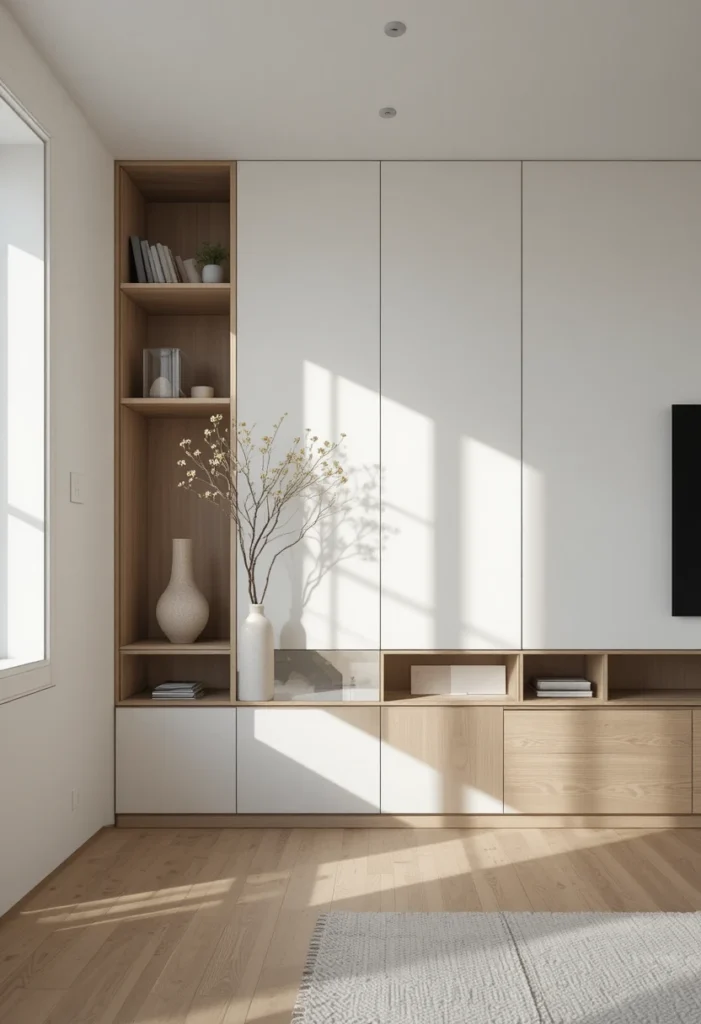
But there’s a catch to minimalism: real life is messy, and Scandinavian homes still need somewhere to put the mail, the chargers, the kids’ toys. The trick is storage that disappears closed cabinets, baskets tucked under console tables, drawer units built into window seats.
- Wall-mounted shelving instead of freestanding units
- Woven baskets for everyday overflow
- A media console with solid doors, not open shelving
7. Layer in Hygge-Style Lighting
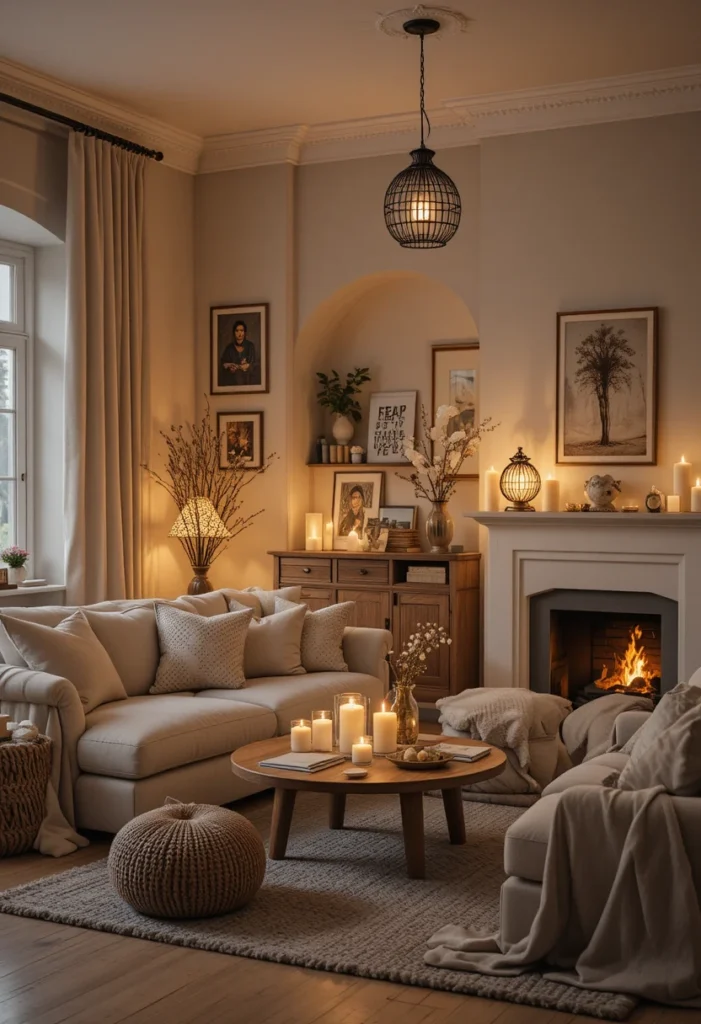
Overhead lighting alone makes a room feel flat and a little clinical. Scandinavian interiors build warmth through layered lighting a floor lamp in the reading corner, a table lamp on the console, a cluster of candles on the coffee table.
Aim for warm-toned bulbs (2700K–3000K) rather than bright white ones. This one swap changes the entire mood of a room after dark.
8. Bring the Outdoors In With Plants
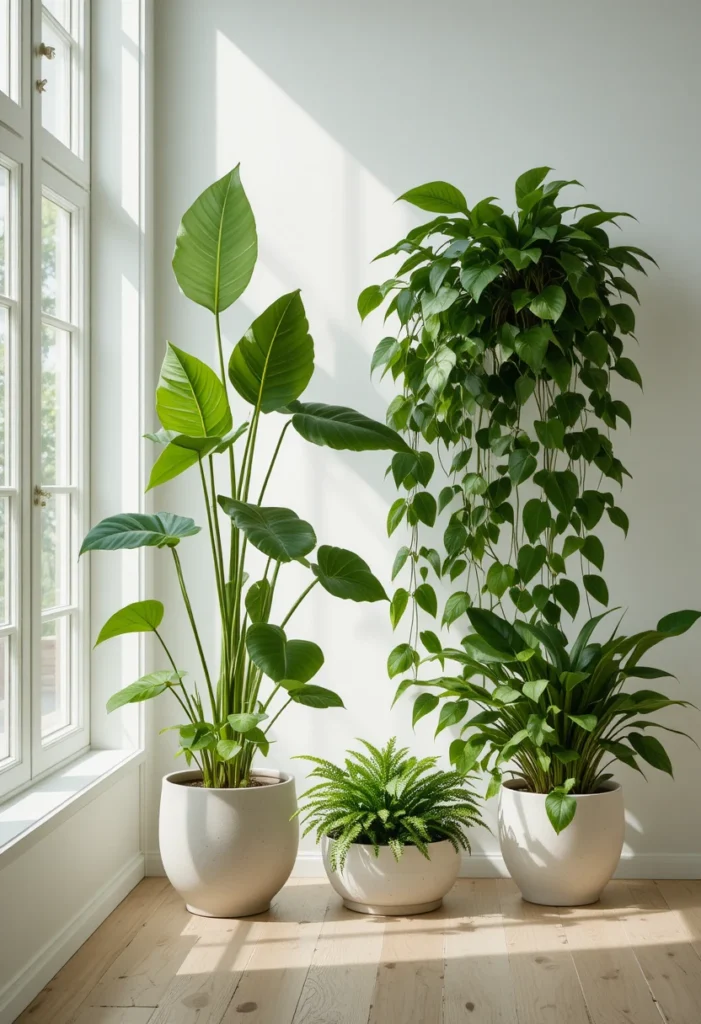
A home without a single plant rarely reads as Scandinavian. Because natural resources were historically scarce in Nordic countries, that deep respect for nature shows up everywhere in the design and houseplants are the easiest way to channel it indoors.
Save-worthy tip: one large, structural plant (a fiddle-leaf fig or olive tree) does more for a room than five small scattered ones.
9. Let a Light Fixture Be the Art
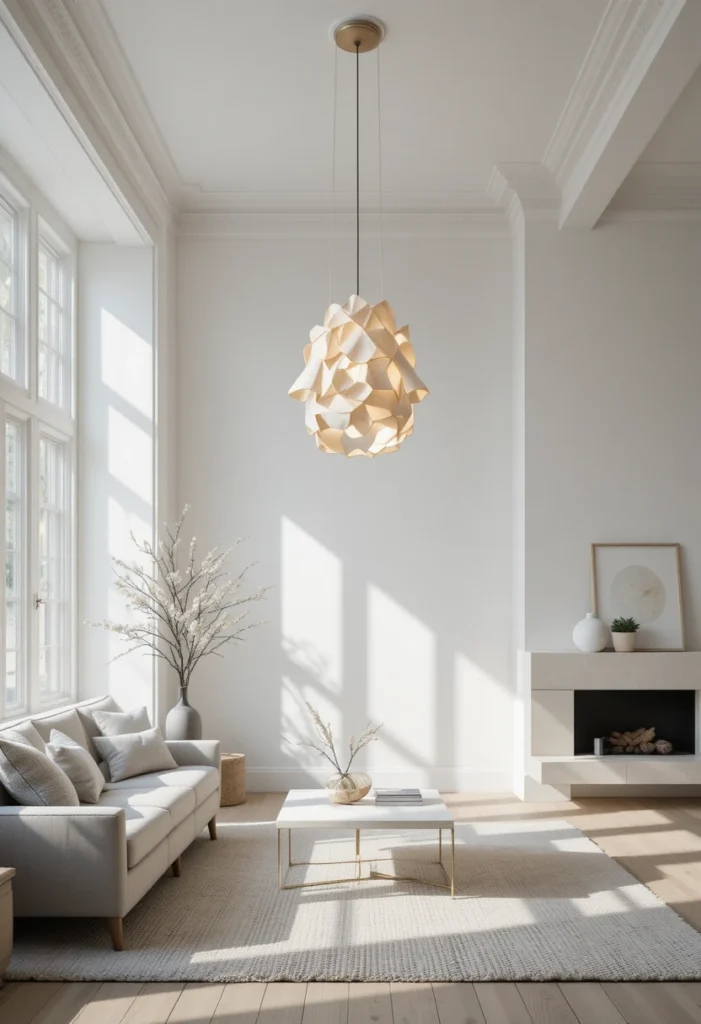
Pendant lights and sculptural floor lamps are one of the few places Scandinavian design allows itself to make a statement. A single striking pendant over a dining table or reading chair adds personality without breaking the room’s calm.
Image placement idea: a vertical shot of a sculptural pendant light glowing at dusk over a wood dining table high pin-potential, especially with soft overlay text like “Let there be (Scandi) light.”
10. Use One Bold Accent, Not Ten
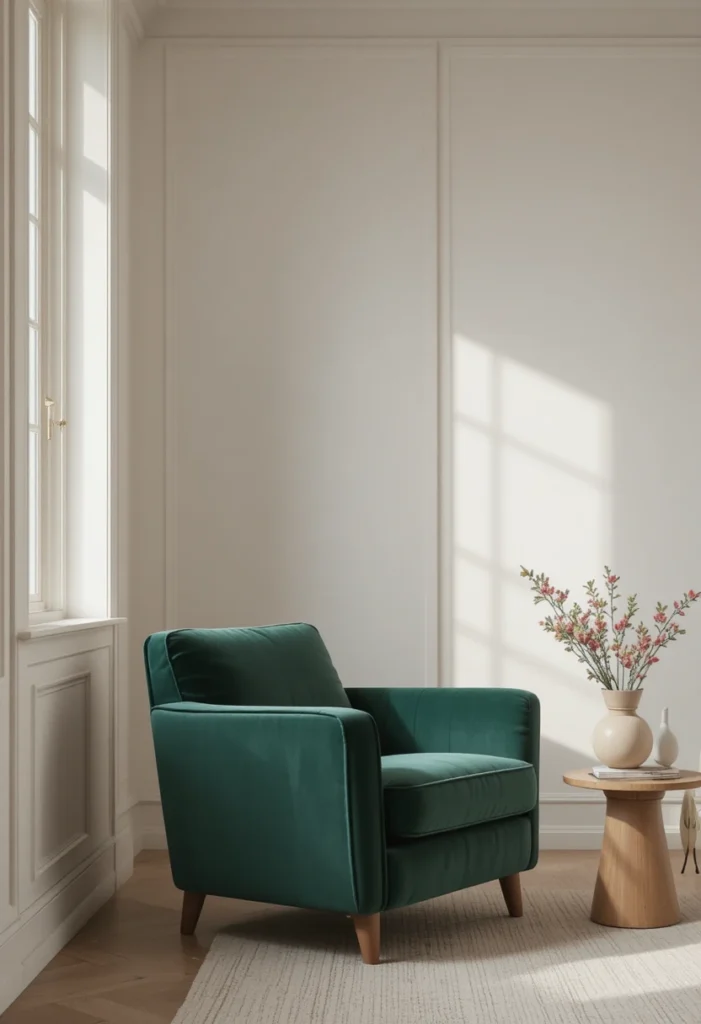
Monochrome doesn’t mean boring. Choose one accent color — a deep forest green, a rust orange, a dusty blue and use it sparingly: a single armchair, one set of cushions, a vase. The rest of the room stays neutral, so that one accent actually gets to shine.
Here’s the thing: the restraint is what makes the accent feel intentional instead of accidental.
11. Ground the Room With a Natural-Fiber Rug
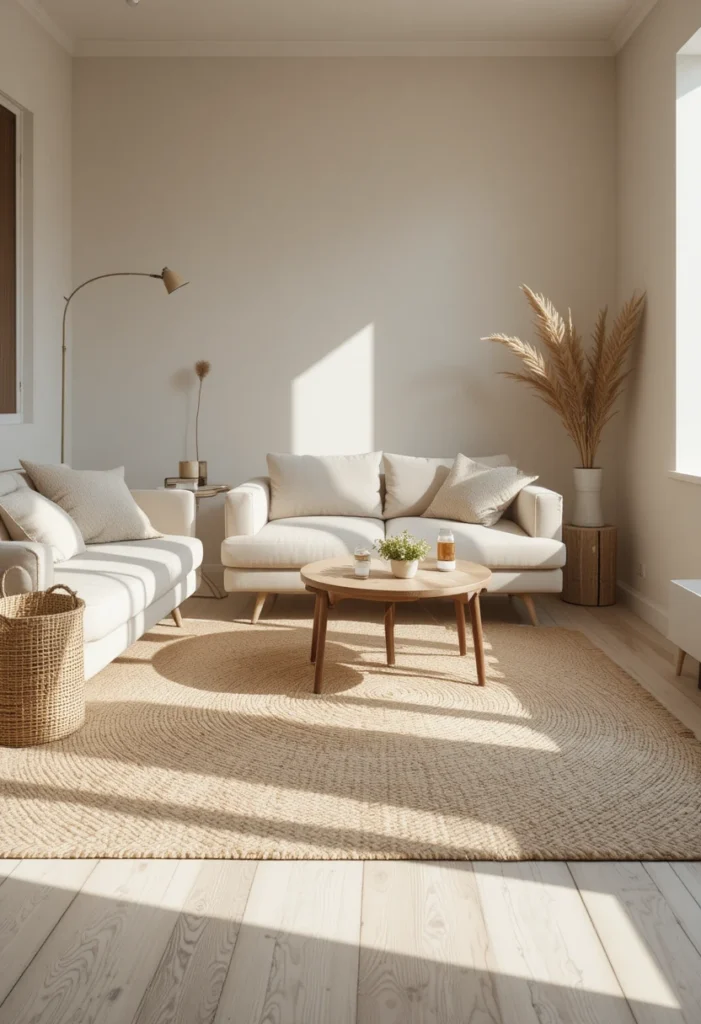
Jute, wool, and sisal rugs add warmth and texture underfoot while staying true to the natural-materials rule. A pale wool rug in a living room, or a chunky jute runner in an entryway, does double duty softening the space acoustically and visually.
Pick a rug that’s a shade or two darker than your walls so the room doesn’t disappear into itself.
12. Display Art With Restraint
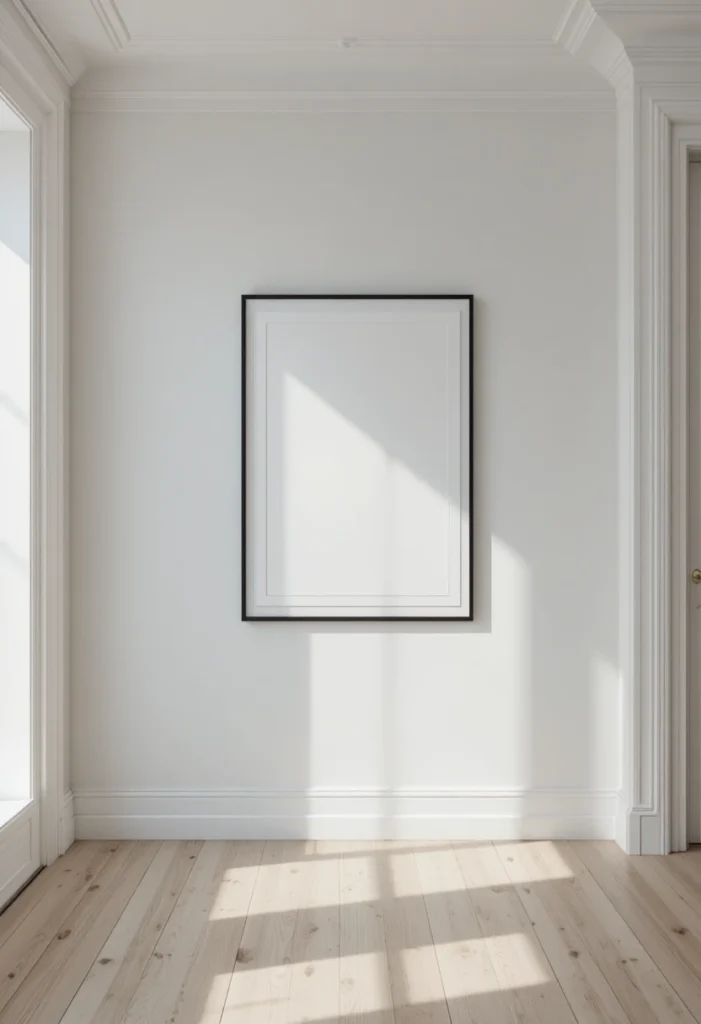
Skip the gallery wall packed floor to ceiling. Scandinavian homes usually favor one or two framed pieces often black-and-white photography or simple line art leaned casually against the wall rather than hung in a rigid grid.
Quick tip: leaning art (instead of hanging it) instantly makes a space feel more relaxed and less staged.
13. Create One Genuinely Cozy Corner
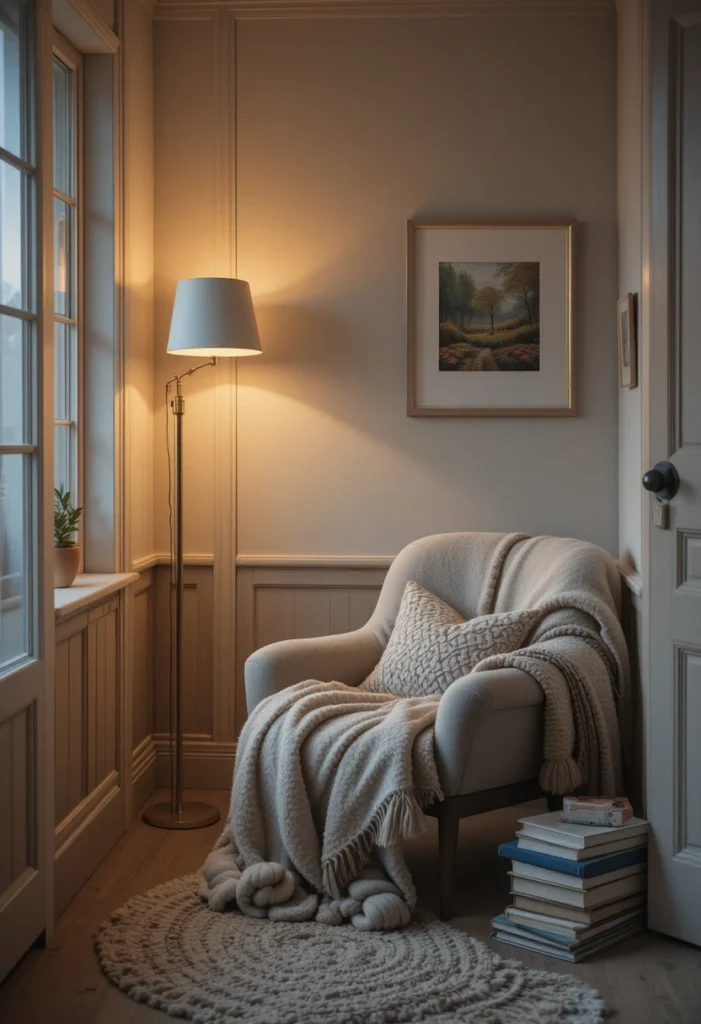
Every Scandinavian home has a spot built purely for slowing down a chair by the window, a stack of books, a soft throw, a small side table for tea. This is hygge in physical form, and it’s one of the easiest updates on this list.
Image placement idea: a vertical shot of a reading nook with a wool throw, warm lamp light, and a steaming mug extremely save-worthy and easy to overlay with text like “Your cozy corner, styled.”
14. Choose Furniture That Multitasks
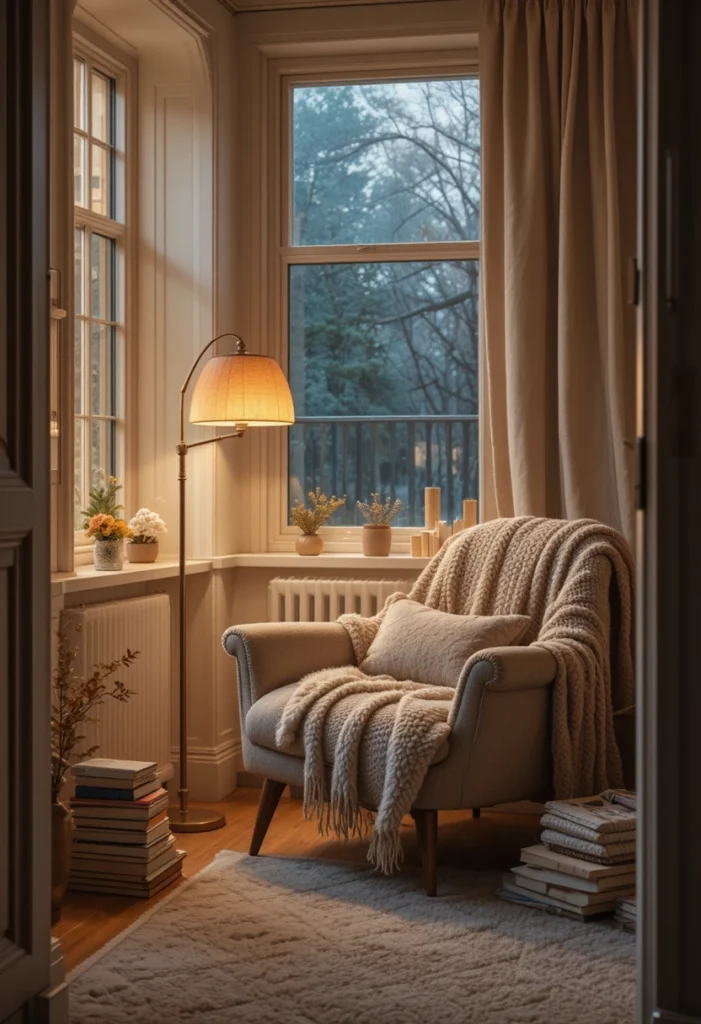
Because Scandinavian homes are often compact, furniture is expected to earn its keep. A storage ottoman that also works as a coffee table. A daybed that becomes a guest bed. A console that hides a drop-leaf dining surface.
Before your next furniture purchase, ask whether it could serve two functions instead of one smaller homes especially will feel the difference.
15. Style With the Seasons, Not the Trends
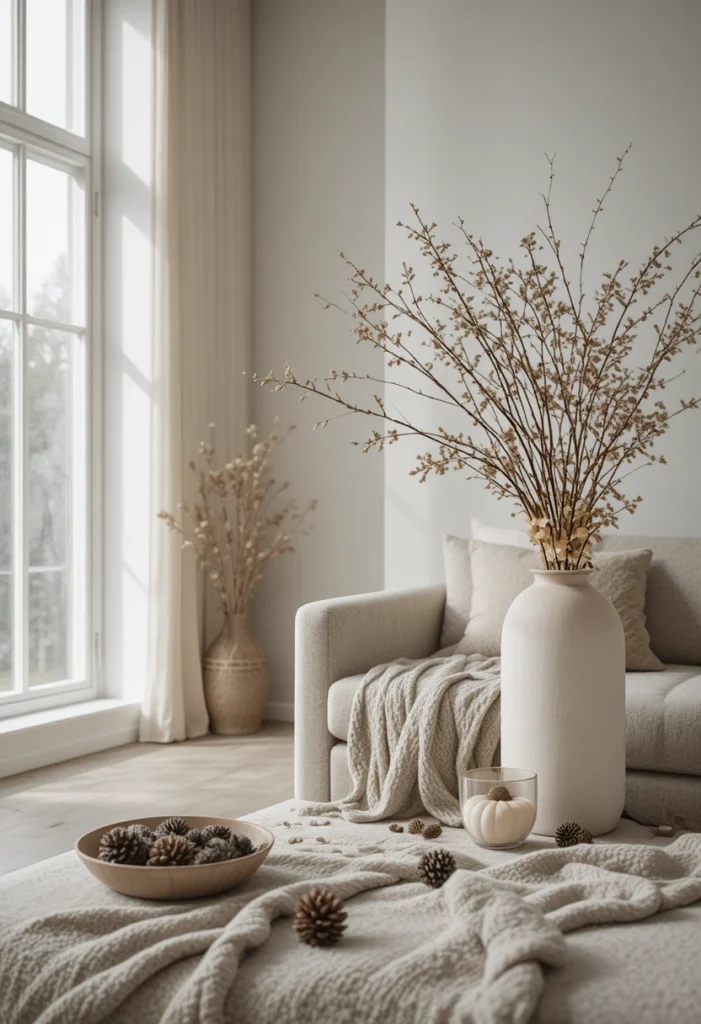
Finally, Scandinavian decor stays timeless because it resists chasing trends. Instead, homes are refreshed seasonally through small, swappable details a different throw, a bowl of seasonal branches, a candle scent change rather than a full redecorate.
Quick summary: keep the bones (furniture, wood tones, neutral walls) permanent, and let small textiles and accessories do the seasonal work.
Frequently Asked Questions
Is Scandinavian decor the same as minimalism?
They overlap, but they’re not identical. Minimalism is about less; Scandinavian design is about purposeful every piece is chosen for both function and warmth, not just reduced quantity.
What colors are true Scandinavian colors?
Warm whites, soft greys, sand, and muted earth tones form the base, often with one restrained accent color like forest green, rust, or dusty blue.
Can I do Scandinavian decor on a budget?
Yes this style actually favors fewer, well-chosen pieces over expensive ones. Secondhand light-wood furniture, IKEA basics, and DIY textile layering go a long way.
What’s the difference between Scandinavian and Japandi style?
Japandi blends Scandinavian minimalism with Japanese design principles, leaning into darker woods, more asymmetry, and quieter, earthier tones while classic Scandi stays lighter and brighter overall.
Bringing It All Together
Scandinavian decor isn’t a single purchase or a weekend project it’s a handful of small, intentional choices that compound into a home that feels genuinely calm to live in. Start with light and a neutral palette, add warmth through wood and texture, then edit ruthlessly until only the pieces that earn their place remain.
Pick two or three ideas from this list to try this month, and pin this guide so you can work through the rest at your own pace.