
Somewhere along the way, we all got told that good design meant restraint. Neutral walls. One accent color. A single “statement piece” per room, as if personality needed rationing.
Eclectic maximalism disagrees. Loudly.
This is the design philosophy for anyone who has ever stood in a beige, bare-walled living room and felt nothing at all. It’s for the person with three different collections, a soft spot for flea markets, and zero interest in matching their throw pillows to their sofa. Done well, eclectic maximalist decor doesn’t read as cluttered or chaotic it reads as a room that actually knows the person who lives in it. Every object has a reason to be there, even if that reason is simply “I loved it and I bought it.”
Below are 15 ways to bring this bold, layered, endlessly personal style into your own home without it tipping into visual noise.
What Is Eclectic Maximalist Decor, Exactly?
Before diving into the ideas, it helps to separate the two halves of the term. Maximalism is the “more is more” mindset bold colors, rich textures, and an abundance of pattern, where every corner of a room has something to say. Eclectic design is about mixing: blending furniture and objects from different eras, cultures, and styles rather than sticking to one aesthetic rulebook.
Put them together, and eclectic maximalism becomes a hybrid: the fearless color and texture of maximalism, filtered through the curated, story-driven mixing of eclectic style. The result should feel intentional curated chaos, not chaotic clutter.
With that foundation in place, here’s how to actually build the look, room by room and layer by layer.
1. Start With a Color Story, Not a Color Rule
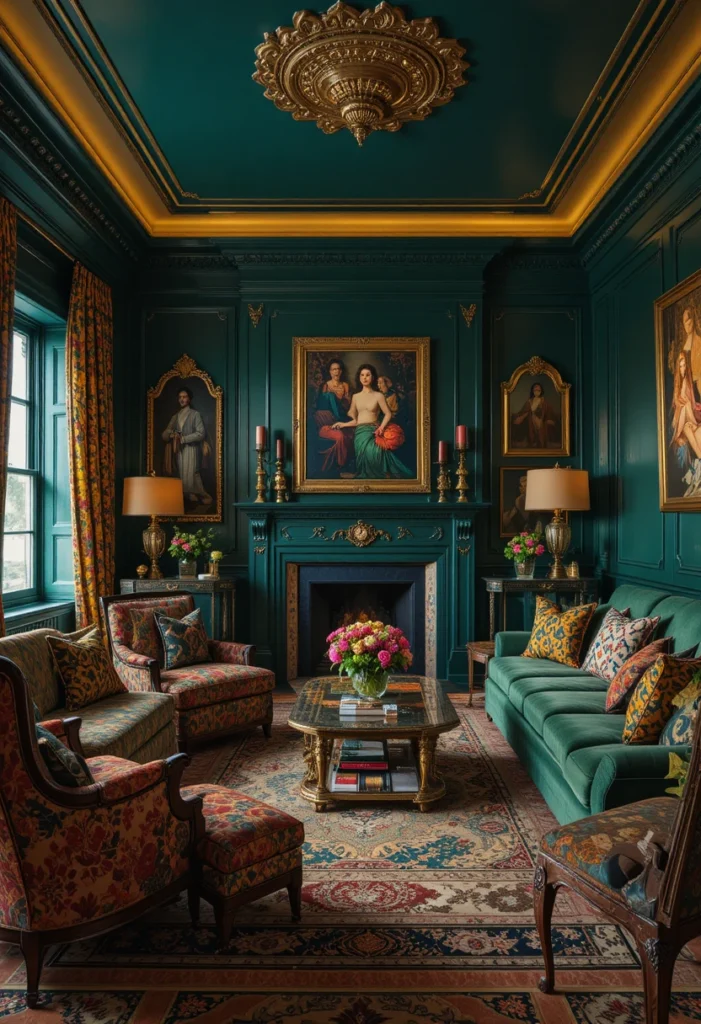
The biggest myth about maximalist rooms is that “anything goes.” In reality, the best eclectic maximalist spaces repeat a handful of colors across different pieces cushions, artwork, a rug, a lampshade to create flow even when the patterns themselves vary wildly. Pick two or three anchor colors (a jewel tone, a warm neutral, and one wildcard hue) and let them reappear throughout the room in different textures and intensities.
Save-worthy tip: Think of your color palette as a thread that runs through the room, not a boundary that limits it.
2. Layer Patterns Like You’re Building an Outfit
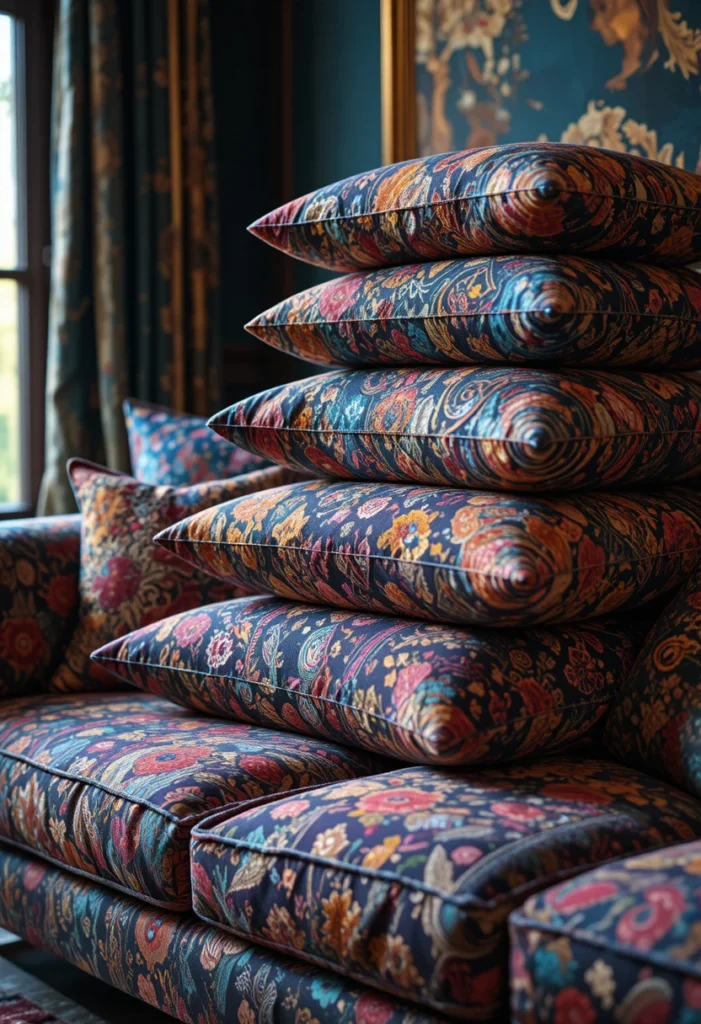
Florals with geometrics. Stripes with paisley. Animal print with damask. Mixing patterns is one of the most defining traits of this style, and it works best when the patterns vary in scale pair a large-scale print with a smaller, busier one so they don’t compete for the same visual space. A patterned rug under a patterned sofa can absolutely work, as long as one of them is doing the “loud” job while the other stays a touch quieter.
3. Mix Eras Like a Vintage Time Capsule
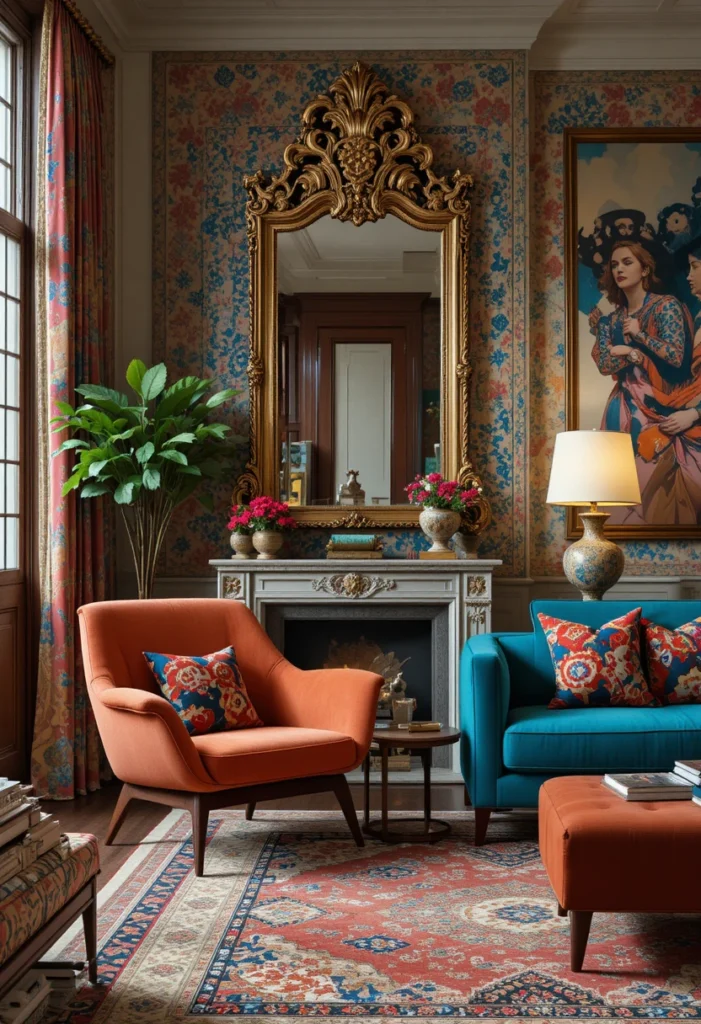
A sleek mid-century credenza next to a Victorian wingback chair. A contemporary abstract painting hung above an antique carved sideboard. Blending furniture from different design periods is what gives eclectic maximalist rooms their sense of history and depth — nothing about the space feels like it came from a single catalog. Thrift stores, estate sales, and antique markets are where this style truly comes alive.
4. Go Big and Bold With Your Art Wall
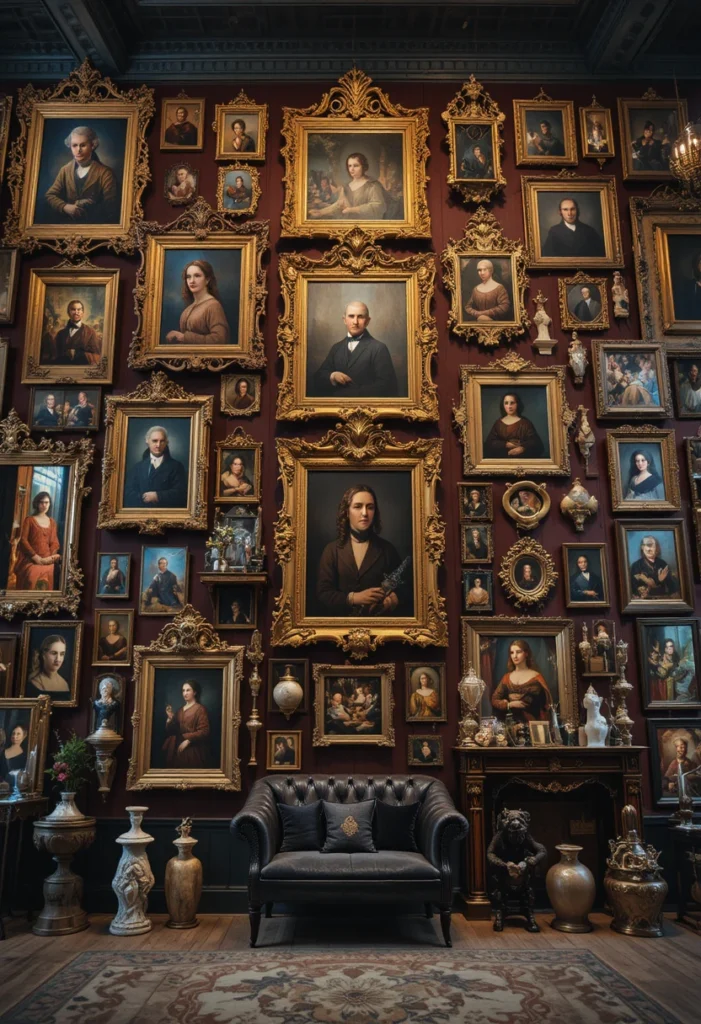
Timid little frames have no place here. Eclectic maximalism loves oversized, statement-making artwork, and gallery walls that mix frame styles, sizes, and eras. Layer different art styles together a large abstract canvas, a gilded vintage mirror, a set of botanical prints and let the arrangement feel collected over time rather than bought as a matching set.
Read Also: Nestly Home Deco
5. Build a Textural Playground
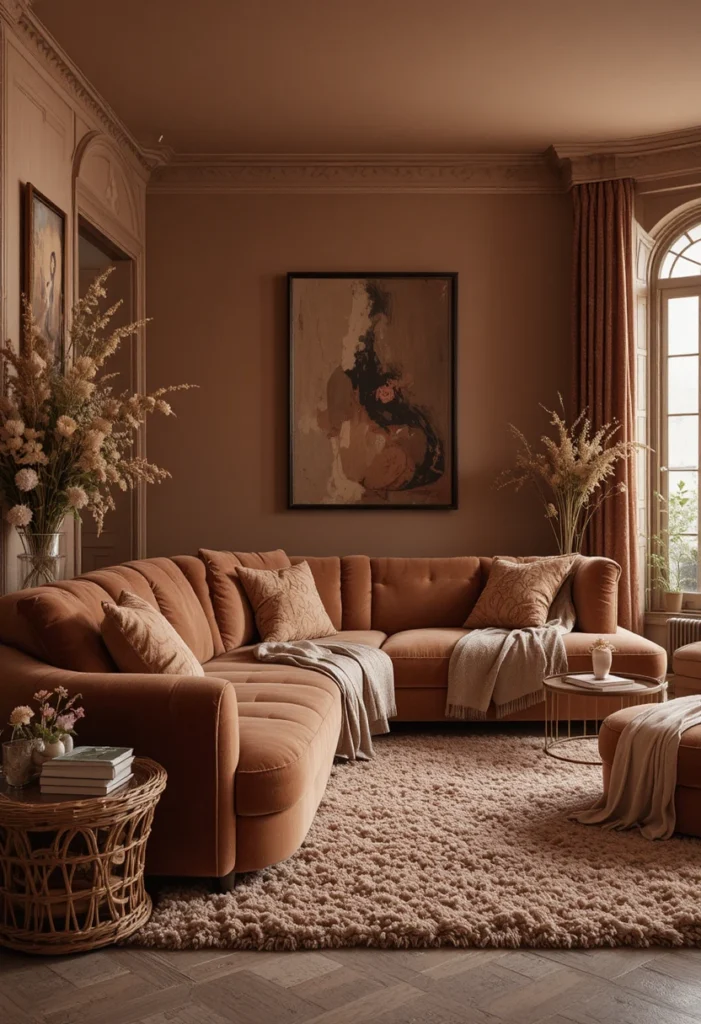
Velvet, leather, wood, rattan, brass, boucle, silk. Texture is what keeps a maximalist room from feeling flat, even when the color palette is restrained. A velvet sofa against a metal coffee table, a leather chair beside a woven rattan chair, a chunky knit throw over a smooth linen cushion these contrasts are what give the room its tactile, “touch everything” quality.
6. Anchor the Room With One Showstopper Piece
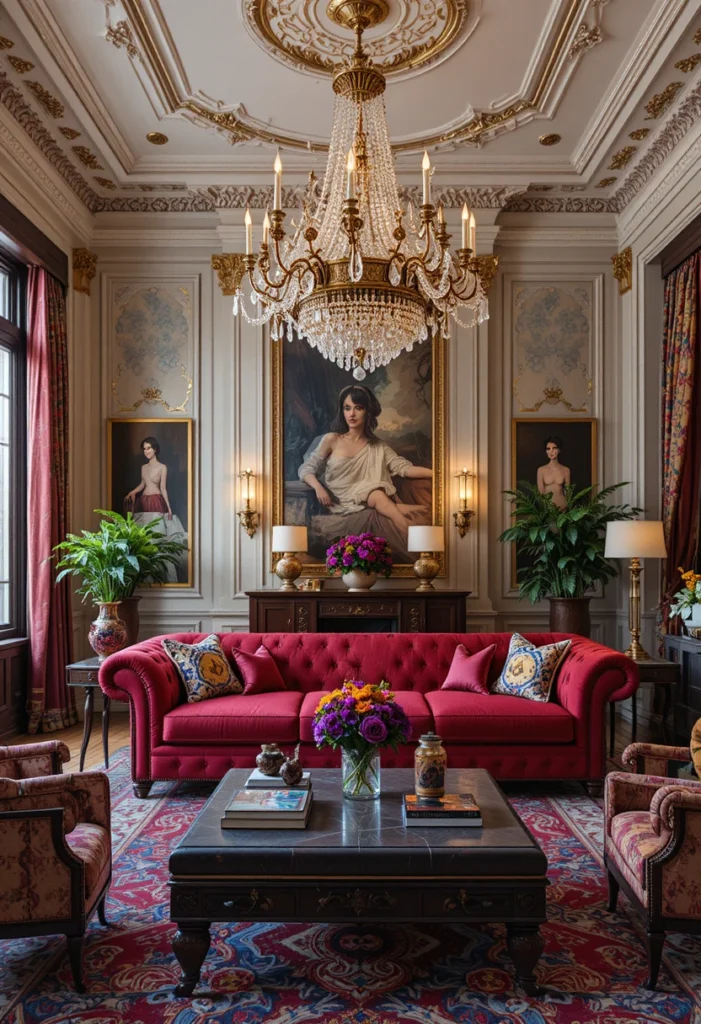
Counterintuitively, one of the best ways to keep a maximalist room from feeling overwhelming is to give it a single anchor: a vintage armchair, a sculptural pendant light, or an oversized statement rug that pulls the whole palette together. Everything else gets layered around that anchor rather than competing with it for attention.
7. Let Global Influences Shape Your Furniture Choices
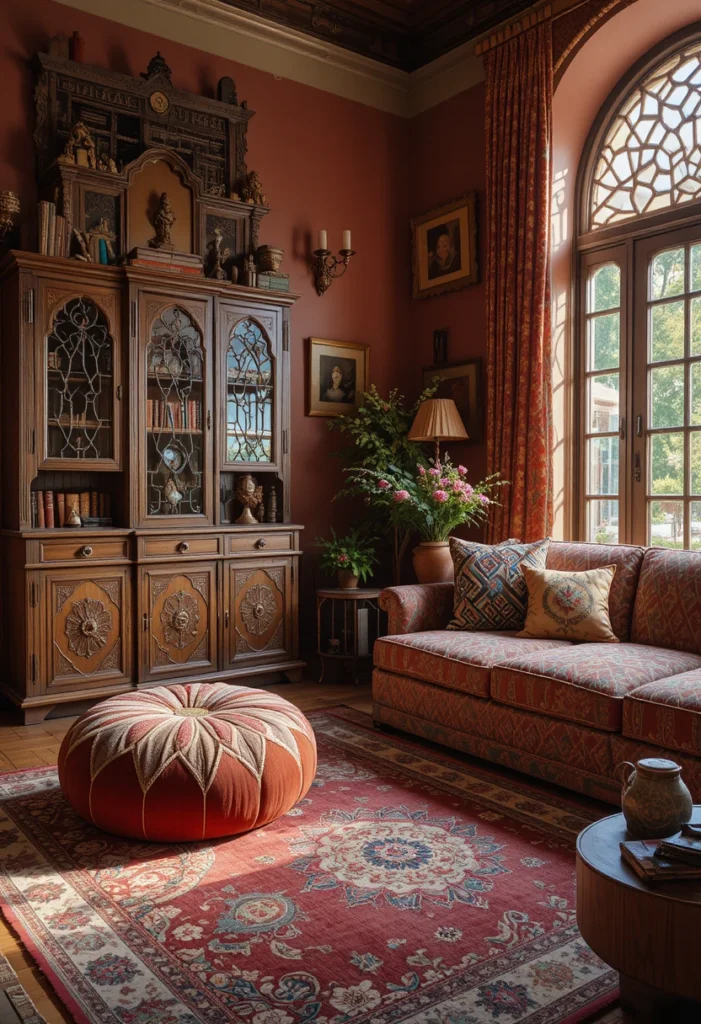
Eclectic maximalist interiors often pull in Moroccan poufs, Turkish kilims, Japanese ceramics, or West African mudcloth pillows objects with real history and craftsmanship. This global mixing adds depth and story to a room, though it’s worth sourcing pieces thoughtfully and respectfully rather than treating another culture’s design language as a costume.
8. Don’t Skip the Ceiling
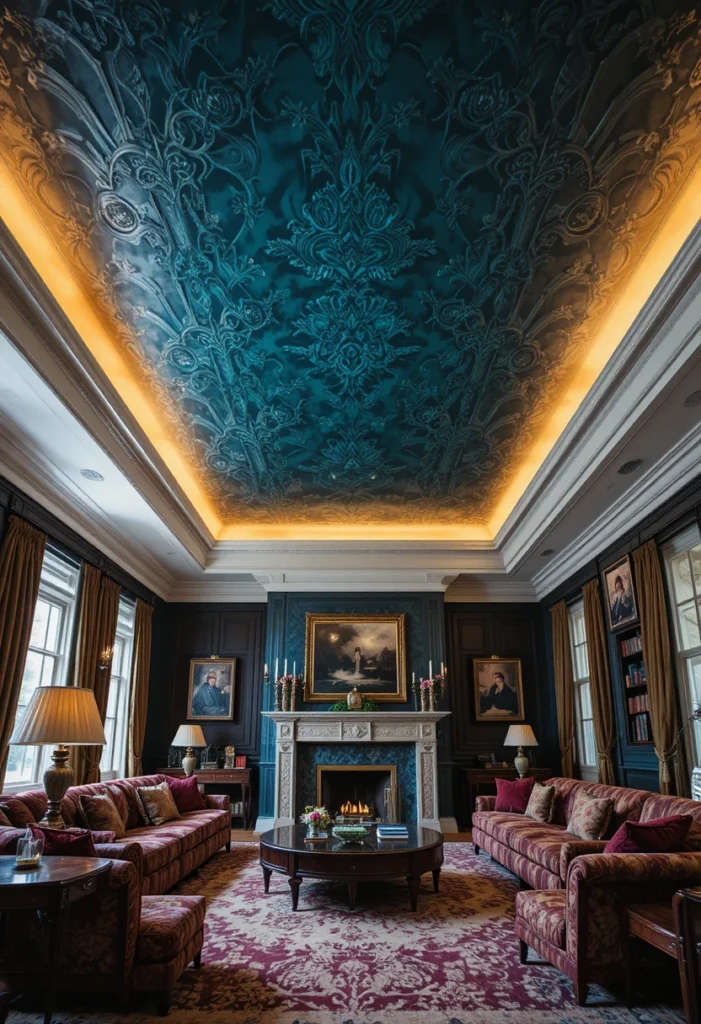
A blank white ceiling is a missed opportunity in a maximalist room. Consider a bold paint color, a patterned wallpaper, or even a dramatic light fixture that draws the eye upward. In smaller rooms especially, this “fifth wall” adds drama without eating into your floor space.
9. Use Wallpaper as Your Backdrop, Not an Afterthought
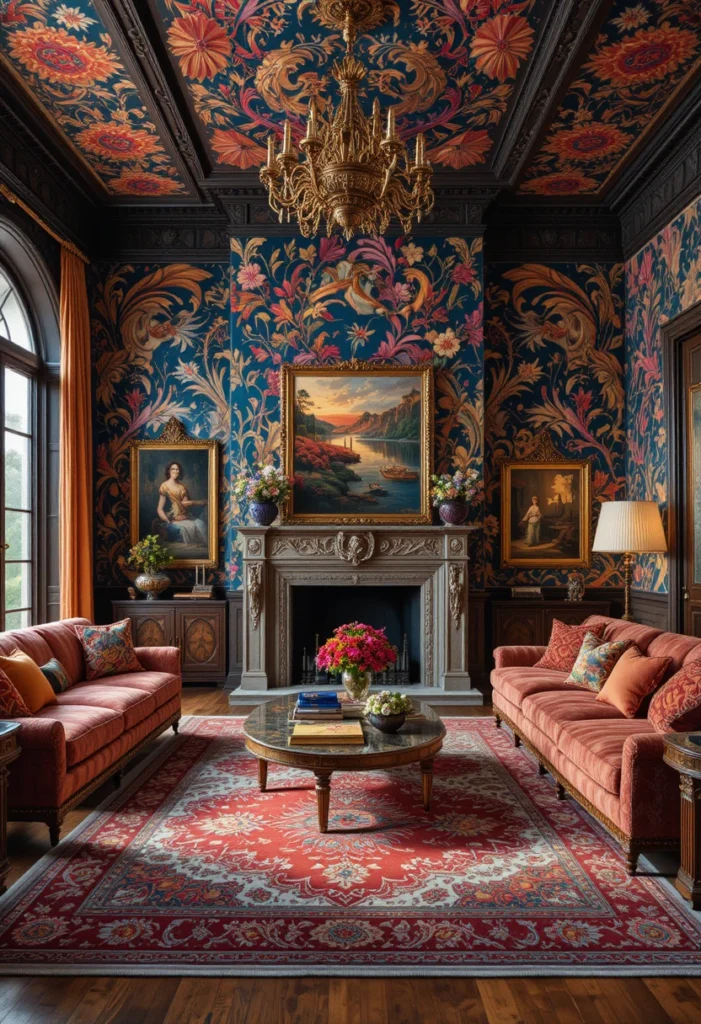
Swapping a plain wall for an over-the-top wallpaper botanical prints, bold geometrics, vintage-inspired motifs instantly sets the tone for the rest of the room. In eclectic maximalist design, the wallpaper often becomes the starting point that every other color and pattern choice responds to.
10. Curate Collections Instead of Scattering Objects
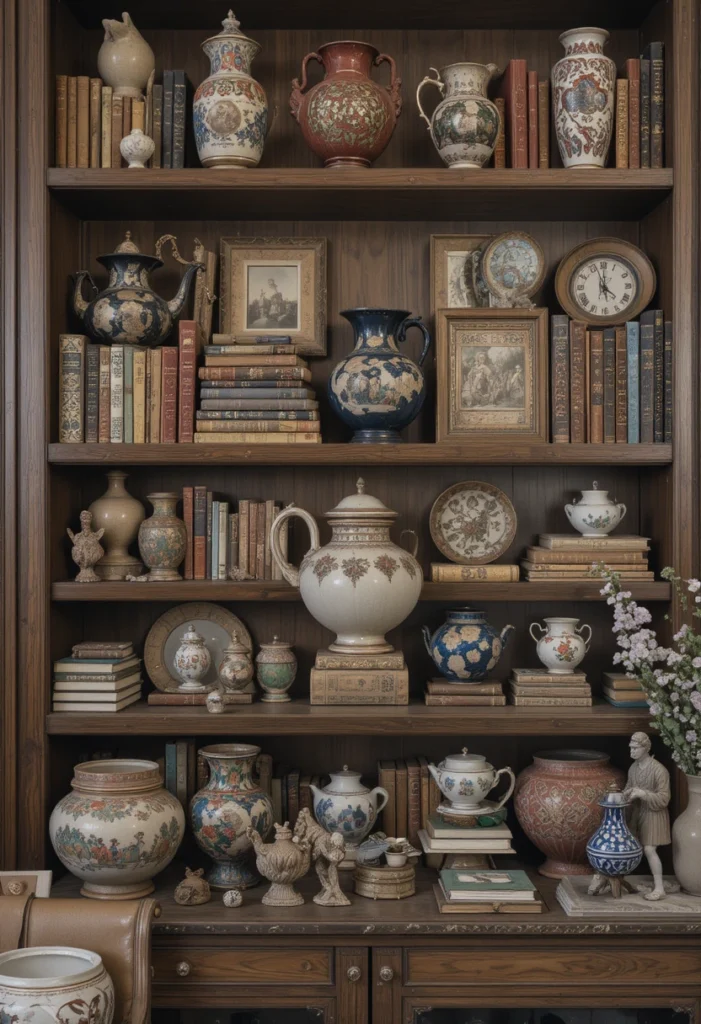
Random knick-knacks read as clutter. A grouped collection a shelf of blue-and-white ceramics, a gallery of vintage mirrors, a curated stack of coffee table books reads as intentional. Grouping like objects together, even eclectic ones, is one of the simplest tricks for keeping “more is more” from tipping into “too much.”
11. Layer Your Lighting
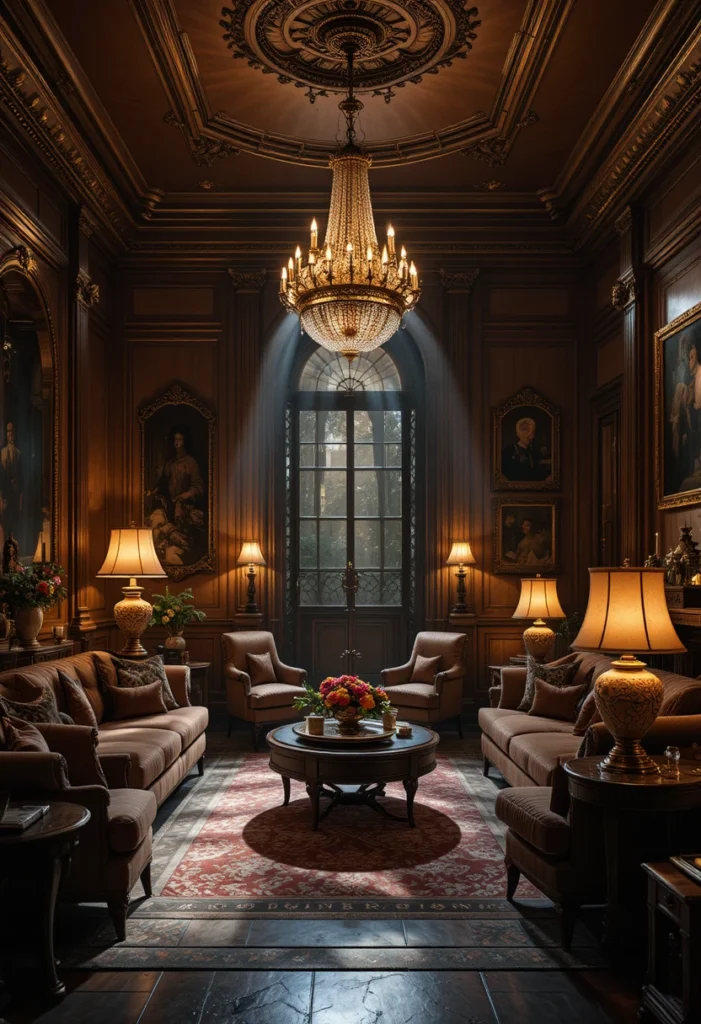
Skip the single overhead fixture. Eclectic maximalist rooms thrive on multiple light sources at different heights: a statement chandelier, a sculptural floor lamp, mismatched vintage table lamps, and maybe a string of warm-toned accent lighting. Mismatched lamps, in particular, are a signature move they add personality precisely because they don’t match.
12. Give the Eye Somewhere to Rest
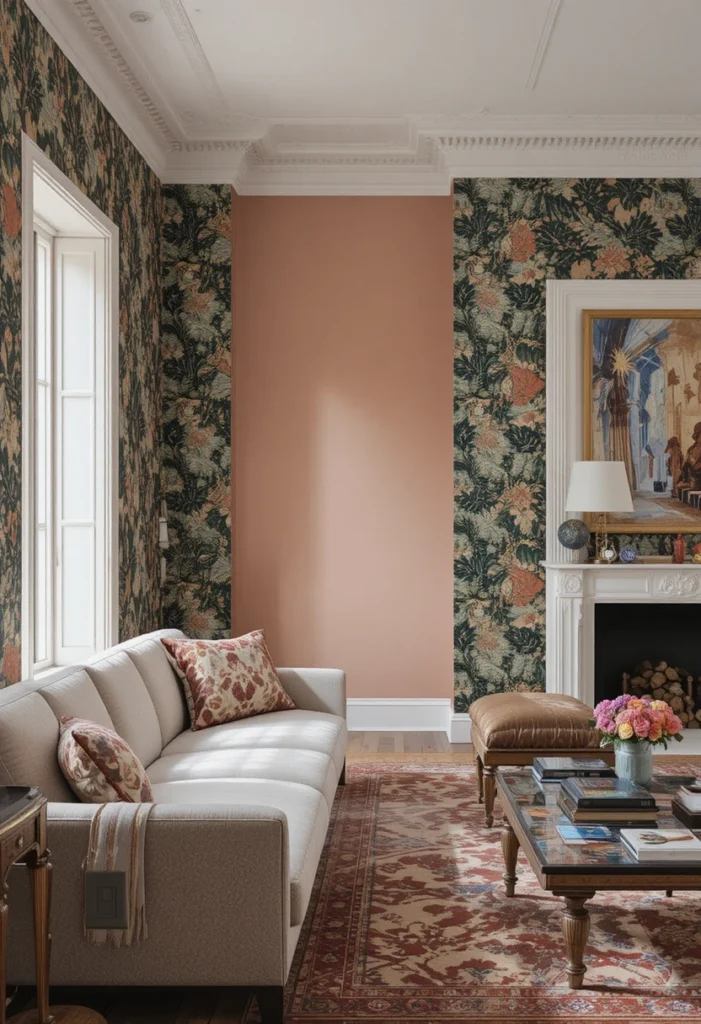
This is the rule that separates good maximalism from overwhelming maximalism: negative space still matters. Balance your boldest, busiest areas with a few quieter zones a plain wall, an uncluttered corner, a simple neutral chair so the eye has somewhere to pause before diving back into the layers.
13. Bring the Look Into the Kitchen and Bathroom
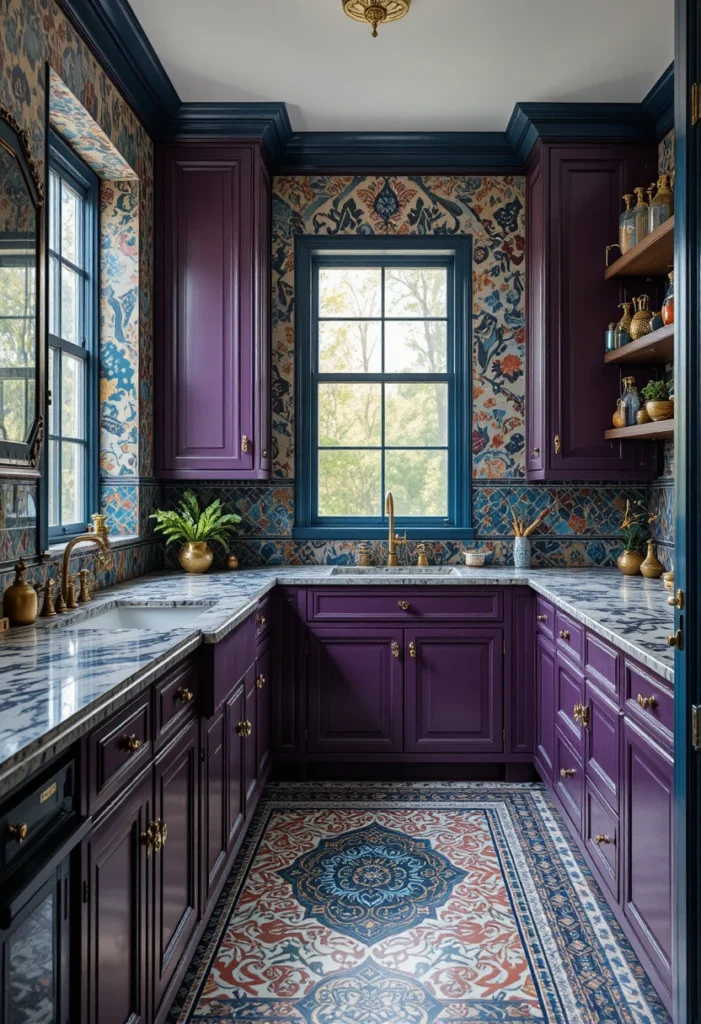
Maximalism doesn’t have to stop at the living room. Painted cabinets in a deep jewel tone, patterned tile backsplashes, and vintage brass hardware can transform a kitchen. In bathrooms, richly colored walls, ornate mirrors, and mixed-metal fixtures create the same layered drama on a smaller footprint.
14. Make the Bedroom Your Most Personal Room Yet
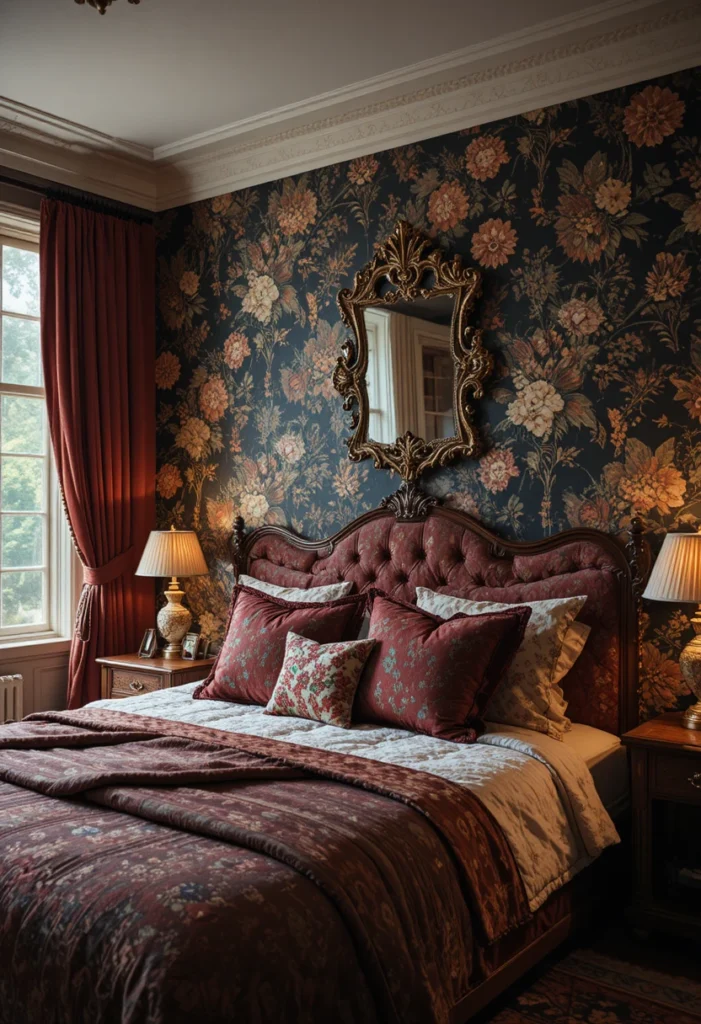
A dramatic four-poster or canopy bed, piled high with patterned throws and mismatched pillows, is eclectic maximalism at its coziest. Pair a bold, jewel-toned accent wall with a vintage dresser and a set of unexpected bedside lamps. Because bedrooms are private, this is often the room where people feel safest taking the biggest risks.
15. Trust Your Own Story Over Any Trend
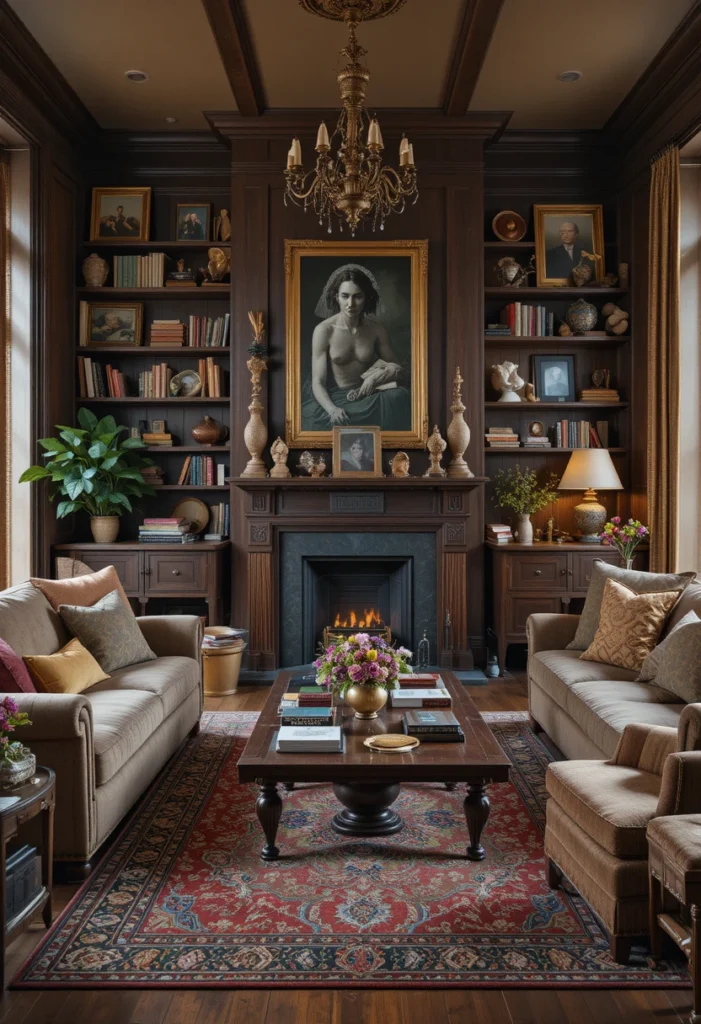
The single most important “rule” of eclectic maximalist decor is that it isn’t really about rules at all it’s about collecting what you genuinely love and trusting that your own taste, however unconventional, will pull together into something cohesive. The souvenir from your honeymoon, your grandmother’s lamp, the rug you impulse-bought on vacation these pieces are what make a maximalist room unmistakably yours, rather than a showroom copy of someone else’s.
Common Mistakes to Avoid
A few pitfalls come up again and again when people try this style for the first time:
- Overcrowding without curation. Abundance is the point, but a room stuffed with objects that have no relationship to each other reads as clutter, not style. Aim for curated chaos.
- Fear of color. The most common hesitation is playing it too safe. Bold colors are what make this style work — timid pastels rarely deliver the same energy.
- No repeated elements. Without a few repeating colors, patterns, or materials tying the room together, even beautiful individual pieces can feel disconnected from one another.
- Ignoring scale. Pairing several large, dramatic pieces without any smaller, quieter ones nearby can make a room feel heavy rather than layered.
Frequently Asked Questions
Is eclectic maximalism the same as boho decor?
They overlap but aren’t identical. Boho design leans on natural materials, earthy tones, and relaxed textures, while eclectic maximalism is broader it can include boho elements alongside Art Deco glam, industrial accents, or vintage European antiques, all mixed together.
How do I start an eclectic maximalist room without it looking chaotic?
Begin with a color story of two or three anchor tones, choose one statement piece as your anchor, and build outward with layered textures and repeated colors. Add new pieces slowly rather than all at once.
Can eclectic maximalism work in a small space?
Yes. Focus on vertical elements like gallery walls and tall shelving, layer multiple light sources, and use one or two bold pieces rather than filling every surface, so the drama reads without the space feeling cramped.
What colors work best for eclectic maximalist decor?
Jewel tones like emerald, sapphire, and ruby are classic choices, but warm muted palettes rust, mushroom, chocolate brown can achieve the same layered depth with a softer feel.
Final Thoughts
Eclectic maximalist decor isn’t about filling a room with as much stuff as possible it’s about building a space that tells the truth about who you are, one collected, color-drenched, texture-rich layer at a time. Start with a piece you love, build a color story around it, and let the room grow from there. The “more is more” philosophy, done with intention, doesn’t just fill a home. It makes it unmistakably yours.