
You know the apartment you’re picturing. The one where the coffee table isn’t buried under mail, the shelves have breathing room, and somehow the whole place looks bigger even though the square footage never changed. That’s not luck. It’s not an unlimited budget, either. It’s a handful of deliberate choices — and idea #9 below is the one most people get backwards without even realizing it.
Minimalist decor gets a bad reputation for feeling sterile, like a hotel lobby nobody actually lives in. But that’s a myth. The best minimalist apartments aren’t empty they’re edited. Every piece earns its spot, nothing fights for your attention, and the whole space feels like it was designed for how you actually live, not for a magazine spread you’ll never recreate.
Whether you’re working with a studio, a one-bedroom rental, or a full apartment you’re finally ready to pull together, these 14 minimalist apartment decor ideas will help you get there — without spending a fortune or throwing out everything you own.
Save this guide before you start decorating. You’ll want to come back to it room by room.
1. Start With a 70/20/10 Neutral Palette
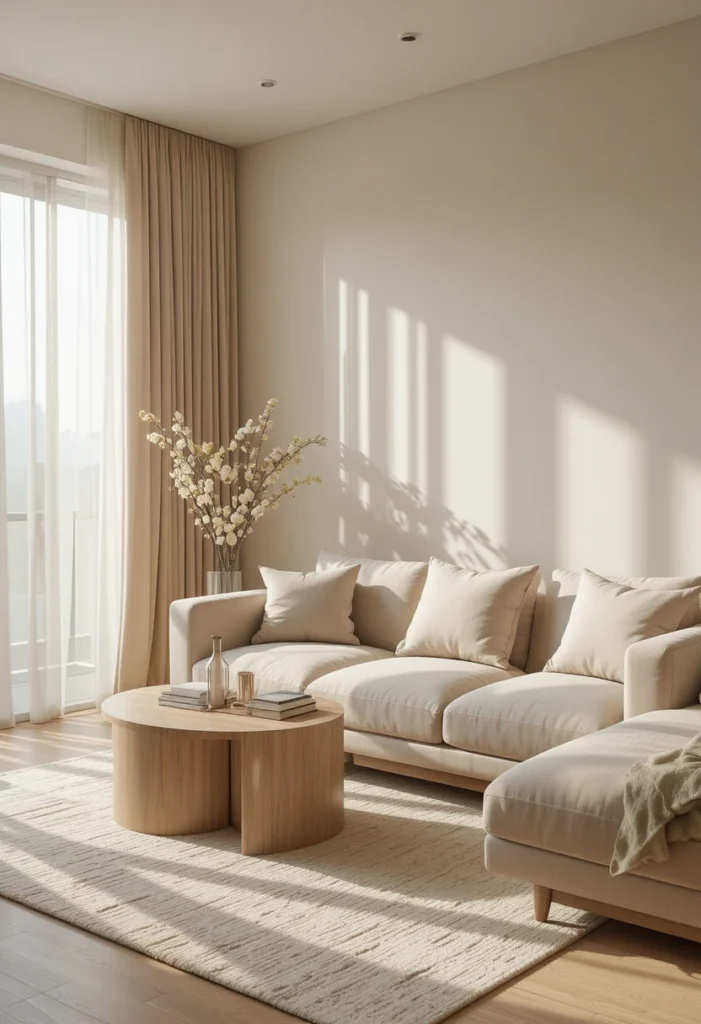
Before you buy a single decor piece, lock in your color ratio. Designers lean on a simple formula: 70% of the room is your main neutral (walls, big furniture, rug), 20% is a supporting tone (usually a second neutral or your wood finish), and just 10% is your accent color.
That last 10% is where your personality lives a couple of throw pillows, one piece of art, a ceramic vase. Keep it small and the room stays calm. Let it creep past 10% and you’ve quietly built a busy room without meaning to.
Here’s the thing: you don’t need five neutrals. Pick one main wall color and two or three supporting shades that repeat throughout the space, so every room feels like it belongs to the same story.
2. Choose Furniture With Visible Legs
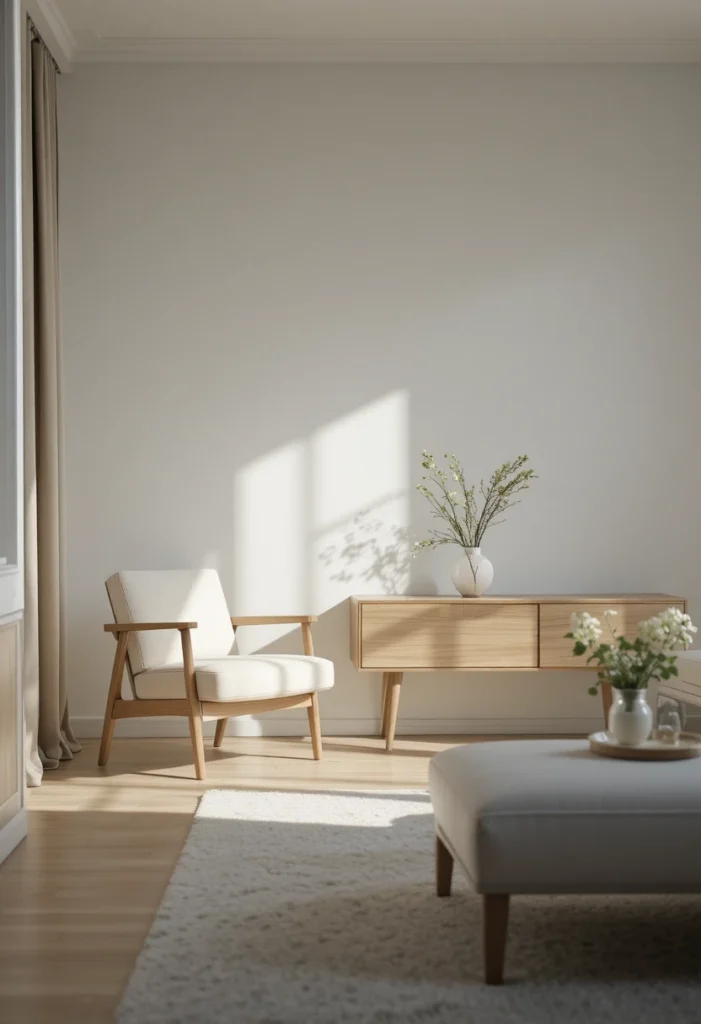
This is the single fastest way to make a small apartment feel bigger, and almost nobody talks about it. Furniture that sits flush to the floor sofas, beds, dressers visually eats the space beneath it. Furniture with exposed legs lets your eye travel underneath, which reads as more open floor and more light.
When you’re shopping, look for:
- Sofas and armchairs with slim, visible legs instead of skirted bases
- Bed frames raised off the floor rather than platform bases that touch down completely
- Coffee tables and console tables with open bottoms instead of solid panels
Quick tip: if you’re standing in a showroom deciding between two nearly identical pieces, the one with visible legs almost always wins for a minimalist apartment.
3. Embrace Warm Minimalism, Not Stark Minimalism
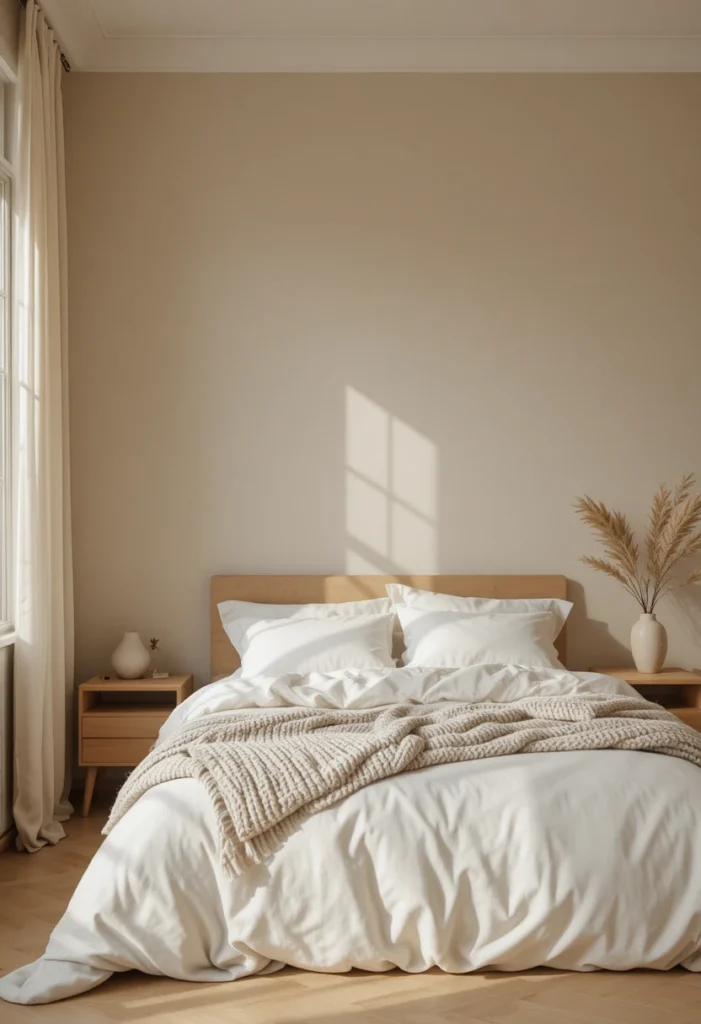
So what does this mean for you? It means you can stop associating “minimalist” with bare white walls and cold surfaces. The direction most designers are pushing toward now blends Japanese restraint with Scandinavian warmth — natural wood, soft textiles, and a muted, warm palette instead of clinical white.
Instead of stark white walls, try a warm greige, a soft putty tone, or a warm off-white with a slight yellow undertone. Cool grays and pure white can fight with natural materials like wood and linen warm neutrals let them glow.
A simple test: hold a piece of undyed linen fabric up to your wall color. If the linen looks warmer next to it, you’ve got the right shade. If it looks grayer or flatter, go a touch warmer.
4. Give Every Surface a “Decor Allowance”
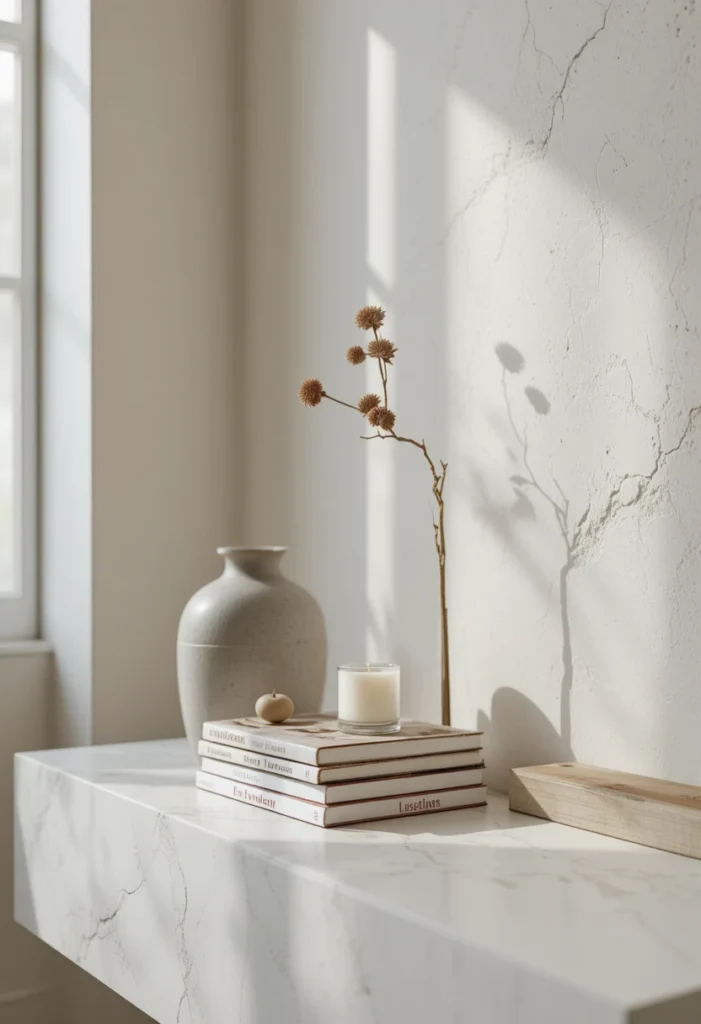
Here’s a trick that actually keeps a minimalist apartment minimalist long after moving-in day: give every surface countertop, console table, nightstand a strict allowance. Usually one larger item and one smaller item, max.
The rule isn’t about owning less. It’s about being ruthless with what stays visible. If you want to add something new, something else has to go into storage first. This single habit does more to prevent slow clutter creep than any big decluttering session ever will.
Read Also: 13 Minimalist Kitchen Decor Ideas for a Calm, Clutter-Free Space
5. Swap Bulky Nightstands for Slim, Wall-Mounted Pieces
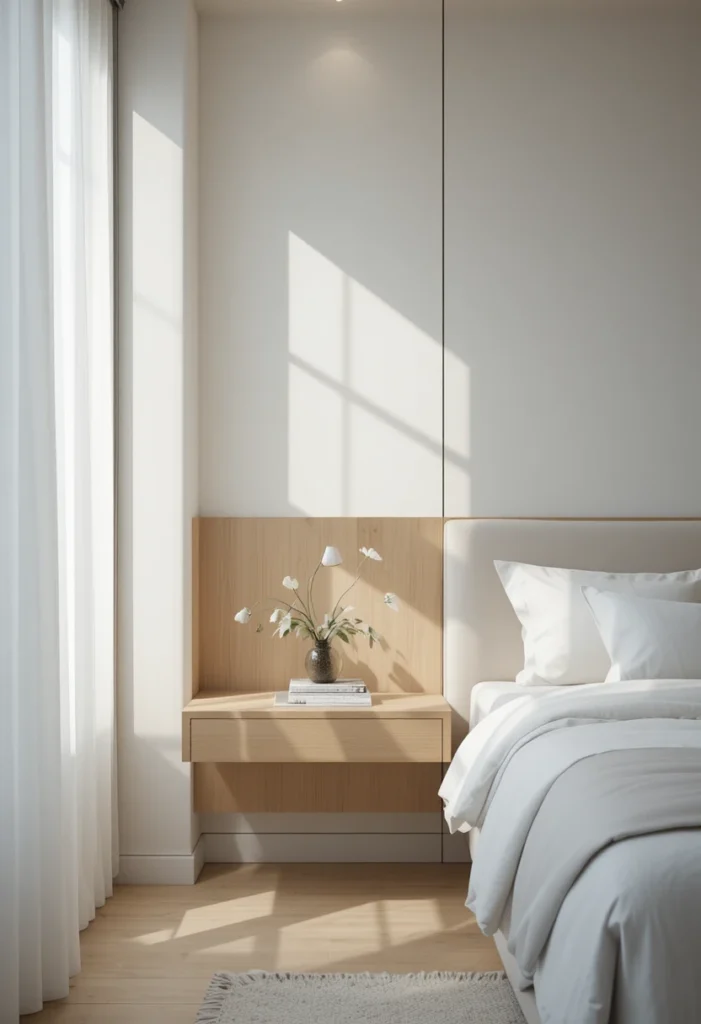
Nightstands are clutter magnets chargers, half-read books, water glasses, and whatever else lands there at 11pm. A slim, wall-mounted nightstand or a small floating shelf solves two problems at once: it physically can’t hold as much stuff, and it frees up visual floor space in a room that’s often the smallest in the apartment.
If you’re renting and can’t drill into walls, a narrow console-style nightstand with open legs gives you a similar lightweight effect.
6. Layer Natural Textures Instead of Adding More Objects
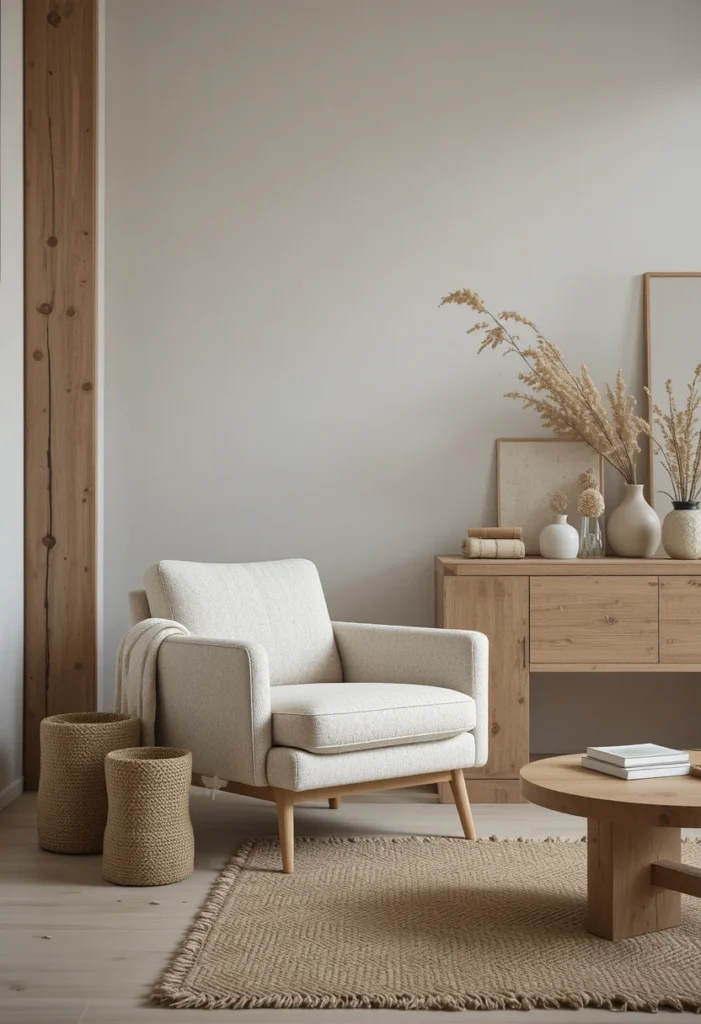
Minimalism doesn’t mean texture-less. In fact, texture is what keeps a neutral room from feeling flat or boring. Instead of reaching for another decorative object, add interest through material:
- A linen throw over a bouclé sofa
- A stoneware vase next to a smooth ceramic bowl
- A jute or wool rug layered under a low wood coffee table
- Unlacquered, matte wood finishes instead of glossy ones
When everything is the same soft neutral tone but made of different materials, your eye still finds plenty to look at it just never feels cluttered doing it.
7. Let Plants Do the Decorating
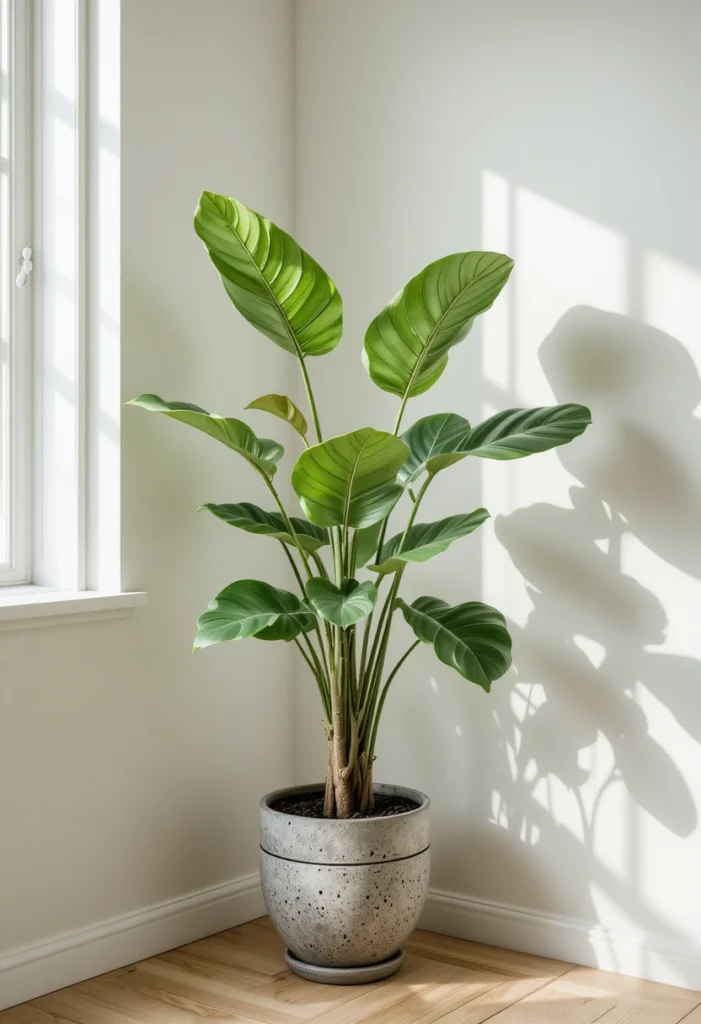
Houseplants are the easiest swap for knick-knacks and tchotchkes. Instead of filling a shelf with small figurines and souvenirs, put one well-shaped plant there instead. It brings color and life into the room without adding “stuff.”
For a minimalist look, keep the pot simple — matte ceramic, stone, or woven natural fiber, never anything glossy or heavily patterned. A single larger plant (a fiddle-leaf fig, an olive tree, a snake plant) often reads as more intentional than several tiny ones scattered around
8. Curate One Gallery Wall Moment, Not Five
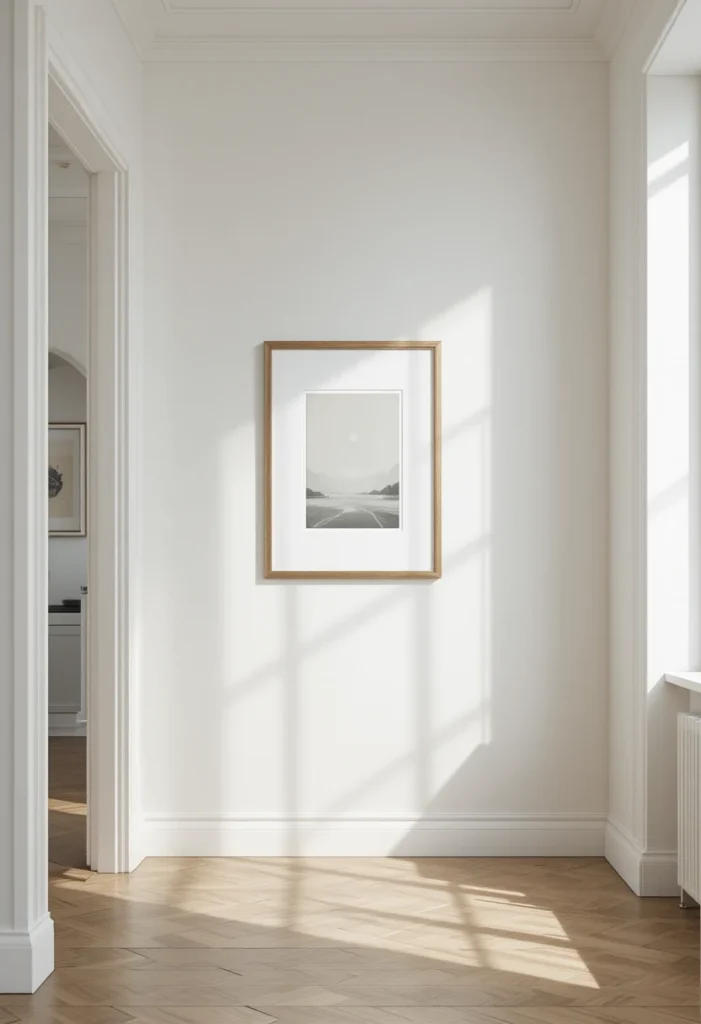
You don’t have to give up on wall art to keep a minimalist apartment. The trick is restraint: pick one wall for a curated gallery moment, and let every other wall stay clean.
When you build that one gallery wall:
- Use thin, unembellished frames instead of ornate or chunky ones
- Stick to a limited color story (black and white photography, or one consistent frame finish)
- Leave generous white space between pieces don’t crowd them edge to edge
One well-composed wall does more for a room than art scattered thinly across every surface in the apartment.
9. Go Low and Let the Walls Breathe
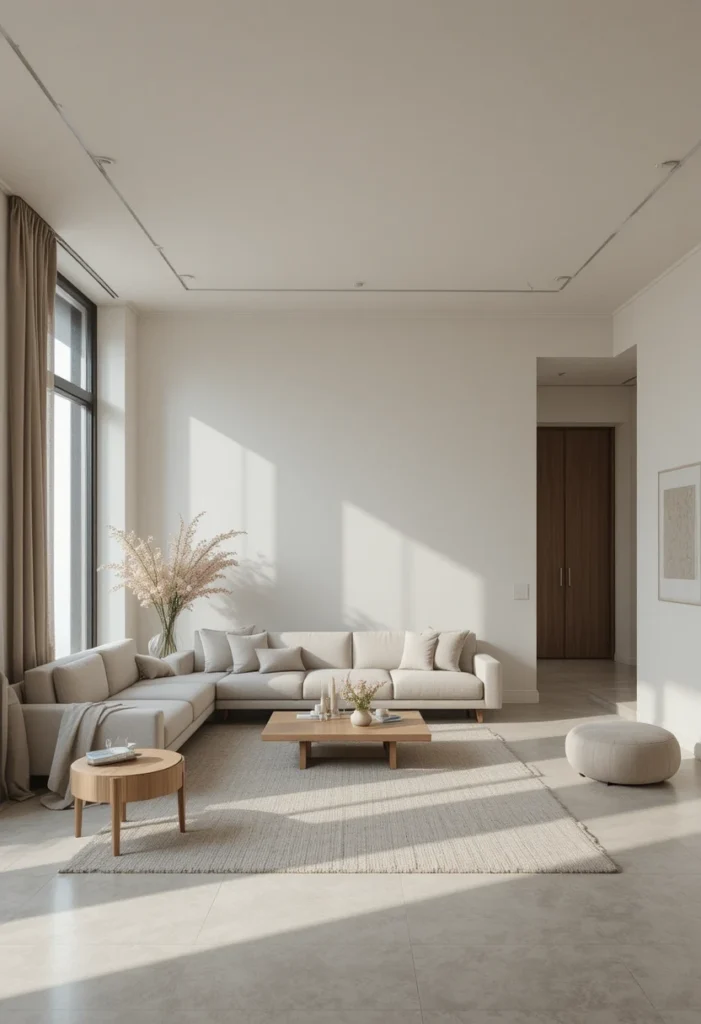
This is the idea most people get wrong. They assume “minimalist” means high-back, boxy furniture pushed against every wall. Actually, the opposite creates a much calmer, bigger-feeling room. Lower-profile furniture a floor-level coffee table, a low-slung sofa, a platform-style bed exposes more wall above it and makes ceilings feel taller.
A standard-height sofa against a small wall visually cuts that wall in half. A lower sofa leaves more open wall visible, and that extra negative space is what actually makes a small apartment read as spacious, not the size of the furniture itself.
10. Hide the Clutter With Closed Storage
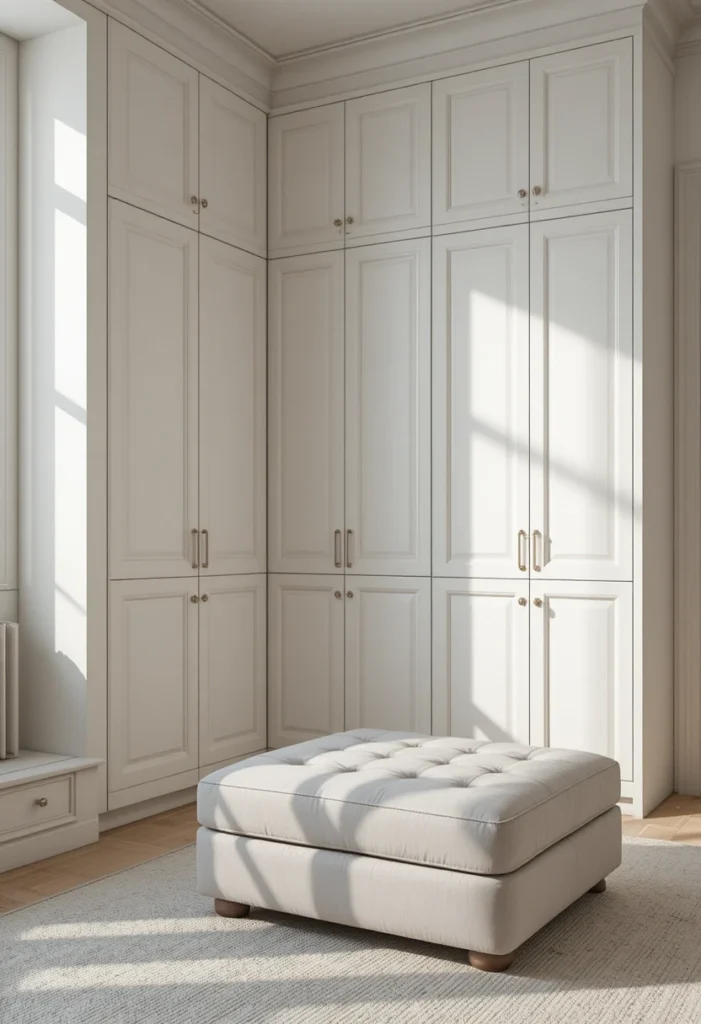
Open shelving looks beautiful in photos and becomes a stress magnet in real life. If you don’t have a place to put mail, remotes, chargers, and daily-use items out of sight, they will end up on your countertops no matter how disciplined you are.
Prioritize:
- A console table or credenza with closed cabinet doors near your entryway
- A storage ottoman instead of an open coffee table
- Woven or fabric bins tucked into any open shelving you do keep
The goal isn’t a home with nothing in it’s a home where everything has a door to hide behind.
11. Use Lighting to Create Mood, Not Just Function
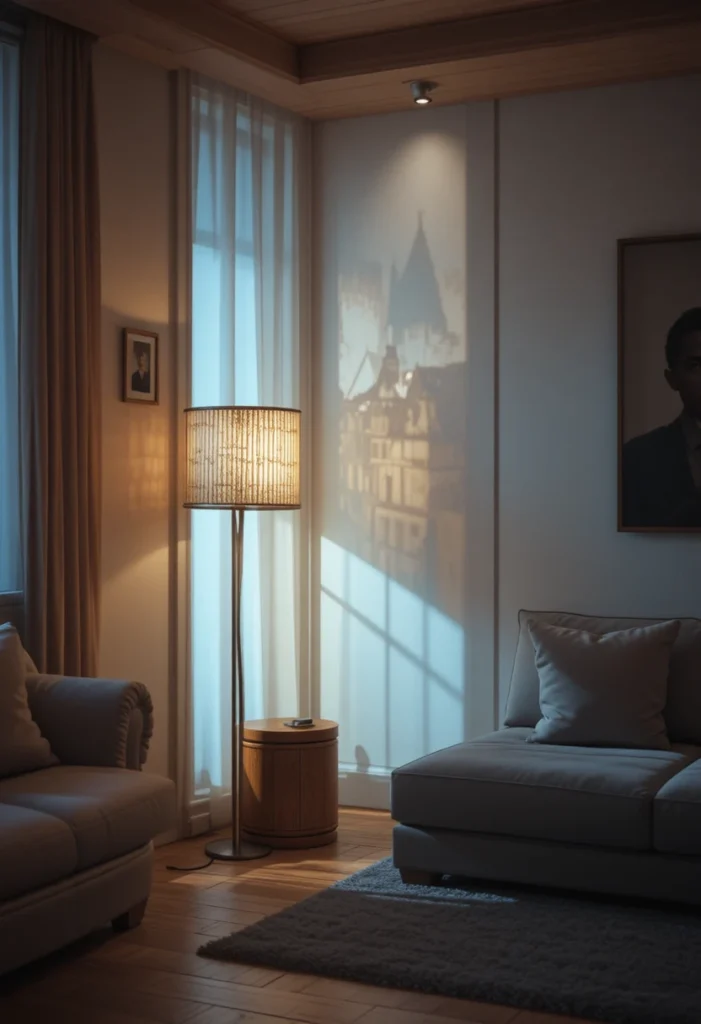
Minimalist apartments live and die by their lighting. A single harsh overhead bulb can make even a perfectly styled room feel flat and uninviting. Layer your light sources instead:
- A floor lamp for ambient light
- A table lamp for a softer reading pool
- Warm-toned bulbs (around 2700K) rather than cool white ones
Warm, layered lighting makes natural materials wood, linen, stone look richer, while flat overhead lighting tends to wash everything out. If you’re renting, swap the fixture and keep the original in a closet to reinstall before you move out.
12. Choose Thin, Unembellished Frames
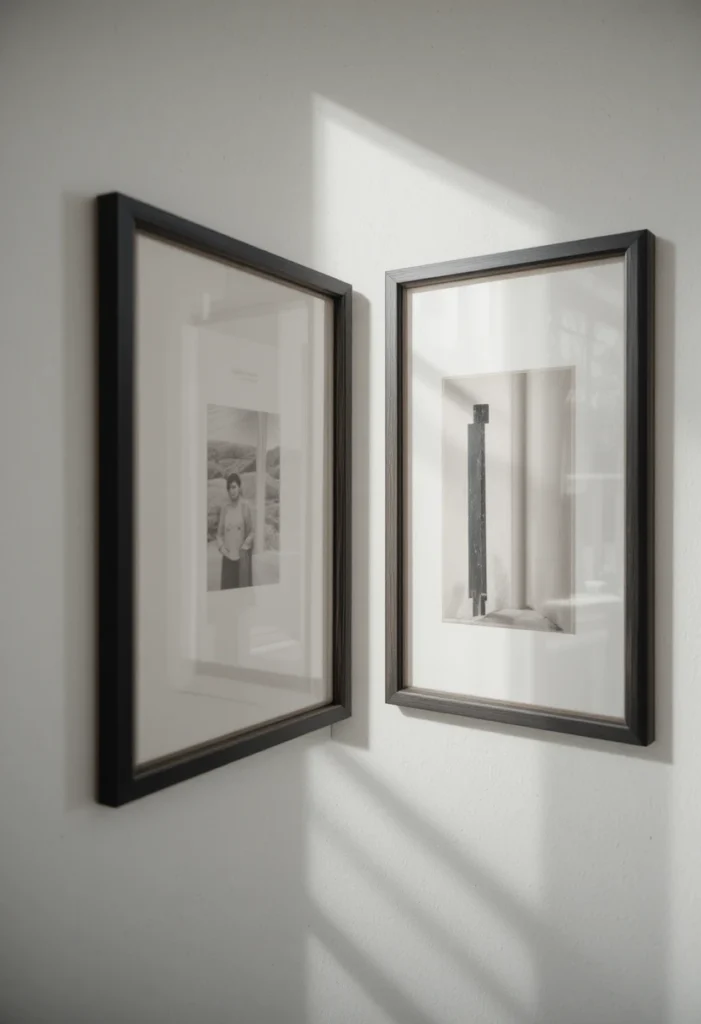
Small detail, big impact. Elaborate, chunky picture frames instantly clash with a minimalist room, even if everything else is perfectly styled. Swap them for thin metal or light wood frames with clean edges. This applies to mirrors too a slim-framed or frameless mirror will always feel more at home in a pared-back apartment than an ornate one.
13. Add One Statement Piece per Room
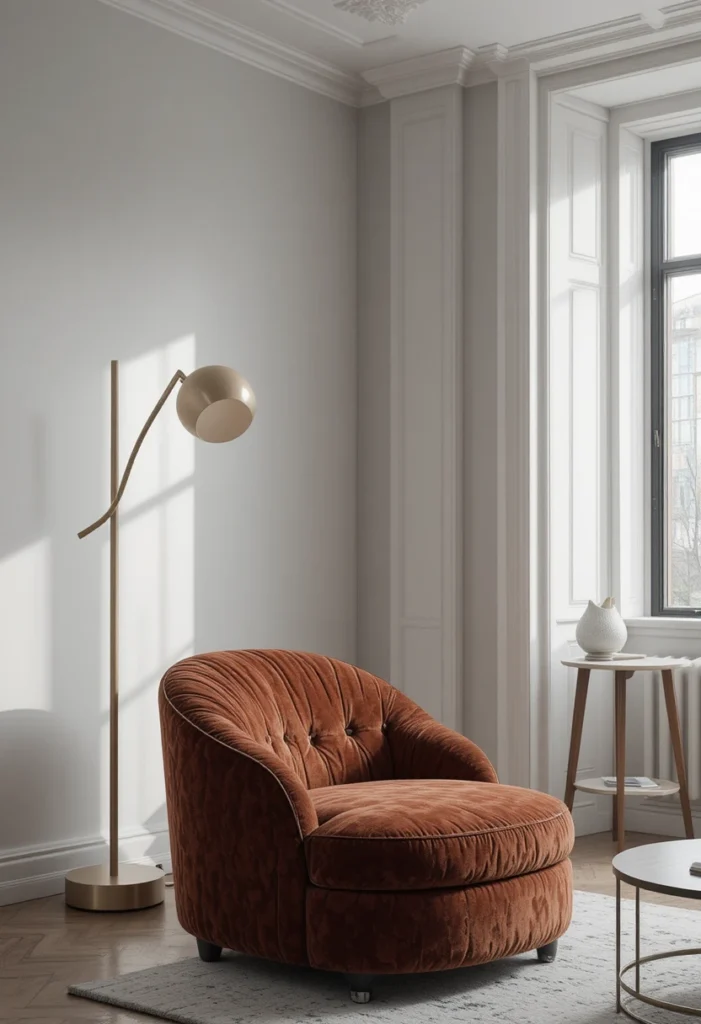
Minimalism isn’t about making every room boring. Pick one statement piece per room and let it do the work a sculptural floor lamp, a bold-shaped accent chair, a striking piece of pottery. Everything else in the room should be quiet enough to support that one moment, not compete with it.
This is the difference between a minimalist room that feels curated and one that feels unfinished. One confident piece, surrounded by calm, reads as intentional design. Five competing pieces reads as indecision.
14. Keep a Weekly “Reset” Ritual
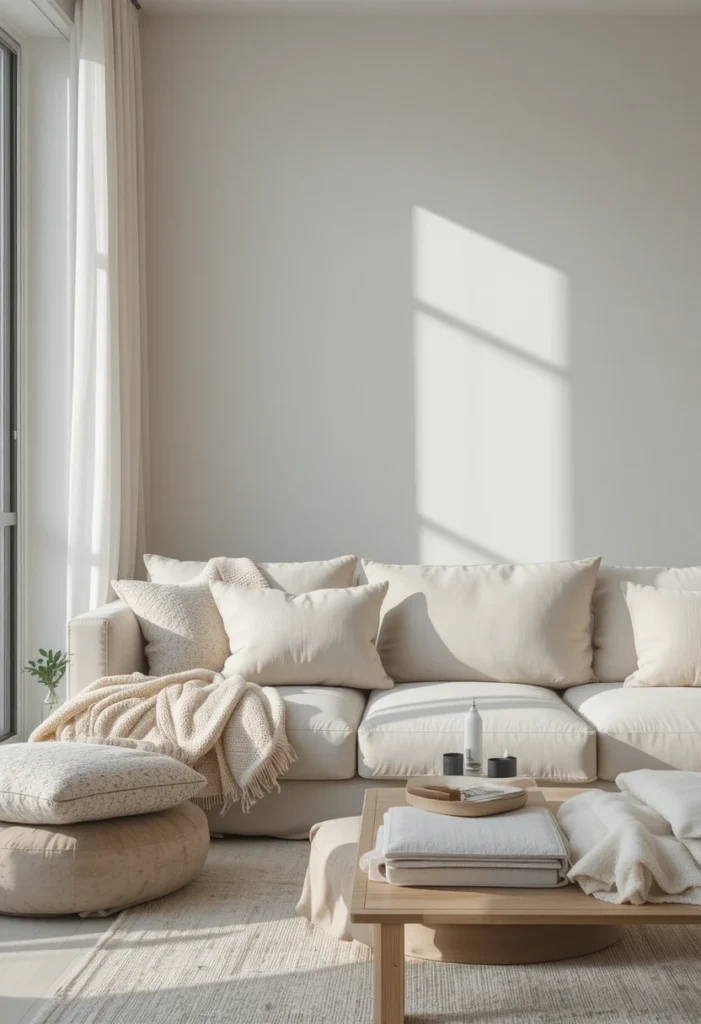
Even the most beautifully styled minimalist apartment falls apart in a week without a maintenance habit. Set a recurring 10-minute reset Sunday evening works well for most people where you put loose items back where they belong, clear countertops, and fluff/straighten what’s visible.
This is the unglamorous secret nobody puts in the photos: a minimalist apartment isn’t a one-time decorating project. It’s a habit you maintain in ten minutes a week, and it’s the difference between a space that stays calm and one that slowly drifts back to clutter by month two.
Frequently Asked Questions
Is minimalist decor expensive?
Not necessarily. Because minimalist decorating means buying fewer, better pieces instead of many small ones, it can actually cost less over time. Prioritize spending on furniture you touch daily (sofa, bed, lighting) and keep smaller decor pieces simple and inexpensive.
How do I make a minimalist apartment feel cozy, not cold?
Lean on warm neutrals instead of stark white, layer in natural textures like linen and wood, and use warm-toned lighting instead of cool white bulbs. Texture and warmth are what separate a cozy minimalist space from a sterile one.
What’s the difference between minimalist and Japandi style?
Minimalism is primarily about reduction — fewer objects, more open space. Japandi blends that restraint with Scandinavian warmth, favoring natural materials, low furniture, and a slightly more lived-in feel. If pure minimalism feels too cold for your taste, Japandi is a warmer entry point.
How do I start decluttering for a minimalist apartment?
Work room by room instead of tackling the whole apartment at once. Sort items into keep, donate, and discard piles, and ask yourself honestly whether you’ve used each item in the last six months. Give yourself a decor allowance per surface going forward so clutter doesn’t quietly creep back in.
The Takeaway
A minimalist apartment isn’t about owning nothing it’s about owning the right things and giving them room to actually be seen. Start with your palette, get your furniture proportions right, layer in warmth through texture and lighting, and protect your progress with a simple weekly reset.
Pick two or three ideas from this list to start with this weekend. You don’t need to overhaul the whole apartment at once the calmest homes are built one intentional choice at a time.