
You open the pantry door, something falls out, and you spend the next five minutes shoving it all back in and pretending that counts as “organized.” Sound familiar?
A tiny pantry doesn’t have to mean tiny patience. With the right system, even a narrow closet or a single kitchen cabinet can hold everything you need and actually look good while doing it. Below are 15 tiny pantry organization ideas that work in real kitchens, not just Pinterest photoshoots, including a few tricks near the end that most people skip and instantly regret.
Here’s the thing: the size of your pantry isn’t the real problem. It’s usually the system or lack of one. Let’s fix that.
Start Here: Empty It Out Before You Organize Anything
Before you buy a single bin, pull everything out of your pantry and put it on the counter. This one step does two things: it shows you exactly what you own (so you stop buying triples of taco seasoning), and it lets you wipe down shelves that haven’t seen daylight in months.
While everything’s out, sort into three quick piles: keep, toss, and “why do I own this.” Check expiration dates as you go. If something’s been sitting untouched for over a year, it’s not earning its shelf space.
Now you’re ready for the fun part.
1. Use Clear Containers for Everything Loose
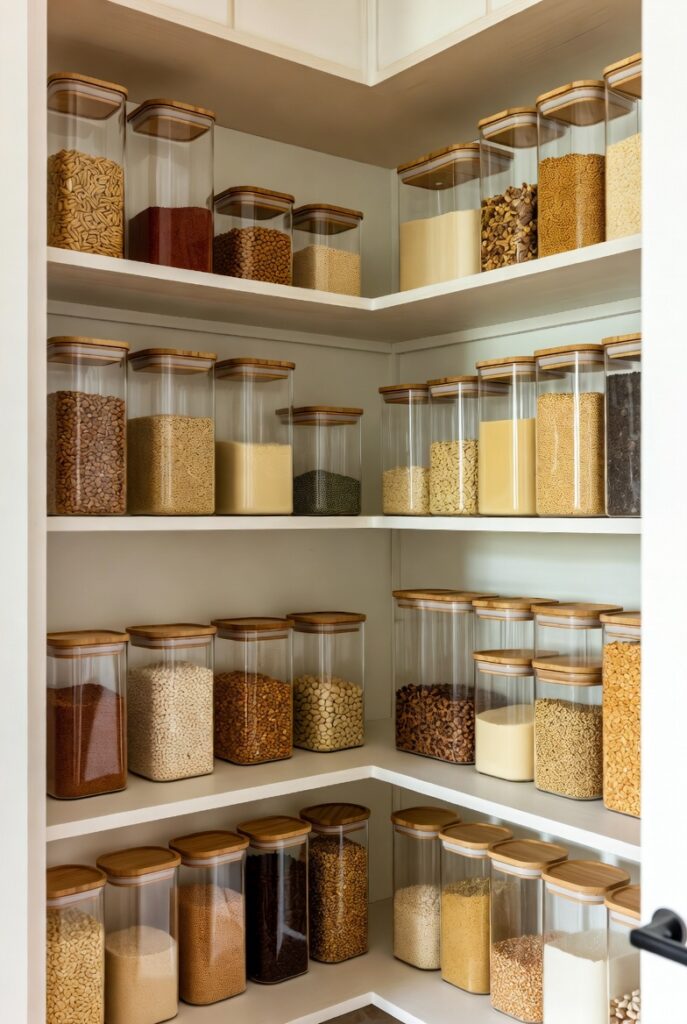
Bags of rice, flour, cereal, and pasta are the number one reason small pantries look chaotic. They’re bulky, they don’t stack, and they take up way more room than the food inside them actually needs.
Decant loose dry goods into clear, stackable containers. You’ll immediately gain shelf space, see when you’re running low, and stop buying duplicates because you can actually see what’s left.
Pinnable tip: Uniform containers instantly make any pantry no matter how small look styled and intentional.
2. Go Vertical With Wall-Mounted Storage
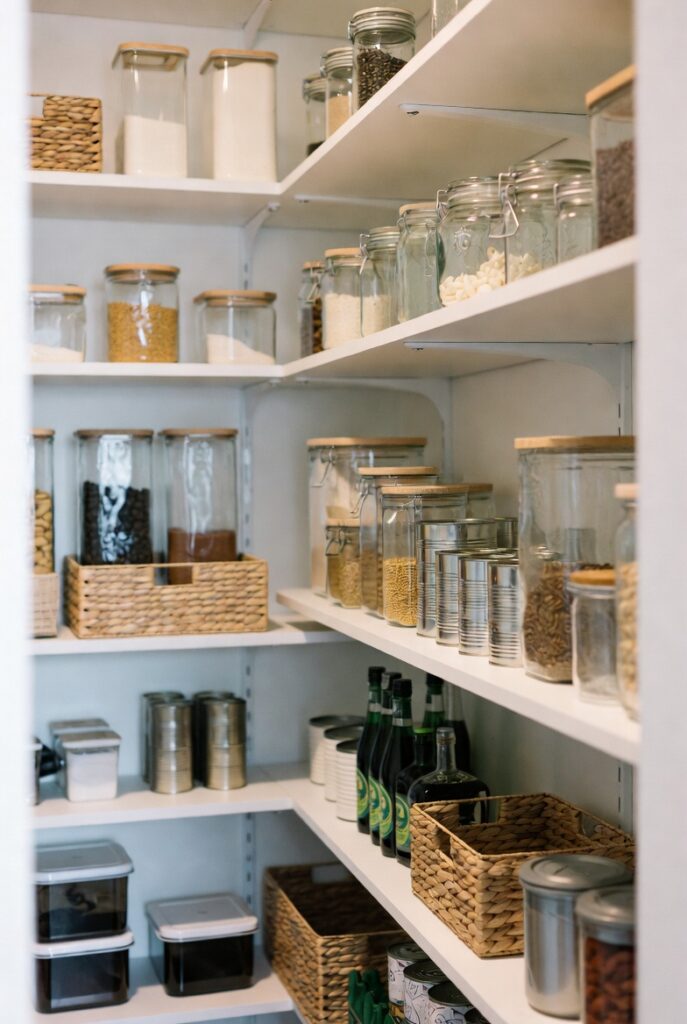
Tiny pantries fail when people only think about shelf depth and forget the walls. The inside of your pantry door and any bare wall space are free real estate.
Add a slim wall-mounted rack, an over-the-door organizer, or adhesive hooks for items like:
- Cutting boards
- Kitchen towels
- Small spice jars
- Reusable grocery bags
Because these mount to a wall or door, they don’t eat into your shelf footprint at all.
3. Try Adhesive, No-Drill Solutions if You Rent
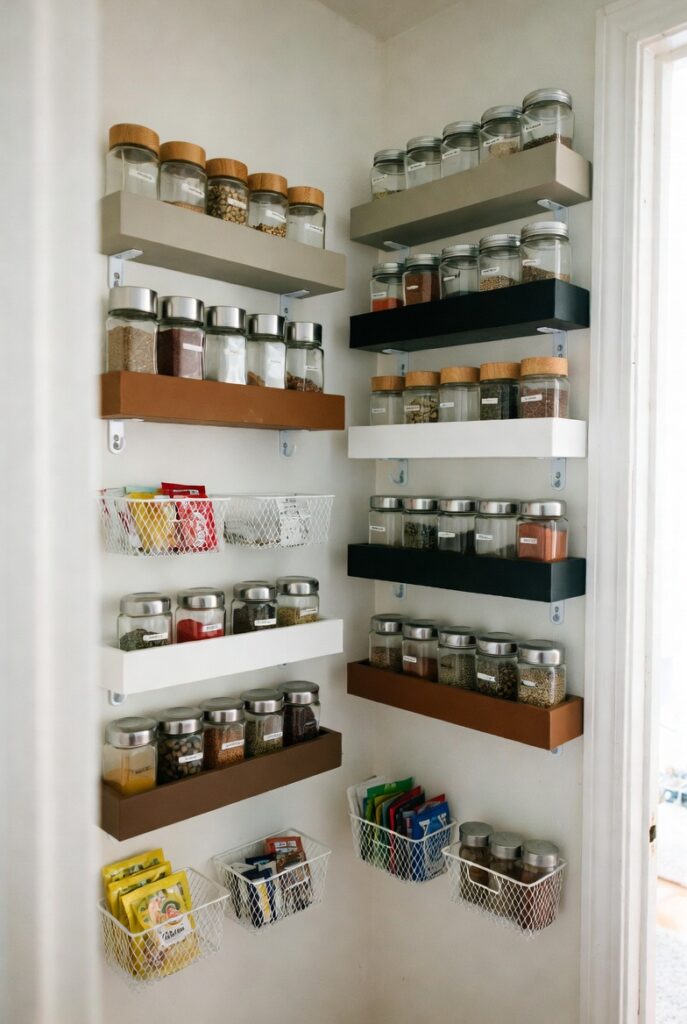
If you’re not allowed to drill into your pantry walls, that doesn’t mean you’re stuck with flat shelves. Command-style adhesive hooks, strips, and small floating shelves hold surprising weight and remove cleanly when you move out.
This is one of the most overlooked tiny pantry organization ideas for renters most guides assume you can drill wherever you want, but a huge number of small-pantry owners simply can’t.
4. Add a Slim Rolling Cart
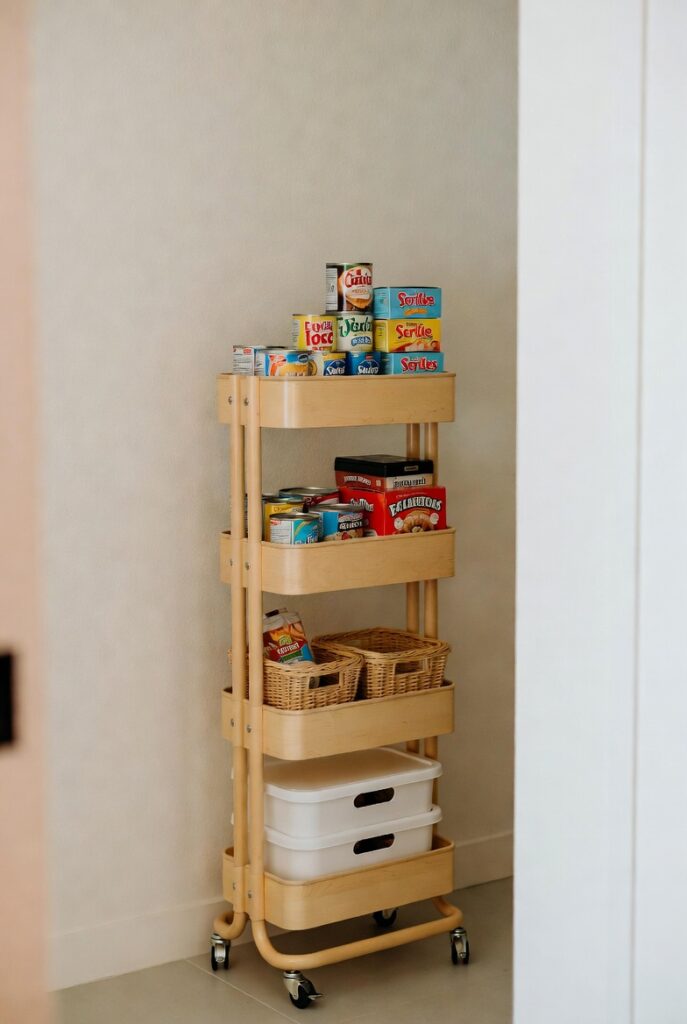
If your pantry is more of a narrow gap than an actual room, a slim rolling cart can act as a mini pantry extension. Tuck it into a corner, next to the fridge, or in a gap between cabinets.
Rolling carts are ideal for:
- Canned goods
- Snacks
- Baking supplies that don’t fit on shelves
Because it rolls, you can pull it out fully to see everything at once something a fixed shelf never lets you do.
Read Also: 15 Tiny Bar Cart Ideas That Prove Small Spaces Can Still Pour Big Style
5. Use Stackable Risers for Cans and Jars
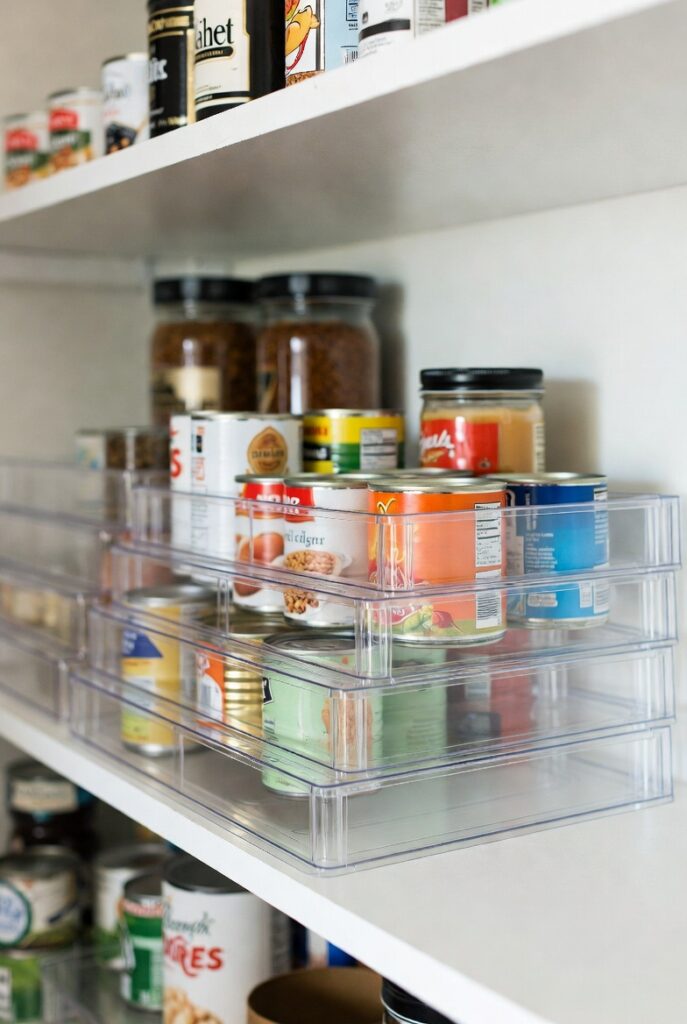
Canned goods are notorious space-wasters because they’re round and they stack badly without help. A two- or three-tier riser lets you see every can at a glance instead of digging through a wall of labels.
So what does this mean for you? No more forgotten cans hiding behind the front row, and no more buying a fourth can of diced tomatoes you already had two of.
6. Corral Snacks in Labeled Bins
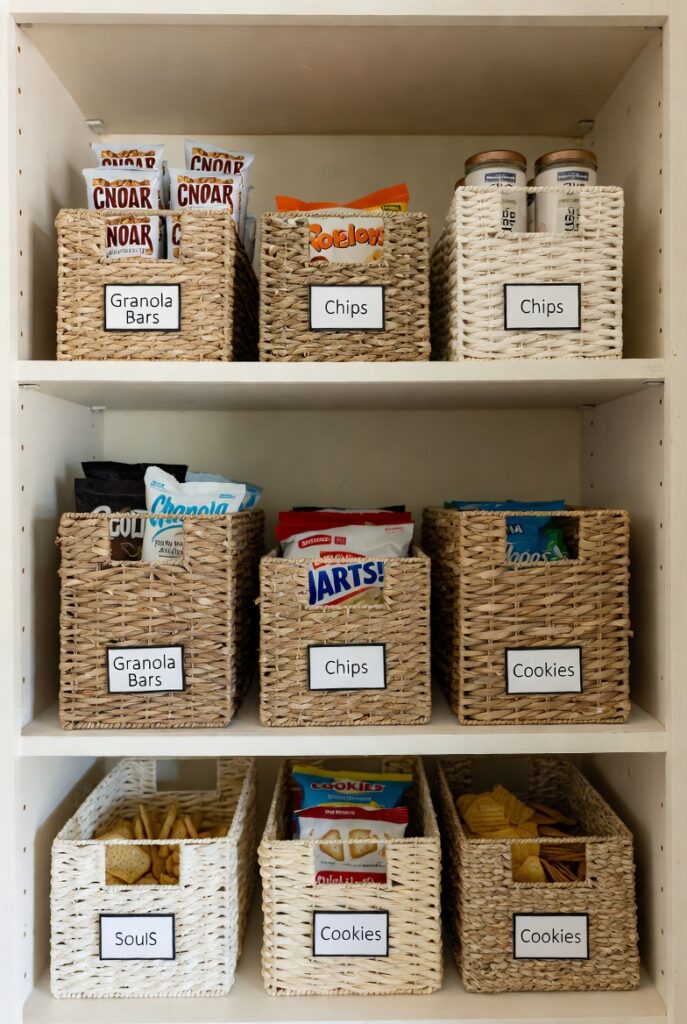
Snacks are the biggest culprits of pantry chaos because they come in odd-shaped bags, pouches, and boxes that don’t stack or stand up on their own.
Group them into labeled bins by category granola bars, chips, kids’ snacks, baking bits so anyone opening the pantry can find (and put back) what they need without creating a landslide.
7. Install a Lazy Susan for Oils, Condiments, and Spices
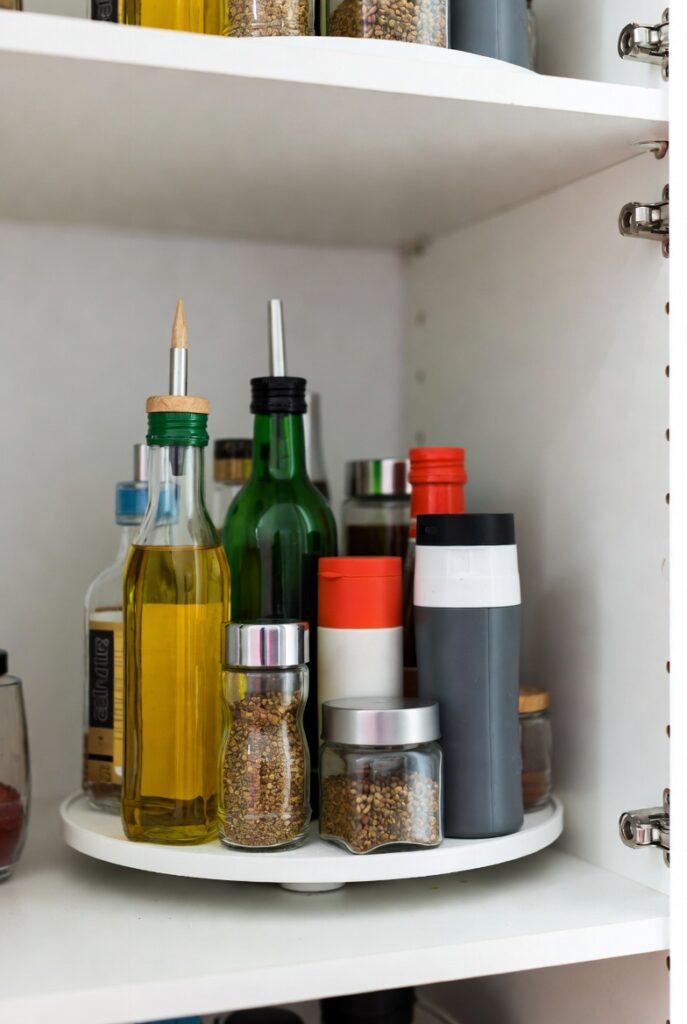
Deep, narrow pantries have a dead-zone problem: things get pushed to the back and forgotten. A lazy susan solves this instantly. Spin it, grab what you need, done.
This works especially well for:
- Cooking oils
- Vinegars
- Spice jars
- Small condiment bottles
It’s a small addition that solves one of the most common complaints about tight pantry spaces the dreaded “I know it’s in there somewhere” search.
8. Create Zones Instead of Random Shelves
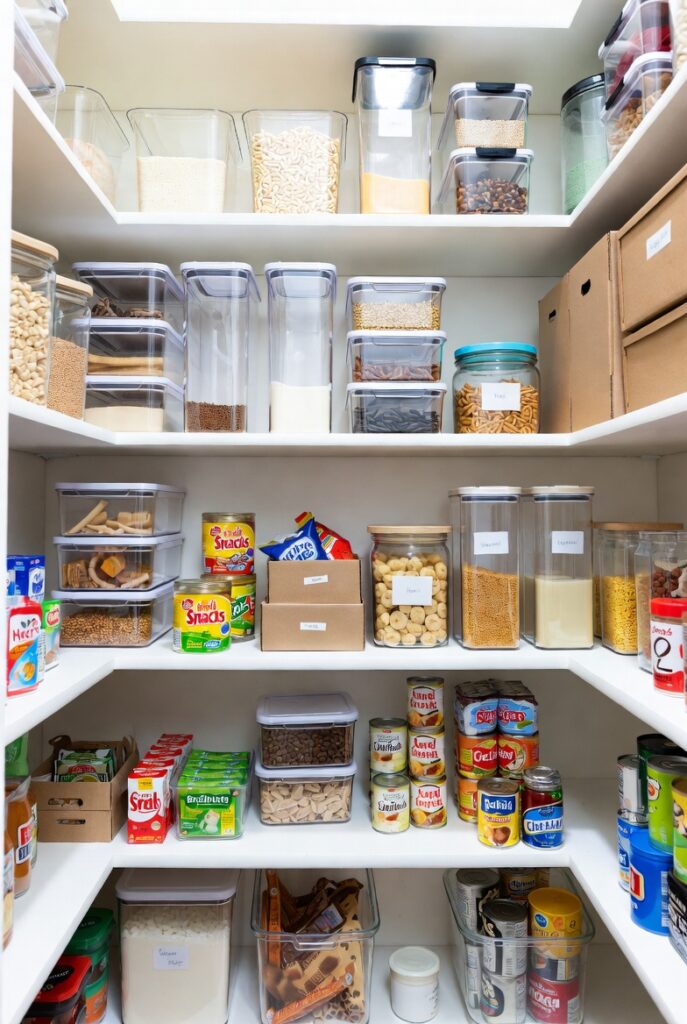
Here’s a mistake almost everyone makes at first: organizing by “whatever fits where.” Instead, assign each shelf a category baking, canned goods, snacks, breakfast, overflow so your brain always knows where to look.
Zoning also makes restocking groceries faster, because you’re not standing in front of the pantry trying to remember where you put the pasta last time.
9. Use Drawer Organizers for Packets and Small Items
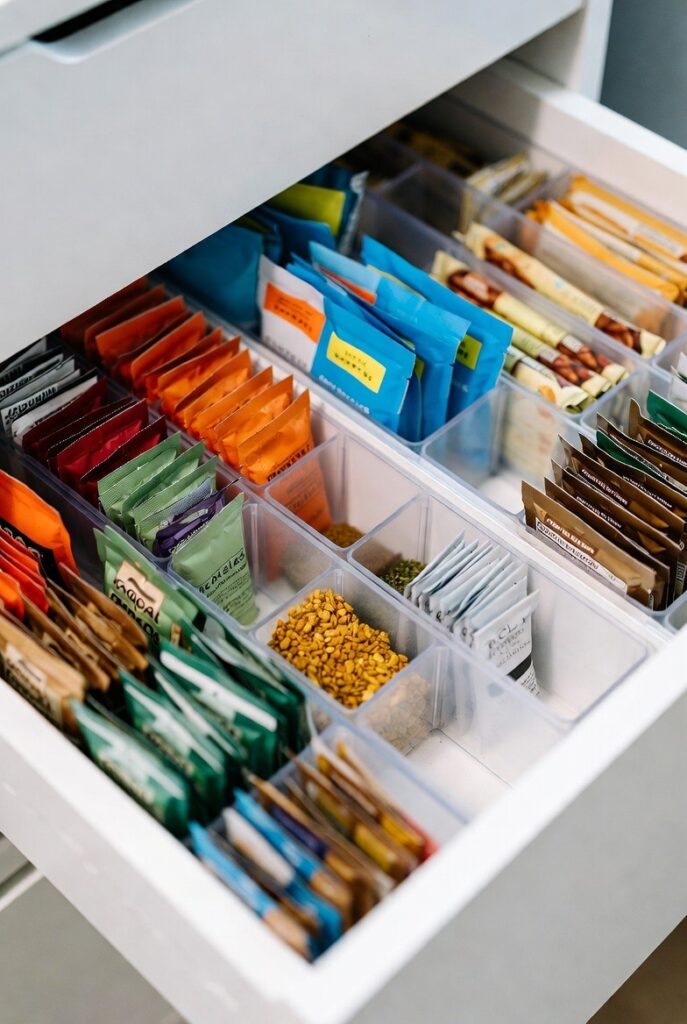
Spice packets, gravy mixes, seasoning pouches, and tea bags are small enough to disappear into chaos on a regular shelf. If your pantry has any drawer space even a single shallow drawer use small dividers to keep these items upright and visible.
No drawers? A small utensil caddy or divided bin does the same job on a shelf.
10. Hang a Tiered Basket System From the Ceiling or Shelf Underside
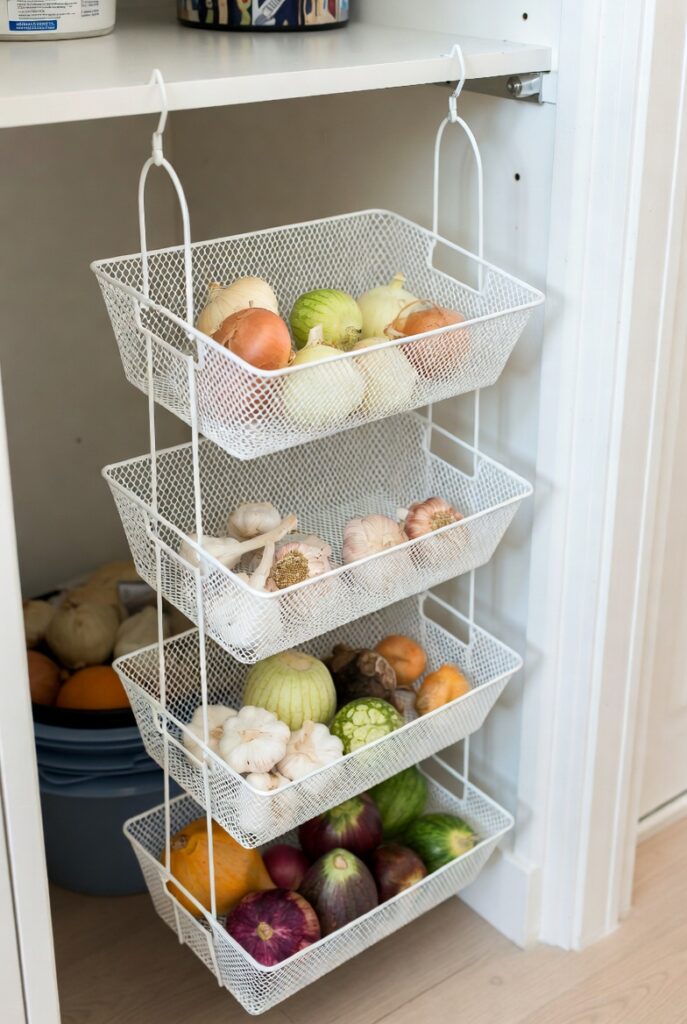
If your pantry has any unused vertical gap between shelves, hanging tiered wire baskets can add an entire extra storage layer without removing a single existing shelf. These work beautifully for:
- Onions and garlic
- Root vegetables
- Bread and rolls
It’s one of the easiest ways to add capacity to a small pantry without buying new furniture.
11. Use Baskets for “Grab-and-Go” Categories
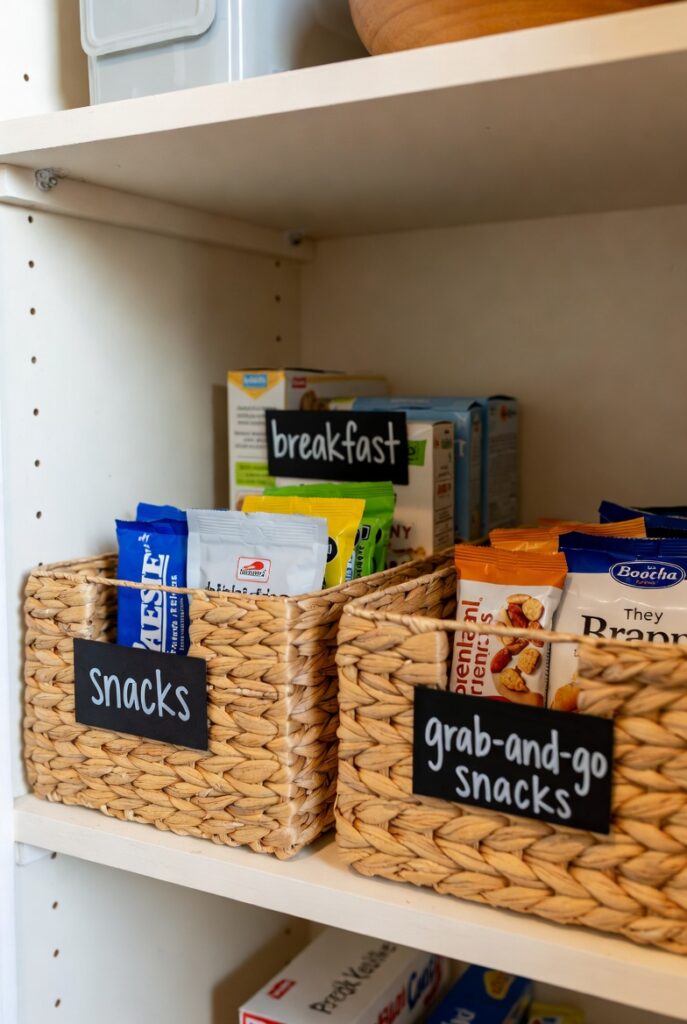
Not everything needs a rigid container. Woven or fabric baskets are perfect for items you grab in bulk, like produce, bread, or packaged snacks kids reach for on their own.
Pinnable tip: Baskets add warmth and texture to an otherwise plastic-heavy pantry function and style in one move.
12. Label Everything (Yes, Even If You Think You’ll Remember)
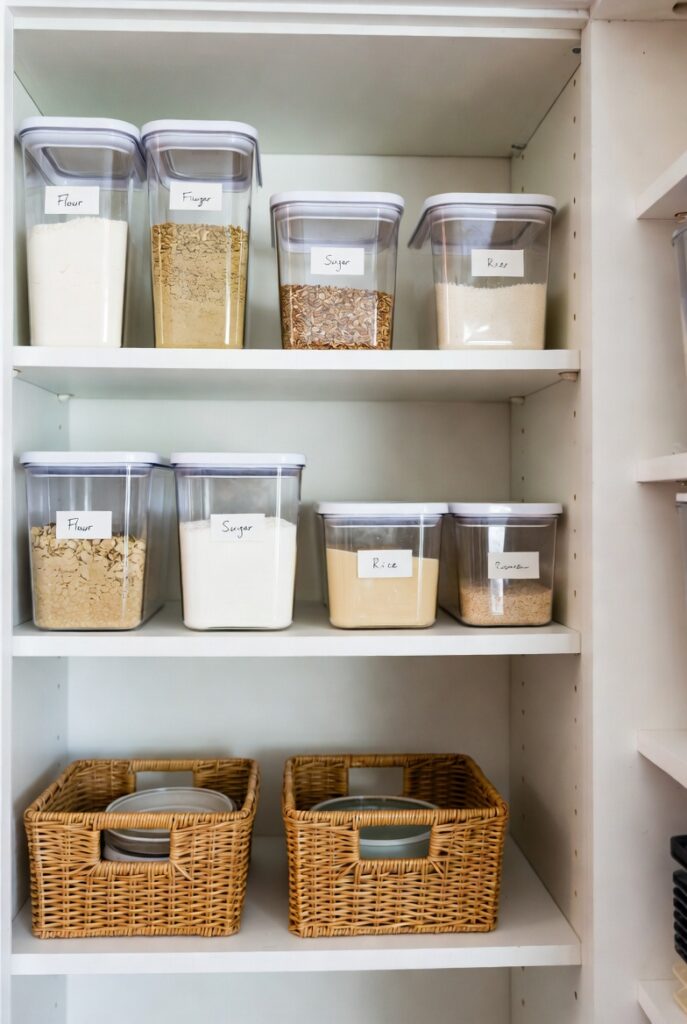
This is the step people skip most and regret most. Labels aren’t really for you; they’re for everyone else who uses the pantry and doesn’t know your system.
Use a label maker, chalk labels, or simple stick-on tags for anything decanted into a container, especially similar-looking items like flours, sugars, or grains.
13. Store Baking Supplies Together in One Container
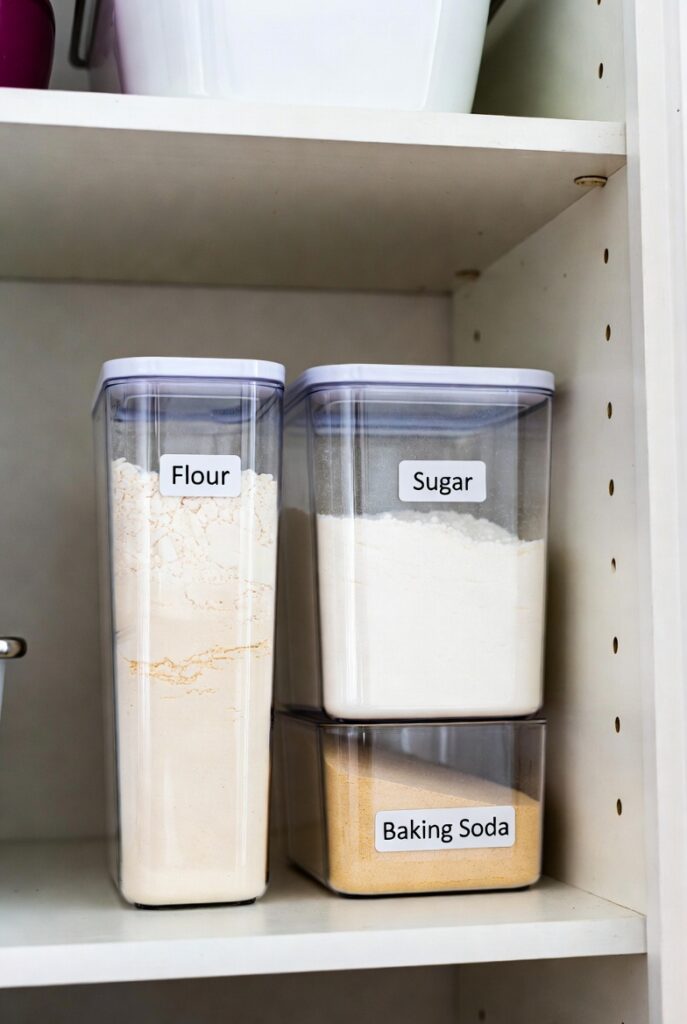
Rather than scattering baking soda, vanilla, sprinkles, and food coloring across different shelves, group them into a single labeled caddy or bin. When it’s time to bake, you pull one container instead of hunting through five shelves.
14. Reserve the Hardest-to-Reach Spot for Rarely Used Items
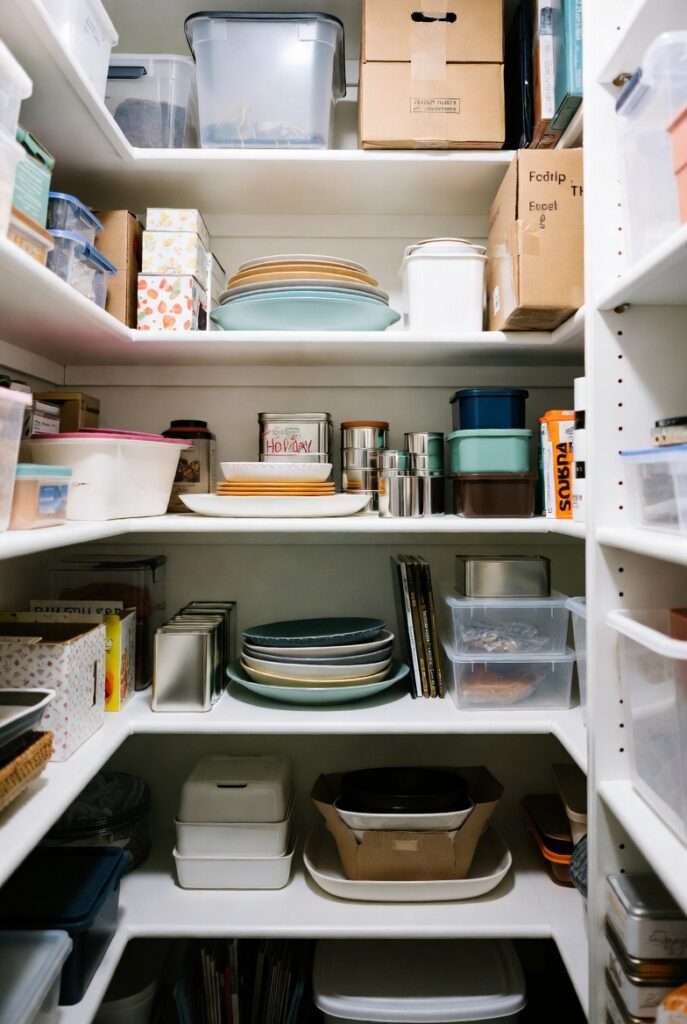
Every pantry has one awkward spot too high, too deep, or half-blocked by a wall. Instead of fighting it, put your least-used items there: holiday baking supplies, spare appliances, or backstock you only touch a few times a year.
But there’s a catch: if you put everyday items in that spot instead, you’ll create friction every single day. Match item frequency to accessibility, always.
15. Do a 5-Minute Reset Every Week
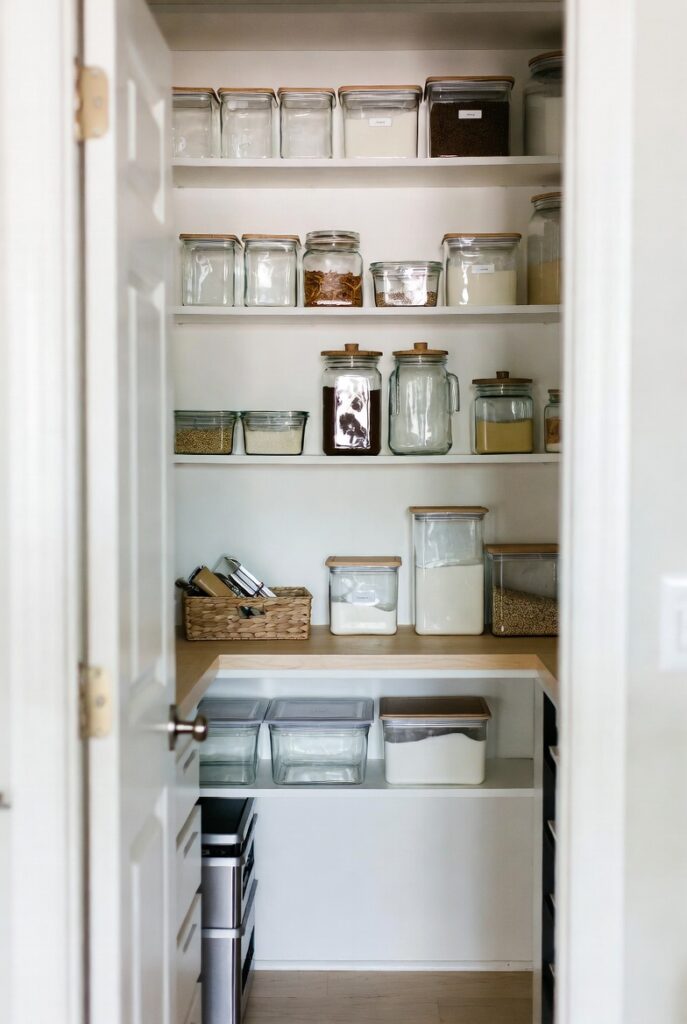
The best small pantry organization system in the world will fall apart without light maintenance. Once a week ideally right before a grocery trip spend five minutes straightening bins, tossing anything expired, and returning items to their zone.
This is the tip most people skip, and it’s the one that actually keeps a tiny pantry organized long-term instead of just organized for one satisfying afternoon.
Frequently Asked Questions
How do I organize a pantry with no shelves at all?
Use freestanding shelving units, a slim rolling cart, or over-the-door racks to create shelf-like storage without any building modifications.
What’s the cheapest way to organize a small pantry?
Repurpose containers you already own, use cardboard or leftover boxes as makeshift bins, and prioritize labeling and zoning both are free and make the biggest visible difference.
How often should I reorganize my pantry?
A full pantry organization refresh every three to six months is typical, with a quick five-minute reset weekly to keep it from sliding back into chaos.
Do clear containers actually make a difference, or is that just aesthetic?
Both. Clear containers let you see quantities at a glance, which reduces overbuying and food waste it’s a functional upgrade, not just a look.
What’s the biggest mistake people make in small pantries?
Organizing by “whatever fits where” instead of creating category zones. Without zones, small pantries drift back into clutter within weeks.
Final Thoughts
A tiny pantry isn’t a lost cause it just needs a system built for its size instead of borrowed from someone’s walk-in. Start with the empty-it-out step, pick three or four ideas from this list that fit your space and budget, and build from there. You don’t need to do all 15 at once to see a difference.
Save this list to your Pinterest board so you can come back to it next time you’re ready to tackle another shelf.