
Walk into the wrong tiny house and it feels like a storage unit with a bed crammed inside. Walk into the right one, and it feels like a boutique hotel suite you never want to check out of. The difference isn’t square footage — it’s decor strategy.
If you’ve ever stood in a 200-square-foot space wondering how to make it feel like home instead of a shipping container, you’re in the right place. These 14 tiny house decor ideas are pulled from real small-space living trends, and every single one is something you can actually pull off no demolition required.
1. Commit to One Color Story, Not a Rainbow of Ideas
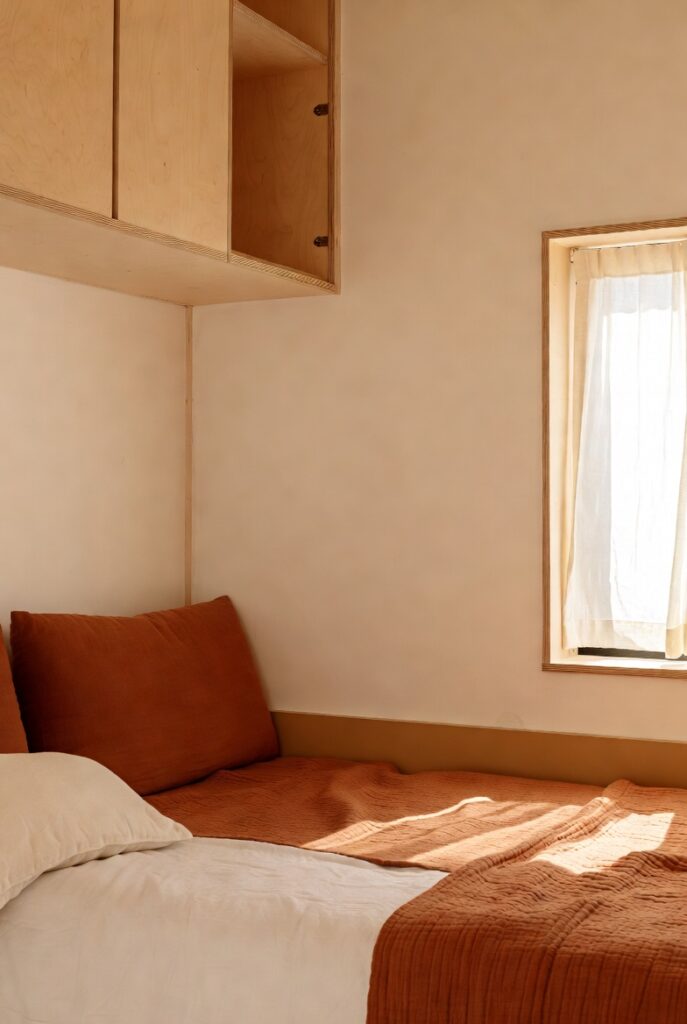
The single fastest way to make a tiny house feel chaotic is mixing five different color palettes across five different corners. Pick one dominant neutral warm white, soft greige, or pale oat and let it flow across walls, ceiling, and larger furniture pieces.
Then choose one accent color and repeat it in small doses: a throw pillow, a vase, a stack of books. Repetition reads as intentional design. Randomness reads as clutter, even when the actual mess is minimal.
Pinterest-worthy tip: A monochrome base with one bold accent color photographs beautifully and is one of the most saved aesthetics in the tiny house niche.
2. Let Vertical Space Do the Heavy Lifting
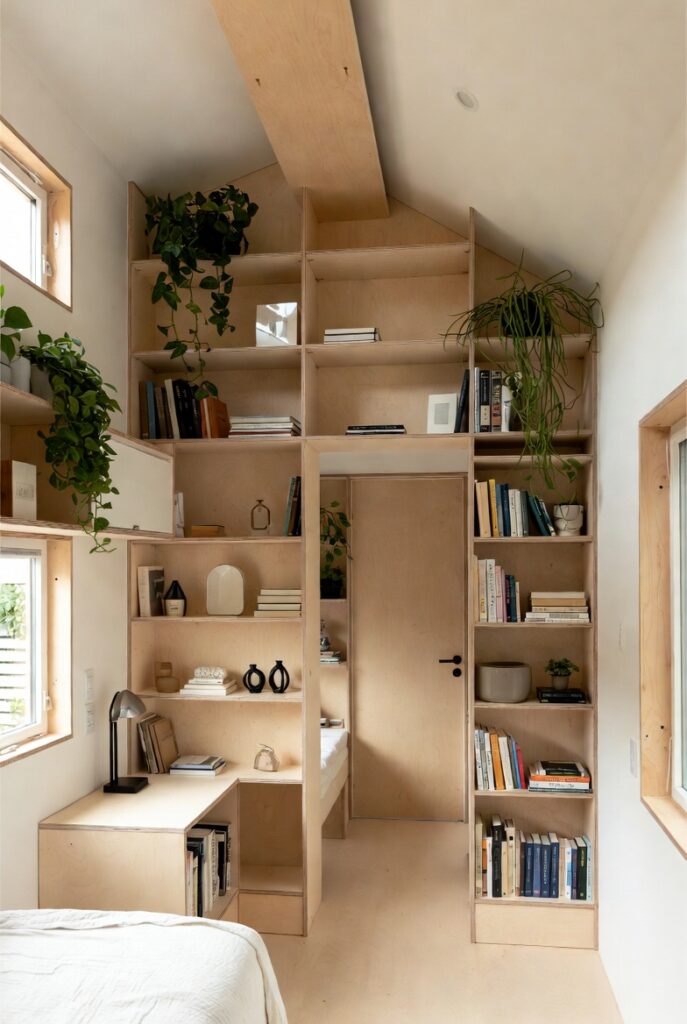
Floor space in a tiny house is sacred, so stop asking it to hold everything. Once you run out of usable floor real estate, your walls become the new frontier.
Floating shelves, wall-mounted desks, and tall narrow bookcases pull the eye upward, which visually stretches ceiling height. Hang art slightly higher than eye level and add a plant or two above a doorway to make the whole room feel taller than it is.
3. Use a Loft Bed to Reclaim an Entire Room’s Worth of Space
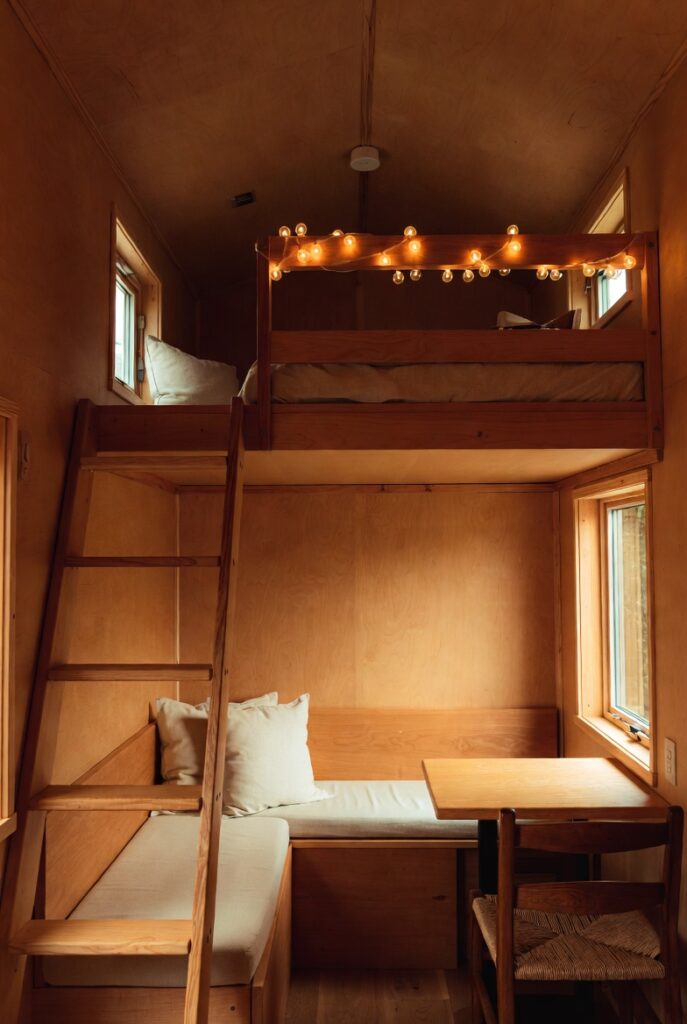
If your tiny house has the ceiling height for it, a loft bed isn’t just a space-saver it’s a design statement. Tucking the bedroom overhead frees the entire main floor for a living room, kitchen, or workspace that would otherwise be impossible.
Add string lights, a small round window, or a cozy reading nook feel underneath the loft with soft rugs and floor cushions, and that “dead space” beneath the stairs suddenly becomes the coziest corner in the house.
4. Turn the Stairs Into Storage
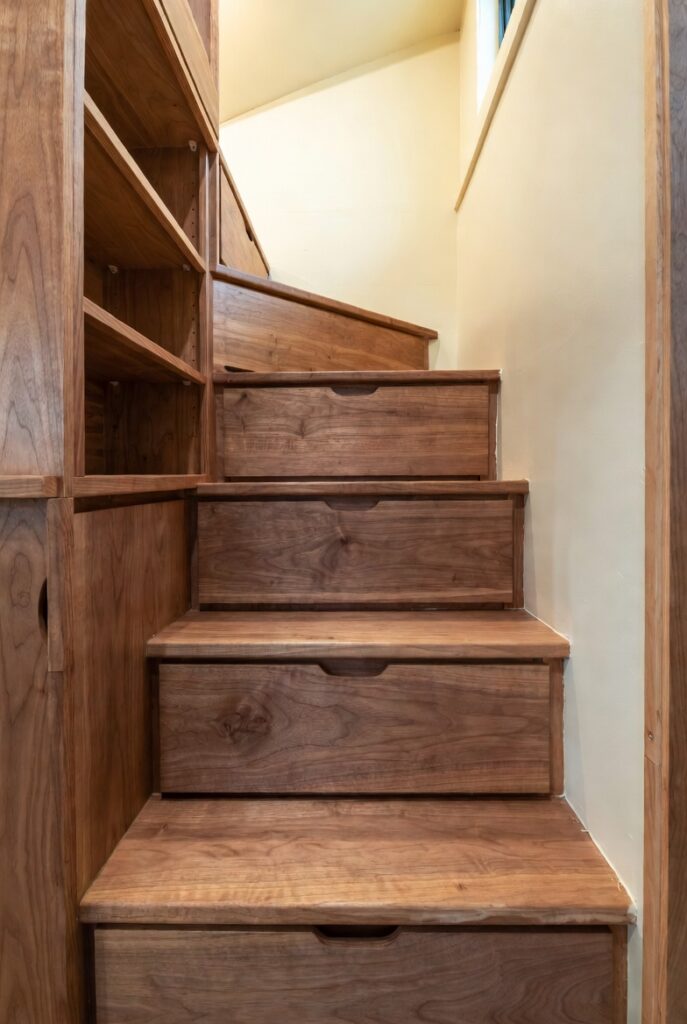
Under-stair storage is one of the most repeated ideas across nearly every tiny house tour for a reason it works. Pull-out drawers built into each step can hold shoes, linens, pantry items, or seasonal clothing without adding a single visible cabinet.
If your tiny house doesn’t have traditional stairs, apply the same logic to a ladder-style loft access: attach slim baskets or hooks along each rung for a similar payoff.
5. Choose Multi-Purpose Furniture Over Single-Use Pieces
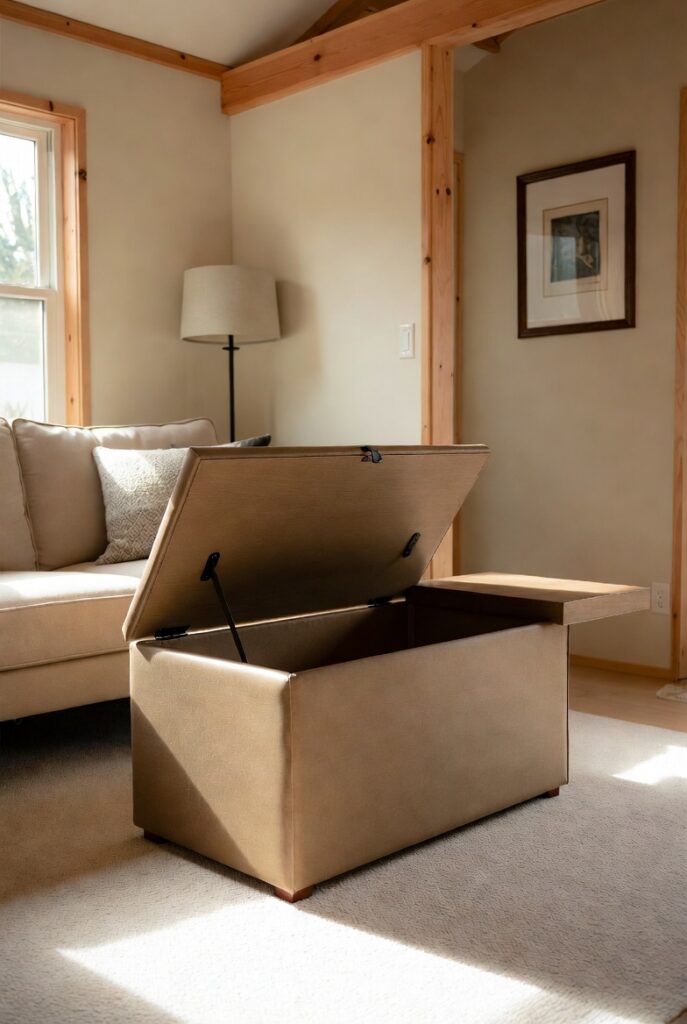
In a normal-sized home, a coffee table just holds coffee. In a tiny house, it should also lift up for storage, extend into a dining table, or fold flat against the wall when you need the floor space back.
Look for:
- Storage ottomans that double as seating and hidden bins
- Wall-mounted drop-leaf tables for dining or workspace
- Sofa beds or daybeds that eliminate the need for a separate guest room
Every piece of furniture should justify its footprint by doing at least two jobs.
6. Add a Statement Light Fixture
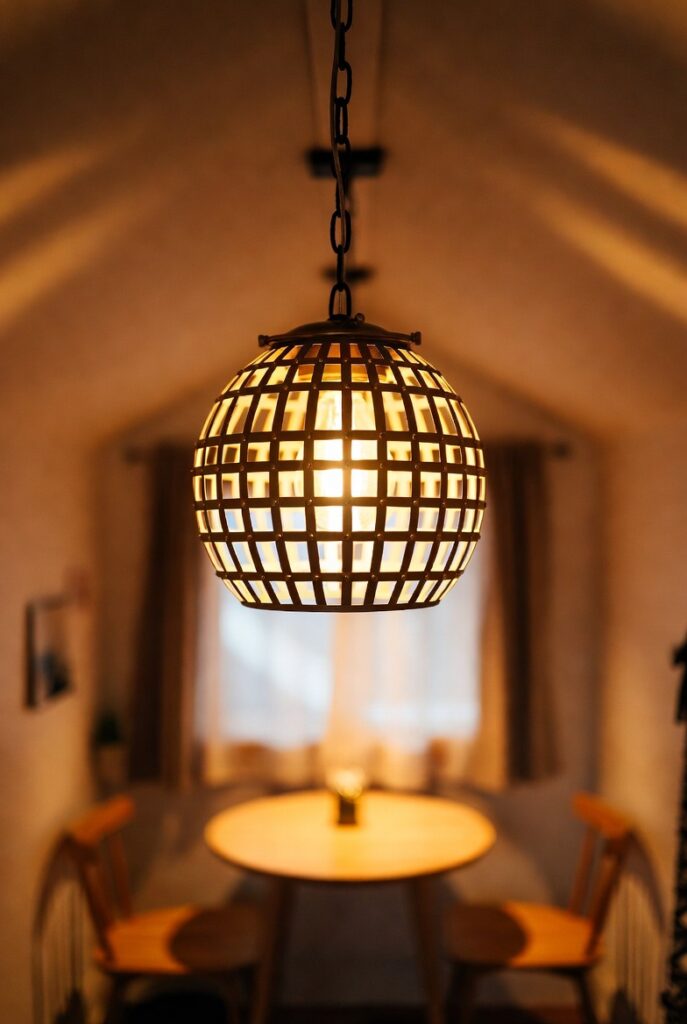
It sounds counterintuitive to add something bold to a small space, but one striking pendant light or sculptural chandelier can make a tiny house feel curated rather than cramped. Because there’s less competing visual noise in a small room, a single standout fixture gets to be the hero instead of getting lost.
Brass, black metal, and woven rattan pendants are especially popular in tiny house interiors right now because they add texture without adding bulk.
7. Use Mirrors to Bounce Light and Fake Extra Square Footage
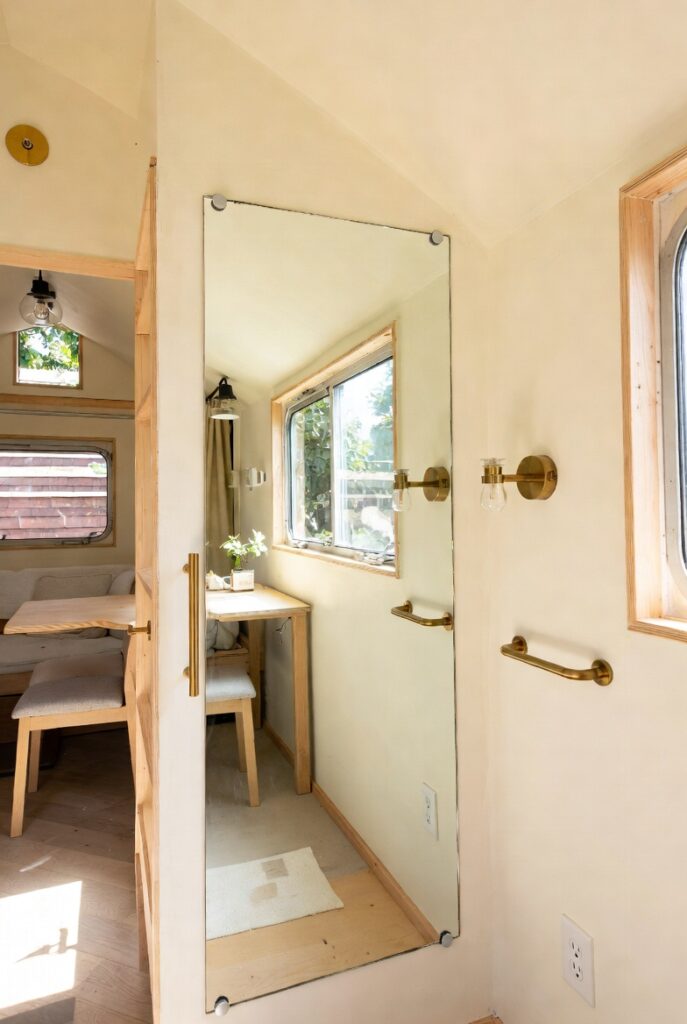
Placing a mirror across from a window is one of the oldest small-space tricks in the book, and it still works because it genuinely doubles the perceived light in a room. A large leaning mirror in an entryway or living area reflects both natural light and whatever view you have, making the whole space feel less boxed in.
Save-worthy tip: An oversized round mirror is currently one of the most pinned decor items for small living rooms because it softens the boxiness of tight walls.
8. Bring the Outdoors In With Plants
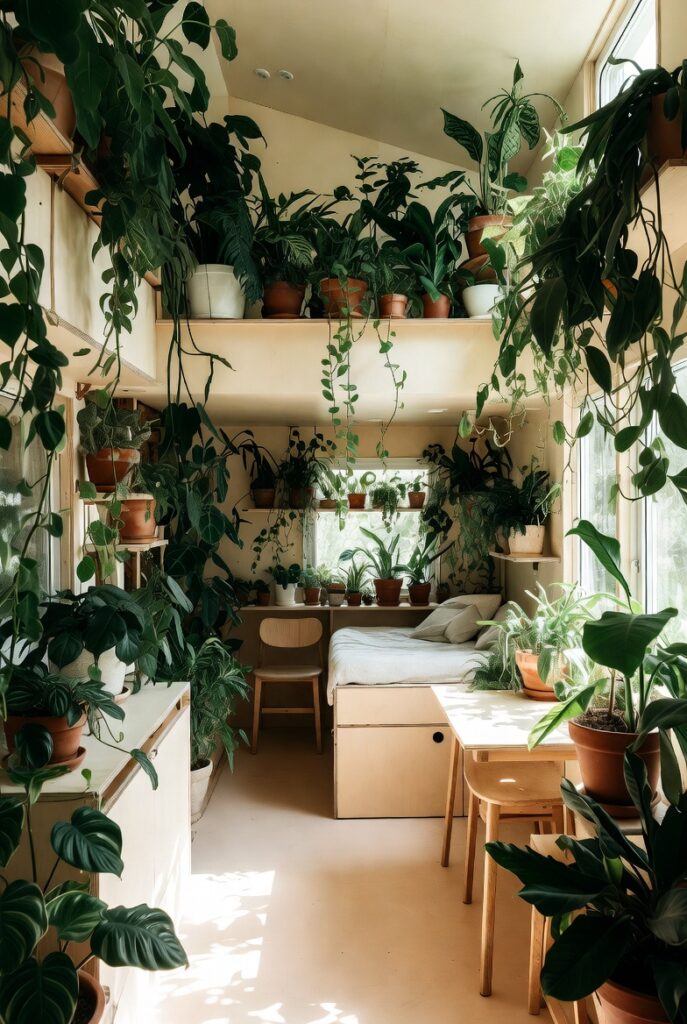
Houseplants solve two problems at once: they add life and color without taking up meaningful floor space, and they make even the smallest interior feel connected to something bigger. Trailing plants on a high shelf, a small potted herb garden on a windowsill, or one statement plant in a floor corner all work.
If natural light is limited, low-maintenance options like pothos, snake plants, or ZZ plants thrive in tiny house conditions without demanding much care.
9. Install a Sliding or Pocket Door
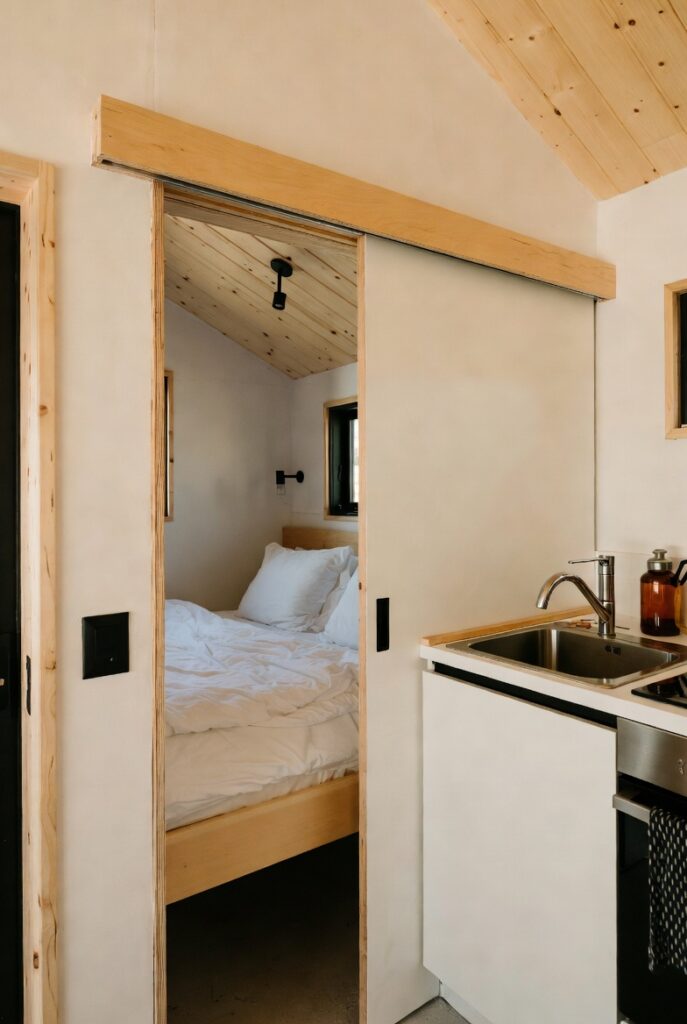
Traditional swinging doors eat up a surprising amount of usable floor space — space a tiny house genuinely cannot spare. Swapping a bathroom or bedroom door for a sliding barn-style door or a pocket door tucked into the wall reclaims that footprint instantly.
It’s also a design opportunity. A stained wood barn door or a black-framed glass slider adds a distinct visual moment to a hallway that might otherwise be forgettable.
10. Create a Micro Reading Nook
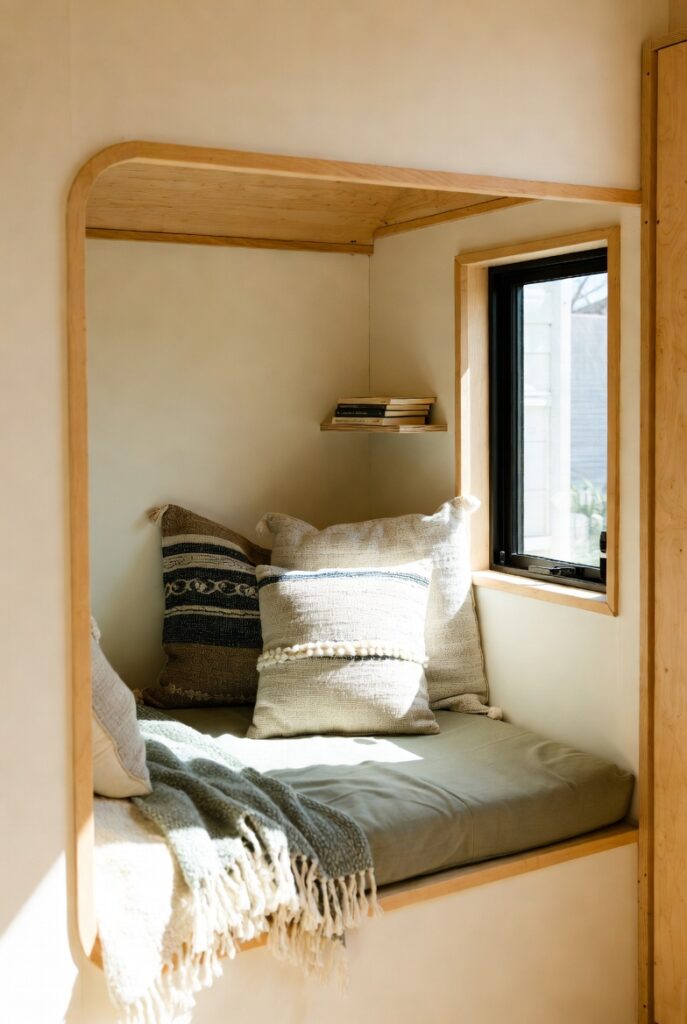
Even a tiny house deserves one soft, quiet corner that isn’t about function. A floor cushion, a small side table, and a warm reading lamp tucked into an unused corner or under a loft can become the emotional heart of the home — the spot in every tiny house tour that gets the most attention.
Keep it low to the ground so it doesn’t visually compete with the rest of the room, and layer in a textured throw blanket for coziness.
11. Use Runners and Small Rugs to Define “Rooms” Without Walls
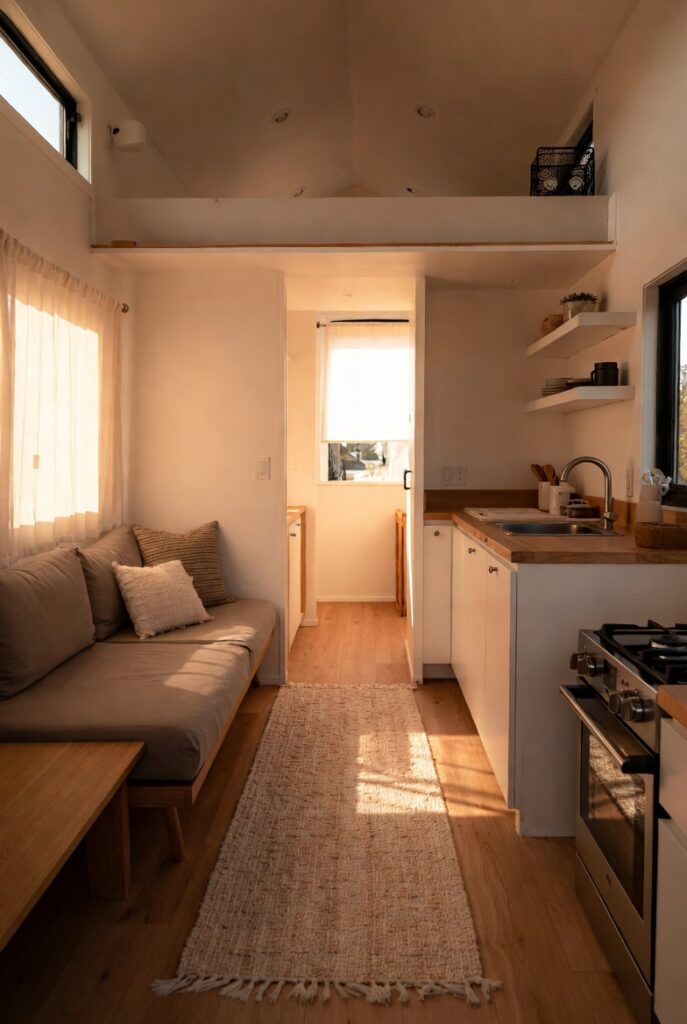
Open-concept tiny houses often blend the kitchen, dining, and living area into one continuous space. Rugs are the easiest way to visually separate these zones without adding a single wall.
A runner down a narrow hallway makes it feel longer and more finished. A distinct rug shape under the dining table versus the seating area tells your eye “this is a different zone” even when there’s no physical divider.
12. Add a Folding or Wall-Mounted Table for Instant Flexibility
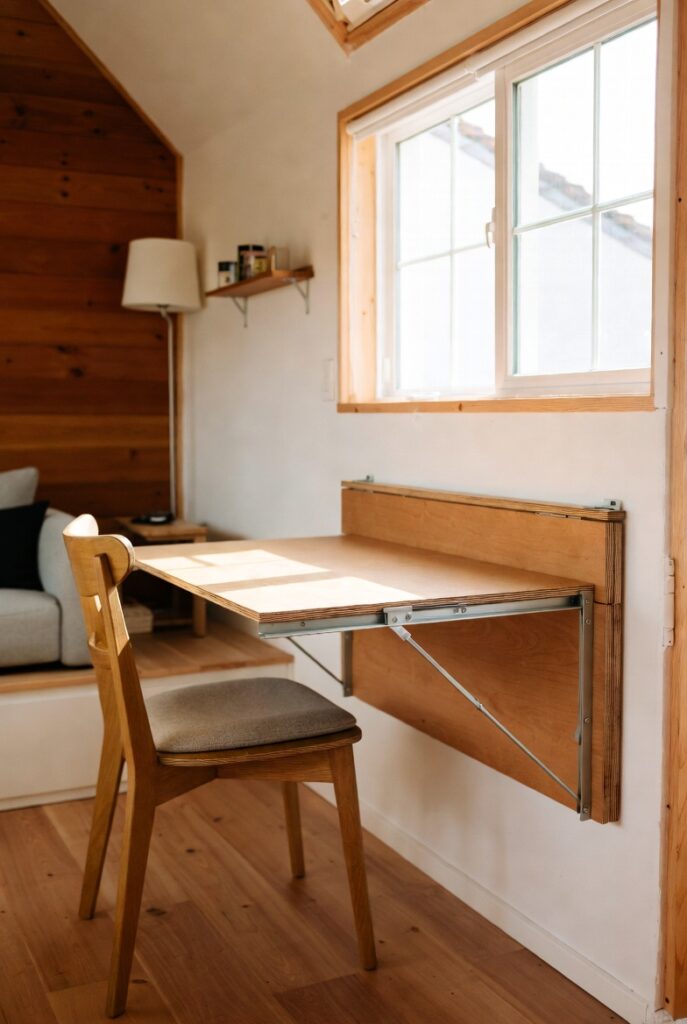
A wall-mounted drop-leaf table that folds down only when needed keeps your main living area open the rest of the time. It’s ideal for a workspace, a dining spot, or a hobby table, and folding it away instantly returns the floor space to the room.
Pair it with stackable or foldable chairs that can be tucked against a wall or hung on hooks when not in use.
13. Keep Window Treatments Light and Airy
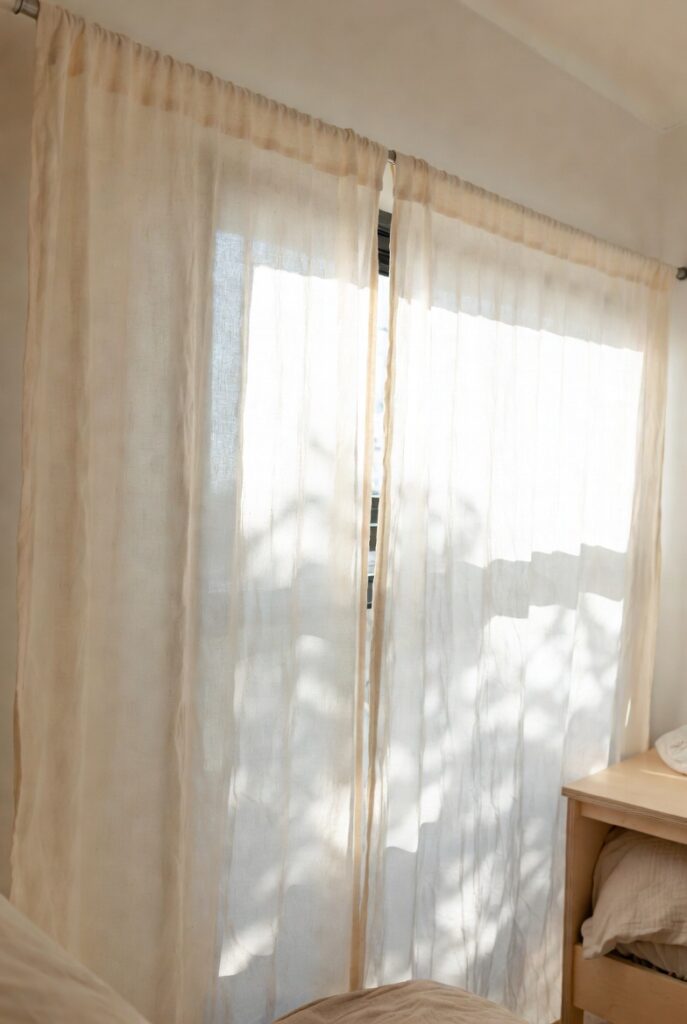
Heavy drapes swallow both light and space in a small home. Sheer curtains, café-style shades, or simple woven blinds let in maximum natural light while still offering privacy, and they visually disappear rather than adding bulk to the room.
If privacy is a bigger concern, layer a light sheer with a simple roller shade rather than choosing one heavy blackout curtain that darkens the whole space when closed.
14. Personalize With a Gallery Wall Instead of Bulky Decor
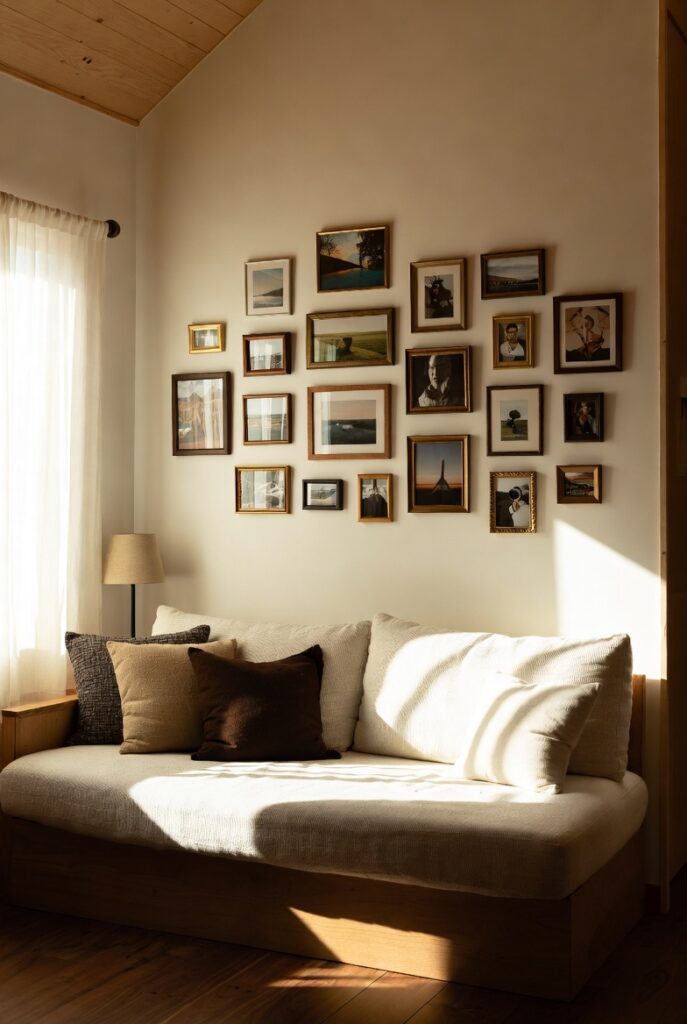
Framed photos, small art prints, or a mix of both cost far less floor space than sculptures, large decor objects, or bulky shelving units and they add far more personality per square inch. A gallery wall in a hallway, above a loft ladder, or beside the entry door makes a tiny house feel lived-in and personal without cluttering a single surface.
Mix frame sizes and finishes for visual interest, but keep the color palette consistent with the rest of your home so it reads as curated, not random.
Frequently Asked Questions About Tiny House Decor
What colors make a tiny house look bigger?
Light neutrals — soft whites, warm greiges, and pale wood tones reflect the most light and create an airy, open feeling. Save bold colors for small accents rather than large surfaces.
How do you decorate a tiny house without making it feel cluttered?
Choose multi-purpose furniture, stick to one color story, and store as much as possible vertically or under stairs and lofts. A good rule of thumb: if a piece of decor doesn’t serve a function or bring genuine joy, it doesn’t earn a spot.
What is the most space-saving furniture for a tiny house?
Storage ottomans, wall-mounted drop-leaf tables, loft beds, and sofa beds consistently offer the best return on floor space because each one serves more than one purpose.
Final Thoughts
A tiny house doesn’t have to feel like a compromise. With the right color strategy, smart vertical storage, and a few standout design moments like a statement light or a cozy reading nook a small space can feel just as intentional and beautiful as a home five times its size.
Start with one or two of these ideas rather than trying to overhaul everything at once. Small, deliberate changes are exactly how the best tiny house interiors come together.
Read Also: Nestly Home Deco